
 Help
Help 
Can institutional Bitcoin demand outweigh policy uncertainty?
Bitcoin has settled back above $65,000, but the market is no longer being driven by a single catalyst. Investors are weighing up a mix of political developments, institutional positioning and monetary policy, leaving price action caught between optimism and caution. Large derivatives traders continue to position higher prices, yet ETF investors have become more hesitant, suggesting conviction is becoming increasingly selective rather than broad-based.

US lawmakers are racing to finalize the Digital Asset Market Clarity Act before a critical September deadline.
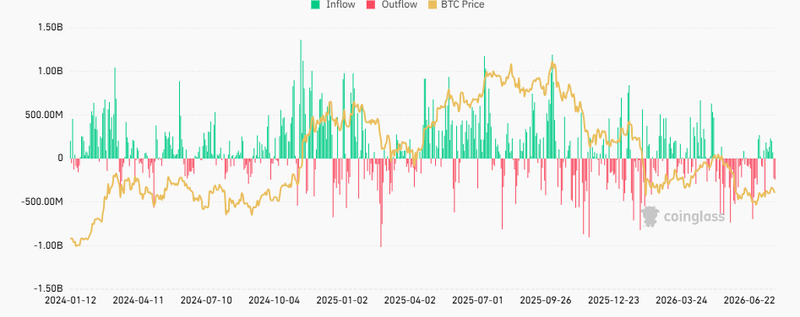
Spot Bitcoin ETFs recorded $465 million in net outflows after seven consecutive sessions of inflows.
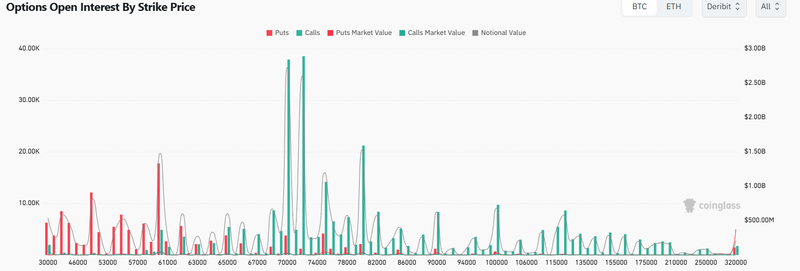
Options traders opened $2.5 billion in bullish Bitcoin call spreads, while total open interest has climbed to $34 billion.
Washington is approaching a decision point
For much of this year, regulation has remained one of the biggest unanswered questions for institutional investors. That uncertainty may soon face its first real test. Negotiations over the Digital Asset Market Clarity Act are entering their final stage as lawmakers attempt to reach a compromise before Congress breaks for the August recess.
Senate Majority Leader John Thune has made it clear the legislation still lacks enough support to pass, but opening debate before lawmakers leave Washington would keep the bill alive and preserve momentum heading into autumn.
If those negotiations stall into September, the window could close altogether for this legislative session. That outcome would leave the industry waiting even longer for a clearer regulatory framework, something many larger investors have viewed as a necessary step before committing additional capital to digital assets.
ETF demand pauses after a strong run
Spot Bitcoin ETFs broke a seven-session streak of steady inflows after recording $465 million in combined net outflows over the last two trading sessions. The reversal does not necessarily signal a broader shift in investor sentiment. Instead, it suggests some investors chose to lock in profits after Bitcoin's recent recovery rather than continue adding exposure to higher prices.
ETF flows remain one of the clearest indicators of institutional demand. Sustained inflows tend to reinforce price momentum by creating consistent buying pressure, while temporary outflows often reflect short-term positioning rather than a fundamental change in conviction. As long as withdrawals remain limited, investors are likely to view the recent outflows as a pause rather than the beginning of a larger trend.
Source: Coinglass
Options traders continue to position for higher prices
While ETF investors reduced exposure, activity in the derivatives market tells a different story. Institutional traders purchased roughly $2.5 billion in notional Bitcoin call spreads expiring on July 31, using around 40,000 option contracts concentrated at the $70,000 and $72,000 strike prices.
The structure allows traders to profit from a continued rally while limiting the premium paid compared with outright call purchases. At the same time, total Bitcoin options open interest has climbed to approximately $34 billion, highlighting continued institutional participation despite recent volatility.
Large options positions do not guarantee Bitcoin will reach those strike prices. They do, however, indicate that professional investors continue to see favorable risk-reward in maintaining bullish exposure even after recent gains.
Source: Coinglass
Fed outlook remains another key variable
Monetary policy continues to shape every major risk asset, and Bitcoin is no exception.
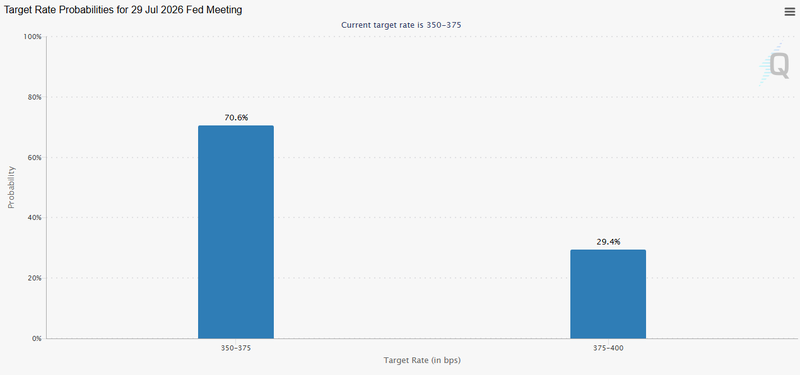
Markets overwhelmingly expect the Federal Reserve to leave interest rates unchanged in July. The bigger debate has shifted to September, where investors still assign a meaningful probability to another rate increase.
That leaves Bitcoin in an uncomfortable position. Lower borrowing costs have historically encouraged demand for growth assets and cryptocurrencies, while the prospect of tighter policy usually strengthens the US dollar and reduces investors' willingness to take risk.
Until inflation provides a clearer direction for policymakers, many investors appear reluctant to build aggressively larger positions despite Bitcoin's recent resilience.
Source: CME Group
SHIB rally fueled by South Korean buying
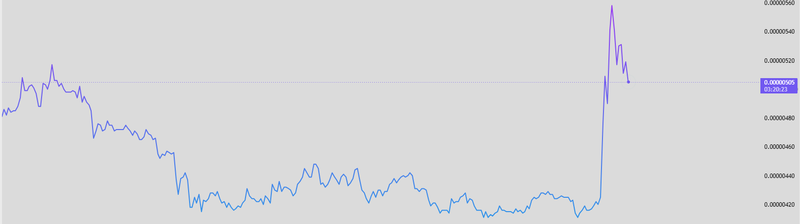
Shiba unexpectedly emerged as the strongest performer in the crypto market, climbing 36% after an intense wave of buying swept through South Korea's Upbit exchange. The scale of the move suggests the rally was driven less by fundamental news and more by a sharp shift in positioning, as aggressive buying quickly overwhelmed available liquidity and forced momentum traders to join the advance.
Upbit has often acted as an early source of speculative flows during periods of renewed retail participation, and this episode was no exception. Although no clear catalyst has been identified, the surge demonstrates how concentrated regional demand can rapidly influence price discovery across global crypto markets, particularly in high-beta tokens such as SHIB.
The unusually strong trading volumes also point to renewed risk appetite among retail investors, a dynamic that often spills over into the broader altcoin market when sentiment begins to improve.
Source: Trading view


