
 Help
Help 
Crypto selloff deepens as ETF outflows and altcoin stress hit confidence
Crypto markets are going through another hard reset. Over the past 48 hours, liquidations have climbed above $1.6 billion, while US spot Bitcoin ETFs have now recorded 13 straight trading days of net outflows.

Crypto liquidations have crossed $1.6 billion in the latest selloff.
Major altcoins are weakening, with ADA falling below $0.20.
ZEC dropped sharply after a critical Zcash bug disclosure.
ETF outflows change the tone around Bitcoin
The 13-day outflow streak from US spot Bitcoin ETFs is one of the most important parts of the story. These funds were a major driver of confidence during the previous advance because they gave the market a steady institutional bid. When ETF inflows were strong, investors could argue that every dip had a natural buyer behind it.
Recent data showed total ETF outflows reaching more than $4 billion during the streak. That does not mean institutional investors are abandoning Bitcoin completely, but it does show that the marginal buyer has stepped back. And in crypto, the marginal buyer matters a lot. When fresh inflows slow or reverse, price action becomes more dependent on leverage, sentiment and short-term trading flows.
It also changes how traders view rebounds. In a strong market, dips are bought quickly because investors are afraid of missing the next leg higher. In this environment, bounces are more likely to be treated with suspicion. Traders are asking whether any recovery is real demand, or simply short covering after a liquidation flush.
The liquidation wave shows that too many traders were positioned for a rebound that did not arrive. Once Bitcoin broke lower, leveraged long positions started getting closed automatically, adding more pressure to the decline.
That does not always mean the market is broken. Sometimes these flushes help clear excessive positioning. But in the short term, they usually create messy price action because every bounce is tested by nervous sellers.
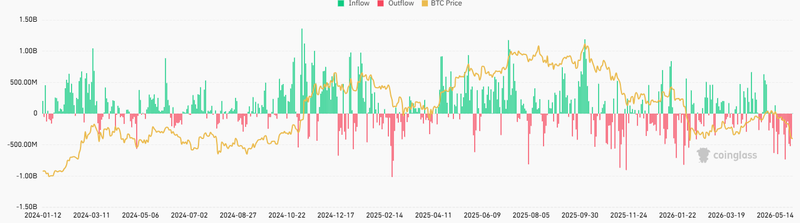
Source: Coinglass
Altcoins are showing more damage
The deeper damage is showing up in altcoins. Cardano falling below $0.20 is not just about ADA as a single project. It is a signal that traders are moving away from higher-risk crypto exposure.
In strong market conditions, altcoins usually benefit from confidence. Bitcoin rises first, then capital rotates into larger altcoins, then into smaller and more speculative names. That rotation depends on investors believing the broader market trend is still healthy.
When altcoins start falling harder than Bitcoin, it usually means investors are no longer looking for upside. They are looking for liquidity. They want assets they can exit quickly, or they move out of the market altogether. That is why broad altcoin weakness often matters more than one token’s chart. It tells us the appetite for risk is shrinking.
Zcash adds a different kind of pressure
Zcash made the situation worse after ZEC fell nearly 30% following Shielded Labs’ disclosure of a critical bug in Zcash’s Orchard privacy pool. Reports said the bug could have allowed undetectable counterfeit tokens, although developers said no exploit was detected and an emergency upgrade was deployed.
Investors trust that the supply is correct, the network works as expected, and the underlying code does not contain hidden problems. When a critical bug goes undetected for years, even if it was not exploited, it reminds the market that technical risk is not theoretical.
For privacy-focused projects, that trust is even more important. The value of the network depends on confidence that the system is secure, private and reliable. A bug disclosure does not only hurt the price. It forces investors to question what else may have been missed.
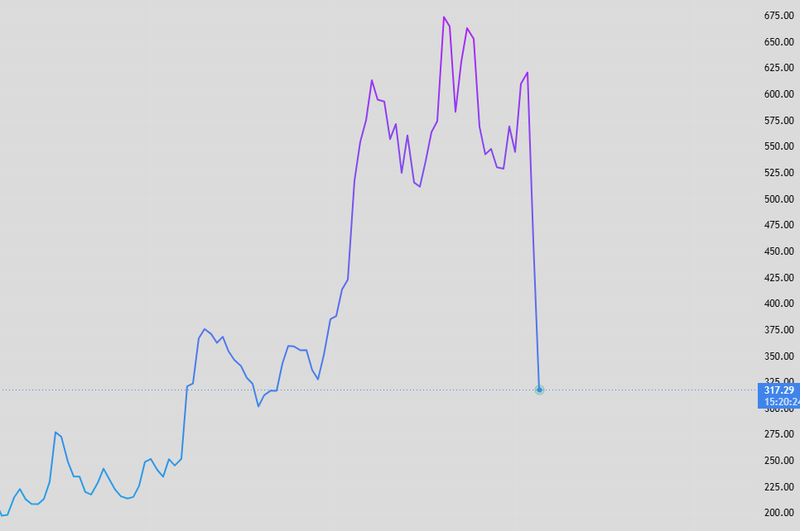
Source: Trading view
The market is now trying to repair trust
Crypto’s problem now is that several pressure points are appearing at the same time. ETF outflows show that institutional demand has cooled. Liquidation shows that leverage was too high. Altcoin weakness shows that risk appetite has faded. Zcash’s bug disclosure shows that project-specific shocks can still appear suddenly and damage confidence further.
None of this means the cycle is finished. Crypto has gone through many violent resets before. But it does mean the market needs more than a short bounce to repair the damage.
For Bitcoin, the first sign of improvement would be a slowdown in ETF outflows. The market does not necessarily need massive inflows immediately, but it does need evidence that institutional selling pressure is easing. Without that, rallies may continue to look fragile.
For altcoins, the market needs stability first. It is hard for traders to rotate back into higher-risk names while Bitcoin is under pressure and liquidity is thin. Until Bitcoin stabilises, altcoin rebounds may remain sharp but unreliable.


