Help
Help Japan’s tightening path meets fiscal pressure
The Bank of Japan heads into Q4 on a tightening path, while the government continues to support household demand through fiscal measures. Rising inflation, a 1.25% policy rate and reduced JGB purchases could keep bond yields under pressure, while the planned food tax cut adds to borrowing needs. The BoJ’s next move will therefore matter not only for the yen, but also for JGB yields and Japan’s fiscal outlook.

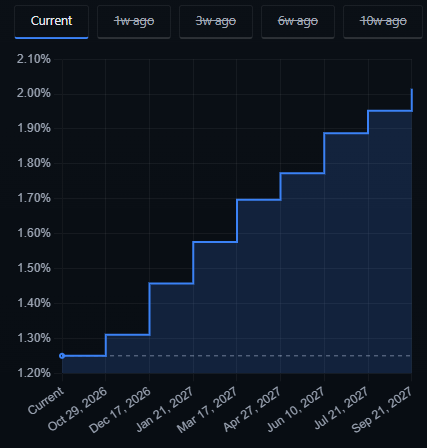
The BoJ is expected to maintain its tightening bias, with a December hike more likely than one in October.
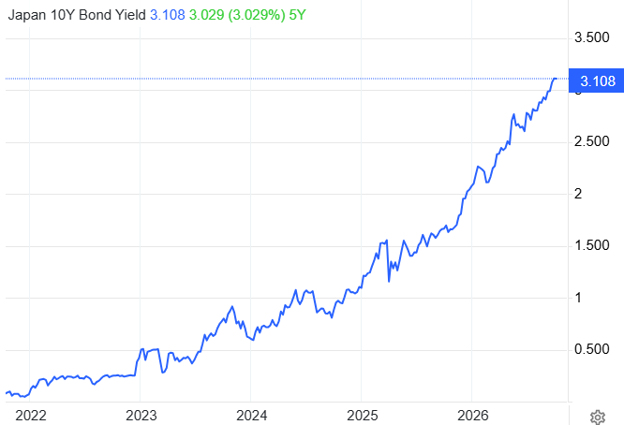
The 10-year JGB yield above 3% suggests investors are demanding greater compensation.
A sustained move above 160 would suggest the US-Japan yield gap is still outweighing the impact of BoJ tightening.
BoJ tightening meets fiscal support
Monetary and fiscal policy are increasingly pulling in opposite directions. With the BoJ’s policy rate at 1.25% and Tokyo core inflation at 2.7%, another rate hike remains on the table. At the same time, the government is moving to support household demand through fiscal policy.
The government plans to cut the consumption tax on food from 8% to 1%, supporting household purchasing power but creating a revenue shortfall of roughly 5 trillion. With public debt near 200% of GDP, this policy mix could put further pressure on JGB yields as borrowing needs remain elevated.
The BoJ is expected to maintain its tightening bias, with a December hike more likely than one in October. The challenge is that every additional rate hike also raises the government’s financing costs, making the balance between controlling inflation and supporting the economy increasingly important.
Source: Rate probability
JGB yields could push higher
Pressure on JGBs is building from both sides. The BoJ is gradually reducing its bond purchases, leaving private investors to absorb more government debt, while fiscal support could increase future borrowing needs.
The 10-year JGB yield above 3% suggests investors are demanding greater compensation as monetary policy normalises and the supply of government bonds shifts. Upward pressure on longer-term yields is likely to continue through Q4. A faster expansion in fiscal spending or a quicker BoJ tightening cycle could add further pressure.
Source: trading economic
The yen’s recovery depends on the BoJ
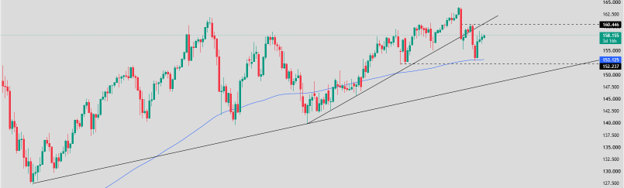
The yen enters Q4 with 160 on USD/JPY as the key ceiling and 152 as the main downside reference, following its sharp recovery from the highs.
A sustained move above 160 would suggest the US-Japan yield gap is still outweighing the impact of BoJ tightening, while bringing intervention concerns back into focus. A break below 152 would signal a different story, suggesting the yen’s recovery is becoming more structural, particularly if accompanied by another BoJ rate hike or lower US Treasury yields.
Source: Tradingview