Help
Help 
The oil barrels are back, the calm is not
Oil enters Q4 under renewed pressure as tensions between the US and Iran continue to disrupt the outlook for global supply. Despite expectations of a return to more stable prices, renewed fighting has pushed Brent back above $100 a barrel, raising concerns about further volatility in the months ahead.

Further attacks on tankers, Gulf infrastructure or shipping through Bab el-Mandeb could push prices above $110.
The base case in the Q3 report assumed the US-Iran truce signed in mid-June would hold
Despite the conflict, crude supply is recovering. JPMorgan estimates Middle East shipments at 17.5 million barrels per day, or 98% of pre-conflict levels.
Renewed tensions drive oil prices higher
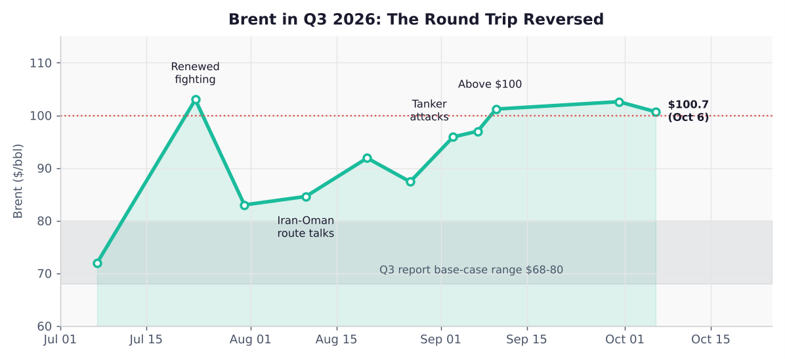
The base case in the Q3 report assumed the US-Iran truce signed in mid-June would hold, with Brent trading between $68 and $80 a barrel as the structural supply surplus returned. Instead, the upside risk identified at the time materialised.
Fighting resumed in the second half of July, pushing Brent from around $72 on 7 July to above $100 in September. Prices ended the quarter near $102.6 on 30 September, gaining more than 11% in the final month alone and over 50% year on year. As of 6 October, Brent was trading near $100.7 and WTI near $89.7.
Diplomatic hopes fade as tensions rise
Q3 brought several attempts to ease tensions, but hopes of a lasting agreement faded. In August, Brent fell to $83–$87 as Iran-Oman talks progressed on shipping routes and revenue sharing through the Strait of Hormuz. However, disagreements over fees remained, with Iran seeking 5%–7% of cargo value, Oman proposing around 3% and Washington rejecting fees altogether.
Tensions escalated in early September following drone attacks on tankers, including one on a vessel belonging to Saudi Arabia’s national shipping company that killed two sailors. US Central Command later announced it had destroyed ten Iranian tankers it linked to a shadow fleet funding the Revolutionary Guard. Shipping through the strait fell to just seven vessels on one day, sending Brent back above $100.
Crude supply recovers, but diesel remains under pressure
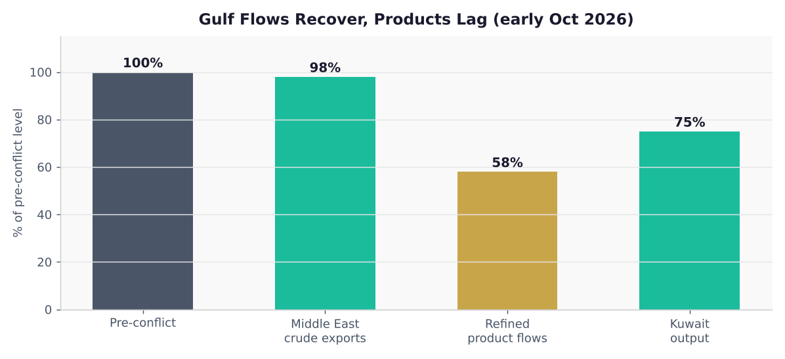
Despite the conflict, crude supply is recovering. JPMorgan estimates Middle East shipments at 17.5 million barrels per day, or 98% of pre-conflict levels. The US Energy Information Administration also reported that shut-in production fell to its lowest level since fighting began, supported by bypass pipelines and ship-to-ship transfers.
However, refined product flows remain at just 58% of previous levels, while Kuwait is operating at around 75% of capacity. This explains why prices remain near $100 despite recovering crude supply. The pressure has shifted towards diesel, with US East Coast distillate inventories around 32% below their five-year average in September, ahead of winter demand.
Efforts to ease oil prices are gaining momentum. OPEC+ has kept production quotas unchanged, while Saudi Aramco widened its November Arab Light discount for Asian buyers from $2 to $5 below the regional benchmark, signalling a focus on market share as exports recover. G7 countries also agreed to release 100 million barrels from emergency reserves, while Iraqi exports rose to around 2.34 million barrels per day in August.
However, global inventories remain low after months of heavy drawdowns, leaving prices particularly vulnerable to further disruptions in the Strait of Hormuz or Bab el-Mandeb.
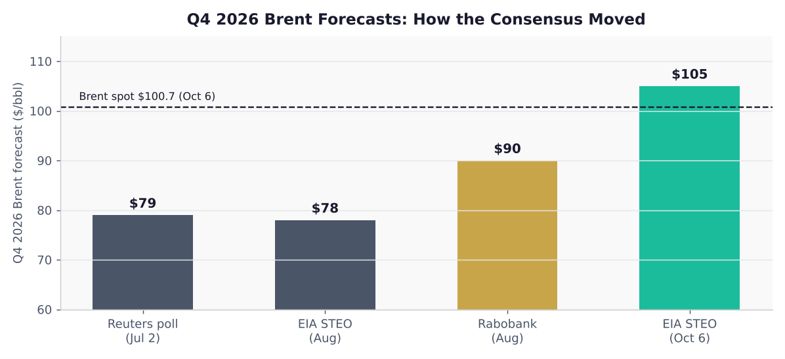
Oil forecasts move higher
The latest forecasts reflect the scale of the price surge. In its 6 October outlook, the US Energy Information Administration (EIA) raised its Q4 Brent forecast to $105 and its 2026 average to $96, up $5 from September. The revisions reflect tight diesel markets and vulnerable regional supply routes, although the EIA expects prices to average $84 in 2027.
These forecasts assume Middle East supply constraints continue through year-end, meaning they do not account for a potential peace agreement.
Two possible paths for Q4
The Q4 outlook remains two-sided. The base case is for Brent to trade between $95 and $105, with recovering crude supply limiting further gains, while diesel shortages and geopolitical risks provide support.
Further attacks on tankers, Gulf infrastructure or shipping through Bab el-Mandeb could push prices above $110. Conversely, a comprehensive US-Iran agreement restoring normal navigation could send Brent back towards $80, as seen in June when expectations of a supply surplus returned. President Trump has linked the timing of a potential deal to the period after the midterm elections.
Key developments to watch include weekly EIA inventory reports on Wednesdays, US inflation data on 14 October, the Fed meeting on 28 October, the midterm elections on 3 November and the next EIA outlook on 10 November. Monthly OPEC+ decisions and vessel traffic through the Strait of Hormuz will also be important indicators.