Help
Help 
Fed rate hike test puts Kevin Warsh’s credibility in focus
The Fed heads into its September meeting with inflation still at 3.4% and markets heavily pricing a rate hike, turning the decision into an early credibility test for Kevin Warsh.
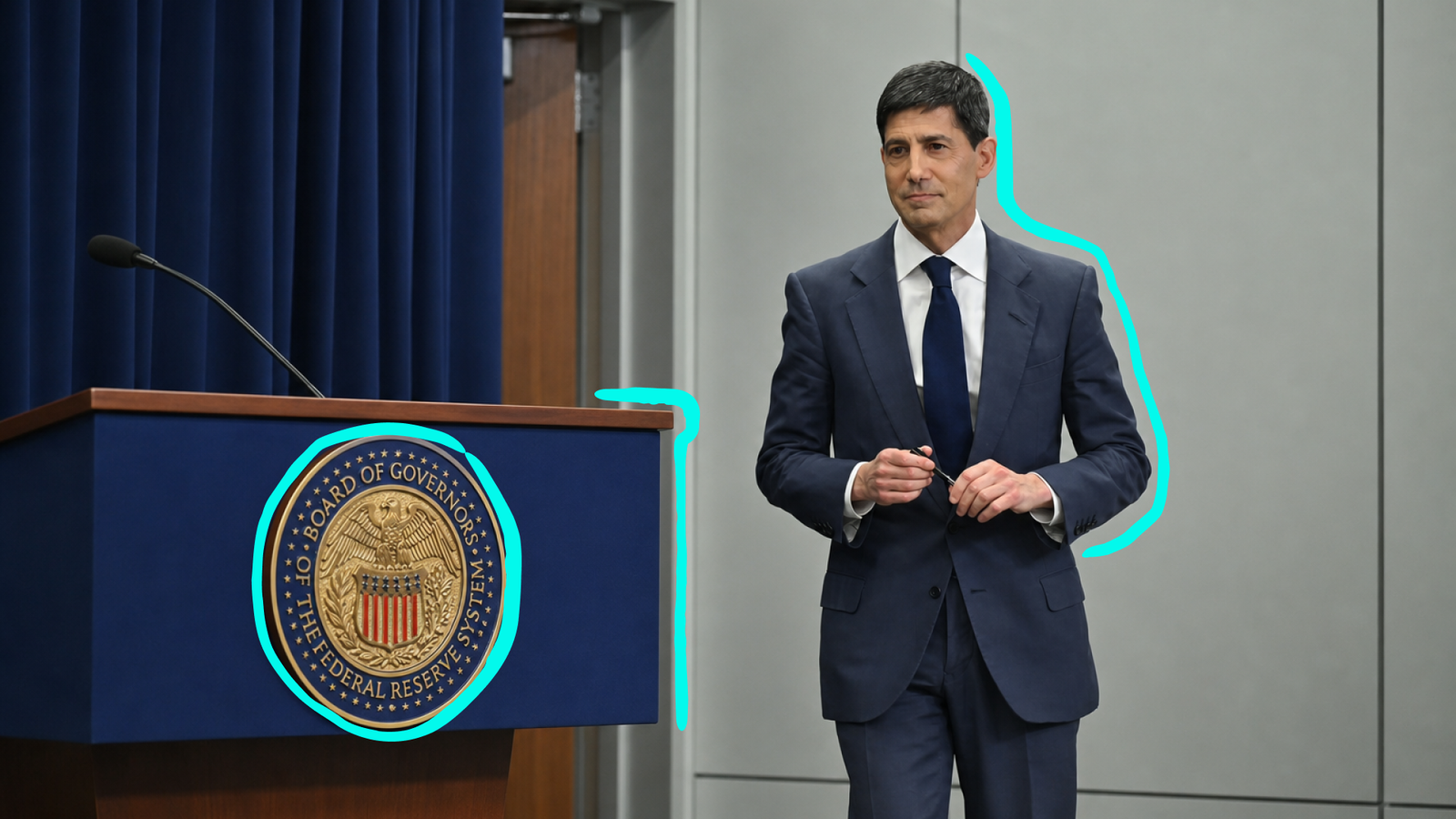
U.S. headline inflation held at 3.4% in August, well above the Fed’s 2% target.
Markets now assign roughly an 85% to 86% probability of a 25-basis-point rate hike.
The federal funds rate currently stands at 3.50% to 3.75%.
The Fed last raised rates three years ago, making a September hike a significant shift in policy.
President Donald Trump continues to call for lower rates, adding a political dimension to Warsh’s first major inflation test.
The Fed enters September with inflation still too high
The Federal Reserve heads into this week’s policy meeting facing one of the clearest tests of Kevin Warsh’s short tenure as chair.
Inflation remains stubbornly above target, markets are heavily positioned for another rate increase, and Warsh has repeatedly emphasized the Fed’s responsibility to restore price stability.
August consumer inflation held at 3.4% year on year, unchanged from July and still comfortably above the central bank’s 2% objective.
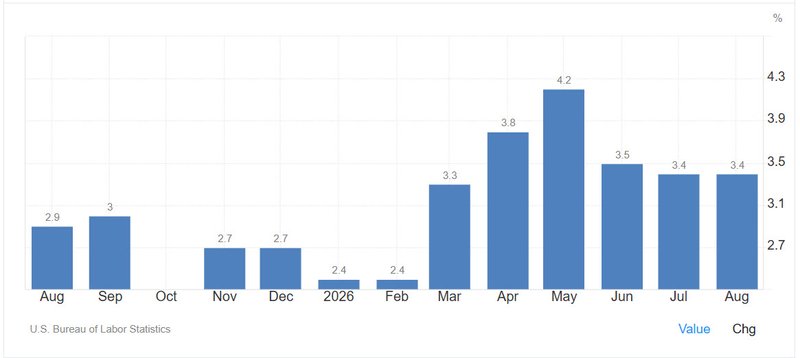
Source: TradingEconomics
That has pushed investors toward a clear conclusion.
Futures markets now assign more than an 85% probability that the Federal Open Market Committee will raise rates by 25 basis points at its meeting ending Wednesday.
The economic question is difficult enough.
The political backdrop makes it even more complicated.
A September hike would restart the tightening cycle
The Fed has kept rates unchanged since January, maintaining the federal funds target range at 3.50% to 3.75% while policymakers assessed the effects of tariffs, energy shocks and broader inflation pressures.
A rate increase this week would mark the first hike in roughly three years.
That makes the decision more significant than a routine quarter-point adjustment.
It would signal that the Fed believes inflation risks have become persistent enough to justify restarting monetary tightening, even with borrowing costs already elevated across much of the economy.
The case for action has strengthened in recent weeks.
Warsh and several other policymakers have indicated that further tightening would become necessary if inflation failed to resume a convincing decline.
August CPI did little to provide that reassurance.
Inflation has stopped making enough progress
The central issue is no longer whether inflation has fallen from its post-pandemic extremes.
It has.
The problem is that progress toward 2% appears to have stalled.
Headline inflation at 3.4% remains too high for the Fed to declare victory, particularly after years of above-target price increases.
Several forces are complicating the outlook. Tariffs are feeding through into some prices, while higher energy costs linked to the conflict with Iran are increasing pressure on transportation and production expenses.
At the same time, strong investment tied to artificial intelligence continues to support demand for labor, infrastructure and capital.
None of these factors alone guarantees persistent inflation.
Together, they make it harder for the Fed to justify indefinite patience.
Why this meeting matters for Warsh
Warsh has spent recent weeks trying to establish a reputation as an inflation-focused central banker.
At Jackson Hole, he reinforced the Fed’s commitment to the 2% target and questioned whether current financial conditions were restrictive enough.
That rhetoric now creates a clear policy test.
If inflation remains well above target and financial conditions are not sufficiently tight, the case for higher rates becomes difficult to dismiss.
A decision to hold would therefore require a strong explanation.
Markets would want to know what exactly Warsh is waiting to see and what conditions would eventually justify another hike.
That makes Wednesday’s meeting as much a communications test as a monetary-policy decision.
Political pressure complicates the picture
President Donald Trump has continued to argue that U.S. interest rates should be lower, saying over the weekend that the United States should benefit from the lowest borrowing costs in the world.
White House officials have also questioned the need for a rate increase.
National Economic Council Director Kevin Hassett said there was no compelling reason to tighten policy now and argued that the Fed should avoid unnecessary intervention ahead of the midterm elections.
That position is very different from current market pricing.
Investors are expecting higher rates because inflation remains elevated.
The White House wants lower rates to reduce borrowing costs and support economic activity.
Warsh now sits directly between those two pressures.
Fed independence is becoming part of the market story
Central-bank independence matters because monetary policy works partly through credibility.
If households, businesses and investors believe the Fed will tighten policy when inflation becomes persistent, long-term inflation expectations are more likely to remain anchored.
If markets begin to think rate decisions are being shaped by political considerations, inflation risk can become embedded in bond yields.
That would be counterproductive.
A politically motivated decision to keep short-term rates lower could ultimately result in higher long-term borrowing costs if investors demand additional compensation for inflation risk.
This is why the September meeting carries implications beyond a single 25-basis-point move.
Markets will be judging whether the Fed’s decisions remain aligned with its inflation mandate.
Trump’s preference for lower rates is understandable economically
The administration’s preference for lower borrowing costs is not difficult to understand.
Higher Fed rates affect mortgage costs, auto loans, credit cards, corporate borrowing and government debt service.
They can also slow investment and consumer spending.
With midterm elections approaching in November, affordability has become an increasingly important political issue.
Higher interest rates risk adding another source of pressure on households already dealing with elevated living costs.
But this creates a classic monetary-policy trade-off.
The medicine used to reduce inflation can make financing more painful in the short term.
Avoiding that medicine for too long can allow inflation itself to become more persistent.
Why raising rates is costly
A rate hike is not a free solution.
Higher borrowing costs work by deliberately reducing demand.
Consumers become less willing to finance large purchases. Companies may postpone investment. Housing activity can weaken. Credit conditions tighten.
That is how monetary policy lowers inflation.
It is also why policymakers hesitate before tightening.
If the Fed raises rates into an economy that is already slowing, it risks doing unnecessary damage to employment and growth.
The question facing officials this week is whether that downside risk now outweighs the risk of allowing inflation to remain around 3.4%.
Market pricing suggests investors increasingly believe it does not.
The Fed could still surprise by holding rates
Despite the high probability assigned to a hike, the outcome is not guaranteed.
The Fed could decide that recent inflation is being driven heavily by temporary shocks and that more time is needed to judge whether price pressures will persist.
Policymakers could also point to the tightening already delivered by higher long-term Treasury yields.
If market rates have already increased significantly, financial conditions may be doing some of the Fed’s work without an additional policy hike.
But a hold would now be a genuine market surprise.
With rate futures assigning roughly an 85% to 86% probability to tightening, an unchanged decision could trigger a sharp repricing across Treasuries, the dollar, gold and equities.
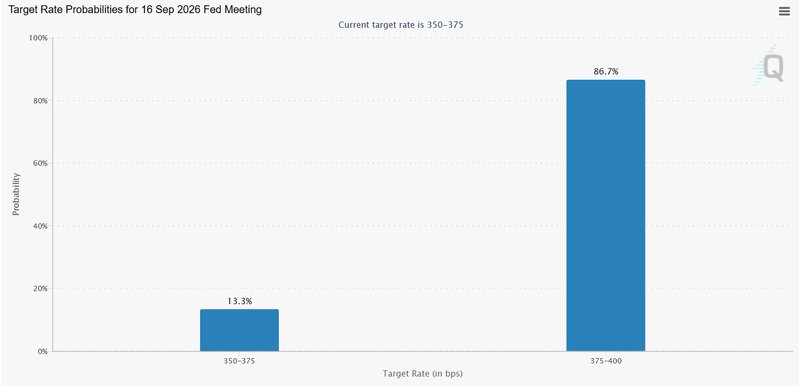
Source: CME Group
The explanation would matter almost as much as the decision itself.
What a rate hike could mean for markets
A 25-basis-point hike would likely reinforce the message that the Fed remains focused on inflation rather than near-term political pressure.
For Treasury markets, the initial reaction would depend heavily on Warsh’s guidance.
If investors view the hike as a one-off move designed to contain inflation expectations, longer-term yields could stabilize.
If Warsh signals that further tightening is likely, yields could move higher across the curve.
The dollar would probably benefit from a more hawkish rate path, while gold could face pressure if higher nominal rates translate into rising real yields.
Equities would face a more complicated trade-off.
A modest hike that reinforces Fed credibility may be manageable. A renewed tightening cycle would raise questions about valuations, financing costs and the durability of economic growth.
A hold could create an even bigger reaction
The more interesting scenario may be no change.
Because markets have already moved heavily toward a hike, holding rates steady would immediately raise questions about the Fed’s reaction function.
Investors would ask whether policymakers see economic weakness that markets have underestimated.
They would also question how a hold fits with Warsh’s recent emphasis on inflation.
If the Fed cannot explain the discrepancy clearly, volatility could rise quickly.
The risk would be particularly high in long-duration Treasuries, where investors are already sensitive to fiscal deficits, inflation and heavy government borrowing.
What to watch beyond the rate decision
The statement and press conference may ultimately matter more than the quarter-point move itself.
Markets will be watching for Warsh’s assessment of three issues.
The first is inflation. Investors need to know whether the Fed believes 3.4% represents temporary persistence or evidence that disinflation has stalled.
The second is financial conditions. Warsh has previously questioned whether they are sufficiently restrictive, so any change in that assessment would be important.
The third is the path beyond September.
A hike accompanied by a cautious message would be very different from a hike that signals the beginning of another sustained tightening cycle.
That distinction will determine how aggressively markets reprice future rates.
Why the September Fed decision is a credibility test
The Fed’s upcoming meeting is unusually important because the economic and political signals are pointing in opposite directions.
Inflation remains at 3.4%, well above the 2% target. Markets see more than an 85% probability of a quarter-point rate increase. Warsh has repeatedly emphasized price stability and suggested the Fed cannot tolerate persistent inflation.
At the same time, the White House is openly calling for lower rates as the midterm elections approach.
That puts Warsh in a difficult position.
A hike would reinforce his inflation-fighting credentials but risk provoking political criticism and increasing borrowing costs across the economy.
A hold could be economically defensible if the Fed believes recent inflation pressures are temporary or financial conditions are already tight enough.
But it would require a far clearer explanation than markets have received so far.
Wednesday’s decision will therefore be about more than whether rates move by 25 basis points.
It will show investors how Kevin Warsh intends to balance inflation, growth and political pressure when those forces point in different directions.