Help
Help Fed hikes rates for first time since 2023 as Warsh keeps another move on the table
The Fed delivered its first rate hike in three years and left another increase on the table as Kevin Warsh made clear that persistent inflation remains the central bank’s priority.
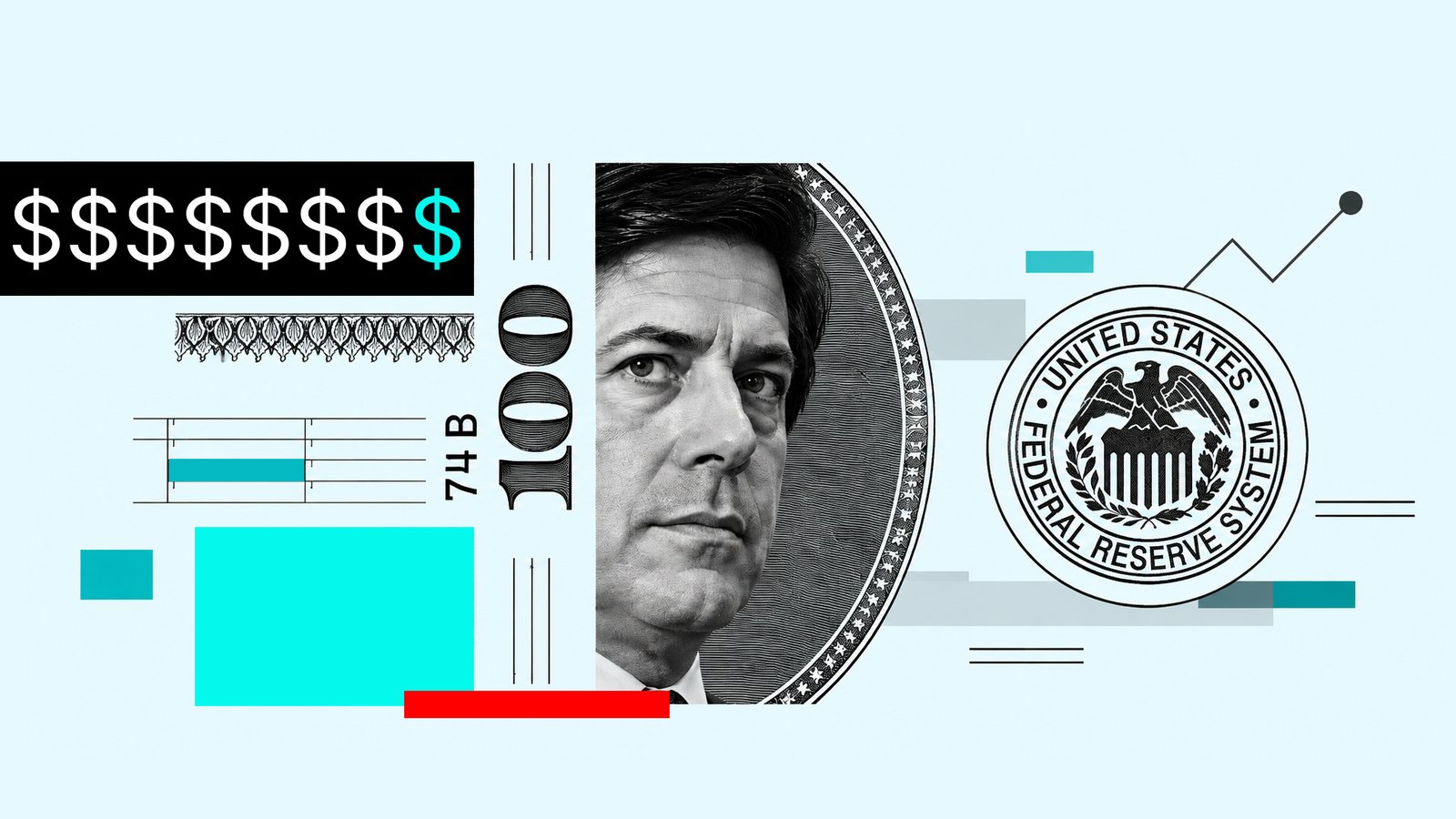
The Federal Reserve raised rates by 25 basis points to 3.75%-4.00%, its first increase since 2023.
The decision was unanimous, 12-0, marking a clear shift back toward tighter monetary policy.
Warsh said inflation remains “too high” and that recent data has not shown enough improvement in underlying price pressures.
The Fed’s median projection points to one more rate hike in 2026, with the year-end policy rate around 4.1%.
The Fed has restarted rate hikes
The Federal Reserve raised interest rates by 25 basis points on Wednesday, lifting the federal funds target range to 3.75%-4.00% and delivering its first rate increase since 2023.
The decision was unanimous, with all 12 voting members supporting the move. That unity is significant after months of debate over whether persistent inflation justified additional tightening.
Fed Chair Kevin Warsh made the central bank’s reasoning clear during his press conference.
Inflation remains above target, economic activity has held up better than expected and the labor market remains sufficiently strong for policymakers to focus predominantly on price stability.
The move marks a clear change in direction after the Fed spent much of 2026 holding rates steady while assessing energy shocks, tariffs and the broader inflation outlook.
Warsh’s message was more important than the hike itself
The quarter-point increase had been heavily priced by markets before the meeting.
What investors needed to know was whether this was a one-off adjustment or the beginning of another tightening cycle.
Warsh deliberately avoided giving them a definitive answer.
He repeated his opposition to heavy forward guidance and emphasized that future decisions would depend on the economy rather than predetermined promises.
That does not mean the Fed is finished.
Warsh said recent inflation readings have not demonstrated a meaningful improvement in underlying trends and stressed that policymakers remain dissatisfied with the current inflation rate.
His message was simple: the Fed has acted, but it has not declared victory.
Inflation is still the dominant concern
Warsh described inflation as having remained too high for too long.
That is important because the Fed is increasingly looking beyond the argument that recent inflation is purely the result of temporary supply shocks.
Oil and energy prices have risen sharply, adding pressure to headline inflation, but Warsh focused on the risk that those shocks spread more broadly through the economy.
The Fed cannot directly lower the price of oil, petrol or groceries.
It can try to prevent those price increases from generating second-round effects through wages, services prices and inflation expectations.
That distinction explains the September hike.
The central bank is not attempting to reverse an oil shock with interest rates. It is trying to prevent an external shock from becoming persistent domestic inflation.
Three things changed since July
Warsh identified three developments that helped move the committee from holding rates in July to raising them in September.
First, incoming economic data has continued to show a resilient economy.
Second, inflation has remained elevated rather than resuming a sufficiently convincing decline toward the 2% target.
Third, geopolitical developments have altered the inflation and economic outlook, particularly through their effect on energy prices.
Together, those factors produced what Warsh described as a firm and unanimous decision.
That also helps explain why the Fed was willing to tighten despite already elevated market borrowing costs.
The central bank appears to believe the economy can absorb a modest increase while inflation still presents the larger risk.
The dot plot points to another hike
The Fed’s updated projections provided the clearest indication that September may not be the end of the tightening cycle.
The median policymaker projection puts the federal funds rate at roughly 4.1% at the end of 2026, implying another 25-basis-point hike before the year is over.
The distribution of forecasts is also revealing.
Twelve policymakers indicated another increase this year, four projected two additional hikes and two expected rates to remain at the new 3.75%-4.00% range.
Warsh again declined to submit an individual rate forecast.
That leaves the committee tilted toward additional tightening without committing the Fed to a specific meeting.
December therefore becomes an obvious candidate if inflation remains persistent.
The Fed raised its inflation forecast too
The new economic projections also show why policymakers remain uncomfortable.
The median forecast for core PCE inflation at the end of 2026 rose to 3.4%, compared with 3.3% in the previous projection.
That is still far above the Fed’s 2% target.
The combination of higher inflation projections and continued economic resilience makes it difficult for policymakers to justify returning quickly to easier policy.
The Fed is effectively acknowledging that disinflation is taking longer than expected.
This does not automatically mean a series of consecutive hikes.
It does mean the burden of proof has changed.
Inflation now needs to improve enough to stop further tightening rather than simply remain stable enough to justify continued patience.
Why Treasury yields fell despite the rate hike
One of the more interesting market reactions came from Treasuries.
The 10-year yield moved lower after the decision, trading around 4.95% after recently climbing above 5%.
At first glance, lower long-term yields after a rate hike may appear contradictory.
It is not.
The September increase was already widely expected. What mattered more was whether the Fed signaled an aggressive sequence of additional increases.
It did not.
Warsh explicitly refused to provide forward guidance, while the median projections pointed to only one additional hike this year rather than the start of a rapid tightening campaign.
Long-term yields can also fall if investors believe tighter policy today will reduce the risk of more persistent inflation tomorrow.
That appears to have helped limit pressure on the long end of the curve.
The yield curve sends an important message
The distinction between short-term and long-term rates becomes increasingly important from here.
The Fed directly controls the overnight policy rate.
It does not directly control the 10-year Treasury yield, mortgage rates or long-term corporate borrowing costs.
Those rates reflect expected Fed policy alongside inflation, growth, fiscal deficits, Treasury supply and term premium.
With the 10-year yield recently reaching its highest level since 2007, markets have already delivered considerable tightening independently of the Fed.
That could ultimately reduce how far Warsh needs to raise the policy rate.
If long-term yields remain close to 5%, financial conditions may become restrictive enough to slow demand without a long sequence of Fed hikes.
Another hike is possible, but October may be too soon
The Fed’s projections leave another move on the table this year, but they do not specify when it would occur.
December may make more sense than another immediate increase.
Waiting would give policymakers additional inflation and labor-market reports and allow them to assess whether the September move is beginning to affect financial conditions.
It would also provide more information about the path of oil prices.
Energy is currently one of the biggest uncertainties in the inflation outlook.
If oil prices retreat materially, some of the pressure driving headline inflation could fade without requiring an aggressive Fed response.
If energy remains expensive and underlying inflation continues running above target, another hike becomes easier to justify.
Warsh is drawing a line between action and guidance
One of the clearest changes under Warsh is the Fed’s communications style.
He again told markets he does not intend to provide detailed forward guidance.
That does not mean the Fed is ignoring markets.
Warsh said he watches market prices and considers the information they contain. But he emphasized that the September decision came from the committee’s assessment of inflation, employment and economic strength rather than from traders’ expectations.
That distinction matters.
Markets can estimate the probability of the next move.
Warsh does not want the Fed to validate those probabilities months in advance.
The result may be more volatility around economic data, but it also means each meeting carries greater genuine uncertainty.
The White House disagrees with the decision
The rate increase also highlighted a clear difference between the Federal Reserve and the White House over the appropriate level of interest rates.
President Donald Trump reiterated after the decision that he believes U.S. rates should be 1% or lower, while administration officials argued that the current inflation problem is largely being driven by energy supply shocks rather than excessive demand.
The Fed took a different view.
Warsh acknowledged that monetary policy cannot directly control oil prices but argued that the central bank must prevent individual price shocks from spreading into broader inflation.
That difference in analysis is likely to remain important if the Fed considers another increase later this year.
Higher rates will be felt by households
For consumers, the September decision adds another layer to an already difficult borrowing environment.
Credit-card rates, auto financing and some variable-rate loans are closely linked to short-term interest rates and can respond relatively quickly to Fed tightening.
Mortgage rates are influenced more heavily by longer-term Treasury yields, meaning the recent rise in the 10-year yield has already placed substantial pressure on housing affordability.
Savers are on the other side of the equation.
Higher policy rates can support returns on money-market funds, certificates of deposit and high-yield savings accounts.
The economic effect of another quarter point therefore depends heavily on whether households are primarily borrowers or savers.
Equities took the decision relatively calmly
Stocks initially held up after the announcement.
The S&P 500 and Nasdaq remained positive immediately after the decision, although gains faded as Warsh emphasized the persistence of inflation.
That reaction suggests investors were prepared for the hike.
The bigger equity risk is not a single 25-basis-point move.
It is the possibility that inflation forces the Fed into a longer tightening cycle while oil prices and long-term yields remain elevated.
Technology and other growth sectors are particularly sensitive because higher discount rates reduce the present value of future earnings.
At the same time, AI-related investment remains strong enough that the Fed does not appear to believe one modest hike will meaningfully disrupt the capital-spending boom.
Why December may now matter more than September
September delivered the expected hike.
The real policy debate now shifts to whether the Fed needs another one.
The median projections say yes.
Warsh refuses to promise it.
That leaves incoming inflation data, energy prices and labor-market conditions to decide the next step.
A clear cooling in underlying inflation could allow the Fed to stop after September.
Persistent core inflation combined with strong employment would reinforce the case for another 25-basis-point increase.
A renewed energy shock could make the calculation even harder because the Fed would need to separate temporary headline inflation from genuine second-round effects.
What the Fed’s first rate hike since 2023 means for the next move
The September meeting established an important change in U.S. monetary policy.
The Fed is tightening again.
Rates are now 3.75%-4.00%, the decision was unanimous, inflation remains above target and most policymakers expect at least one more increase before the end of the year.
But Warsh stopped well short of announcing a new sequence of consecutive hikes.
That may explain why the 10-year Treasury yield declined after the decision despite the Fed becoming more hawkish.
The market heard two messages at the same time. Inflation is still serious enough to require action. The Fed is not yet convinced that it needs an aggressive tightening cycle.
That leaves December as the next major test.
If inflation finally begins to cool, September could prove to be a limited adjustment.
If price pressures remain stubborn, Wednesday’s hike may be remembered as the point when the Fed’s tightening cycle restarted in earnest.