Help
Help Fed September minutes: AI investment, energy prices and tariffs complicate rate outlook
The Federal Reserve's September minutes show that the case for tighter policy is no longer built around the labour market alone. Energy prices, tariffs and the scale of AI investment are becoming part of the inflation equation, while weaker payroll growth is making another immediate hike harder to justify.
The Fed raised rates by 25 basis points in September to 3.75%-4%, but officials differed over the reason for doing so.
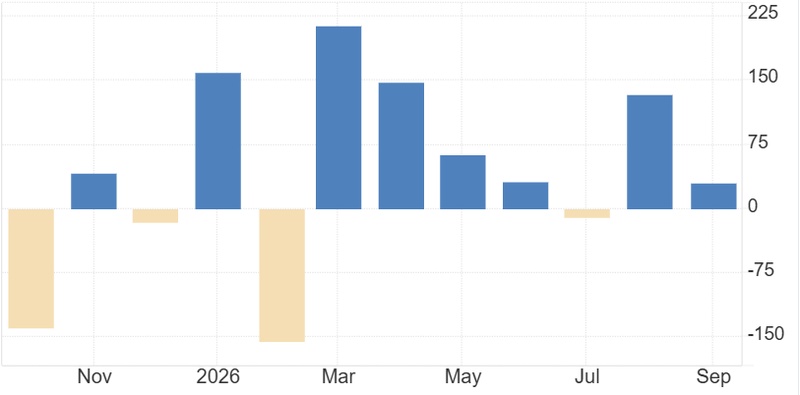
September payrolls rose by only 29,000, while August was revised down from 162,000 to 133,000. Average monthly job growth in 2026 is now around 68,000.
Officials identified AI infrastructure investment, energy prices and tariffs as risks that could keep inflation elevated.
The October meeting is likely to be more data-dependent, with December potentially becoming the more important hike window
The September hike was not simply a response to payrolls
The September rate increase is increasingly difficult to explain through the labour market alone. At the time of the meeting, officials saw employment as broadly stable and the economy as expanding at a solid pace. They also saw inflation risks tilted higher. That combination allowed the Fed to raise rates without believing that the economy was already deteriorating.
Revisions removed 60,000 jobs from July and August
Since then, however, the labour data has materially weakened. September payrolls rose by only 29,000, while revisions removed 60,000 jobs from July and August. Wage growth also slowed to 3.0% year on year.
That changes the policy calculation. If employment continues weakening while wages remain contained, another rate increase becomes harder to justify on demand grounds. The Fed can tolerate a softer labour market if inflation is clearly moving lower, but it becomes much harder to keep tightening simply because growth elsewhere remains resilient.
Source: U.S. Bureau of Labor Statistics
AI is changing what the Fed means by “strong demand”
This is where the minutes become more interesting. Policymakers repeatedly discussed the scale and speed of the AI buildout, noting that it had continued to surprise the upside and was supporting robust business investment.
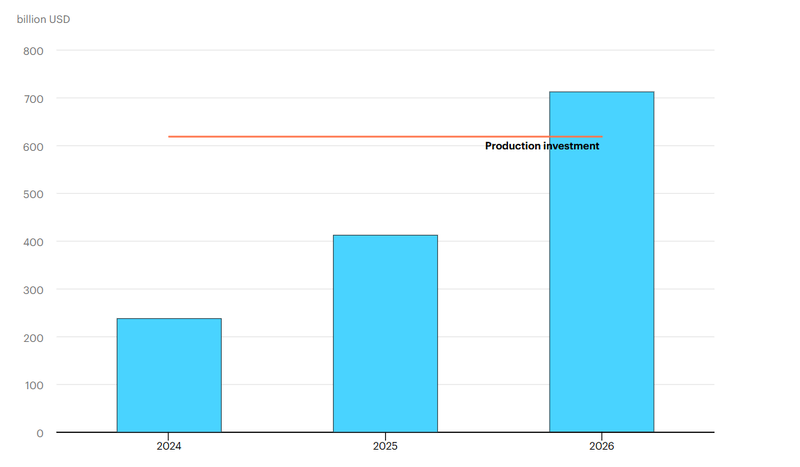
The scale is becoming difficult for policymakers to ignore, the major hyperscalers spend around $700 billion on AI infrastructure in 2026, concentrated across data centres, advanced chips, networking, power and computing capacity.
At this scale, AI investment is no longer simply a technology-sector story. It is becoming a meaningful source of aggregate demand, with some officials warning that AI-related spending could eventually push demand beyond supply.
The connection to monetary policy is important
AI investment is pulling capital into data centres, semiconductors, energy infrastructure and computing capacity, while companies are increasingly using debt to finance that expansion. The Fed minutes specifically noted that heavy private debt issuance for AI infrastructure was contributing to higher Treasury term premiums. That means the AI cycle is affecting not only GDP and productivity expectations, but also financial conditions and the cost of capital across the broader economy.
This creates a difficult feedback loop
Strong AI investment supports GDP and productivity expectations, which keeps financial conditions and corporate spending relatively resilient. But if hyperscaler spending remains close to this scale, it can also sustain demand for labour, energy, construction and capital at a time when the Fed is trying to slow the economy enough to bring inflation back to target.
The Fed therefore cannot look only at payrolls. The question is whether weakness in traditional sectors is being offset by an AI-led capital-spending cycle powerful enough to keep aggregate demand above its inflation-consistent speed. That is one reason resilient growth may not be enough for the Fed to declare victory, even as the labour market becomes increasingly difficult to ignore.
Source: IEA
Supply shocks are making the rate tool less precise
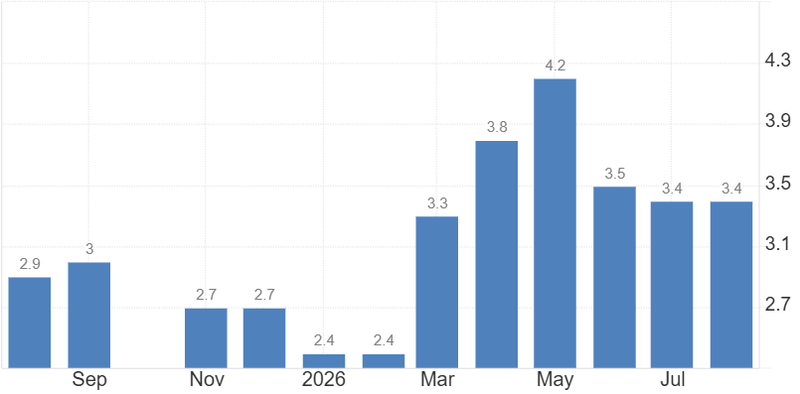
Energy prices and tariffs create an even more difficult problem. The minutes show that officials attributed elevated inflation partly to higher energy and input costs, tariffs and technology-related price pressures. PCE inflation was estimated at 3.8% in August, while core inflation remained at 3.4%.
Higher rates can reduce consumption, credit growth and investment. They cannot produce more oil, reduce shipping costs or reverse tariffs. That means the Fed's response depends on what happens next.
If higher energy prices remain concentrated in headline inflation while wage growth and inflation expectations stay contained, tightening aggressively would risk weakening demand without solving the original shock. But if companies begin passing higher costs through more broadly, workers demand compensation and services inflation accelerate, the shock becomes more persistent.
That is the line the Fed is watching, a temporary supply shock is something monetary policy can look through, while a supply shock that changes wages and expectations becomes a monetary-policy problem.
Source: U.S. Bureau of Labor Statistics
The neutral-rate debate raises the risk of overtightening
A couple of officials raised their estimates of the neutral federal funds rate, while several said the current policy rate was not restrictive or only mildly restrictive. Most participants nevertheless judged that another increase would probably be appropriate before year-end.
That view explains why the Fed can remain hawkish despite weaker employment. If policymakers believe the economy can absorb higher rates because productivity and potential growth are improving, they have more room to tighten.
But the assumption carries a risk
The minutes themselves acknowledge that the timing and magnitude of AI's productivity gains remain highly uncertain. If the Fed mistakes temporary AI-driven investment strength for a permanently higher growth trend, policy could become too restrictive before the weakness appears in the headline data.
The danger is not simply another rate hike. It is hiking on the assumption that the economy has become less sensitive to rates, only to discover later that the transmission mechanism was working with a long lag.
October may be the pause, but December remains the test
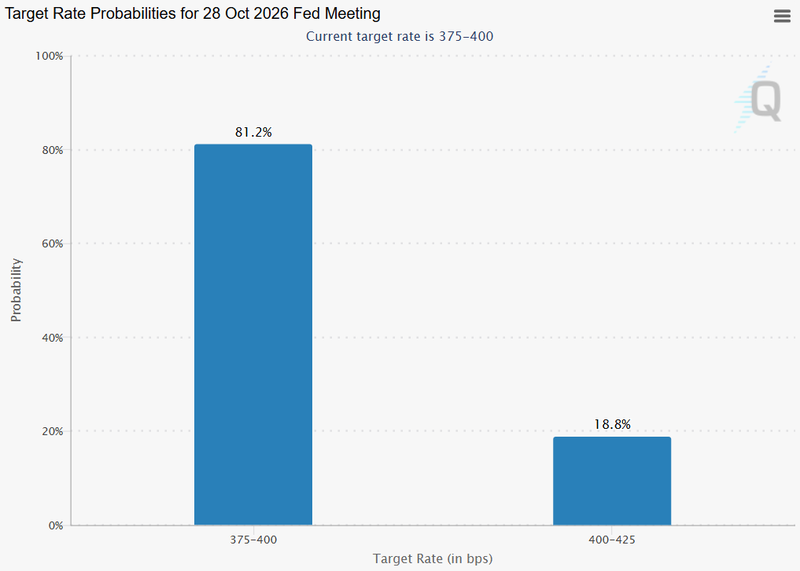
The latest labour data has already reduced the market's conviction around an October hike, investors now see a much lower probability of an October move, while expectations for another increase later in the year remain considerably stronger.
However, the deciding factor will be whether inflation begins to broaden from energy and tariff effects into wages and services, or whether the weaker labour market starts pulling consumption and demand lower.
The September minutes therefore do not point to a simple hawkish Fed. They reveal a central bank trying to determine whether today's resilience reflects genuine higher potential growth or an investment boom that will eventually fade.
That distinction will determine the next rate move. If payroll weakness becomes the dominant signal, the case for another hike will weaken. If AI investment, energy prices and tariffs continue keeping demand and inflation elevated, the Fed may conclude that waiting carries the greater risk.
Source: CME Group