Help
Help 
Japan inflation accelerates what it means for the BoJ and yen
Japan’s latest data are putting the Bank of Japan in an increasingly difficult position, inflation is accelerating faster than expected, the labour market remains tight, yet the government is preparing measures to ease the pressure on households. The question for markets is no longer whether the BOJ can continue normalizing policy. It is how quickly it can do so without tightening into an economy where consumption remains uneven.

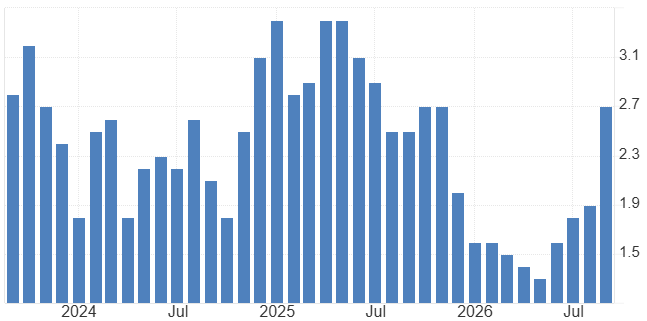
Tokyo core inflation accelerated to 2.7% year on year in September, while underlying inflation excluding fresh food and fuel reached 3.0%.
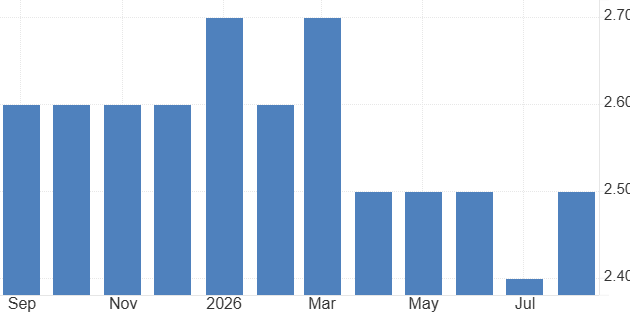
Japan’s unemployment rate rose to 2.5% in August but remained low by historical standards.
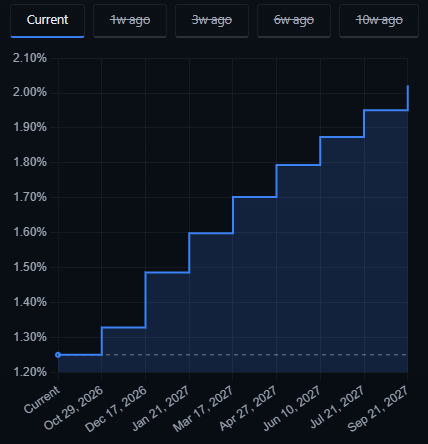
Some BoJ policymakers have argued for a faster move toward a neutral policy rate, while markets have shifted toward an October hold and a potential December hike.
Why is Tokyo inflation becoming harder for the BOJ to ignore?
The September figures matter because the acceleration was broad rather than limited to one volatile category. Tokyo core CPI rose 2.7%, up from 1.8% in August and above the 2.4% market forecast. More closely watched, the index excluding fresh food and fuel accelerated to 3.0%.
Service inflation also increased sharply to 2.3%, suggesting that higher labour costs are increasingly passing through to prices. That matters for the BOJ because imported energy inflation can fade when oil prices fall, while broader services inflation can become more persistent.
The distinction is important. Japan is no longer dealing only with a temporary energy shock. Some of the pressure is beginning to spread through domestic pricing.
Source: Statistics Bureau of Japan
Is the labour market giving the BoJ room to wait?
The unemployment rate offers little sign of a major deterioration. Japan’s jobless rate increased to 2.5% in August from 2.4% in July, while employment increased by 140,000 from a year earlier. The rise in unemployment therefore does not yet represent a sharp loosening of labour-market conditions.
Prices are accelerating while the labour market remains relatively tight
The latest Tankan survey adds another complication. Large manufacturers’ sentiment improved to its highest level since 2018, helped by strong global AI demand, although confidence among non-manufacturers weakened and consumer spending remained soft. Corporate inflation expectations also remain elevated.
So the case for tightening is not coming from inflation alone. It is increasingly tied to the risk that higher prices become embedded in wages, services and expectations.
Source: Ministry of Internal Affairs & Communications
What changes with the government’s food-tax cut?
The government has approved a plan to reduce the consumption tax on food from 8% to 1% for two years from April 2027, alongside payments intended to remove the remaining tax burden. The measure is designed to ease household costs, but its financing remains a market concern, with an estimated revenue shortfall of around ¥5 trillion.
This creates a policy tension
Fiscal support can reduce the immediate burden of higher food prices, but it does not address the underlying forces pushing inflation higher. At the same time, weaker tax revenue can add to pressure on government finances and bond yields.
For the BOJ, that means fiscal policy and monetary policy are pulling on different parts of the economy, one is trying to protect household purchasing power, while the other is trying to prevent inflation from settling above target.
October or December, what is market watching?
The BOJ raised its policy rate to 1.25% in September, the highest level in more than three decades. At the September meeting, several policymakers argued that rates should move faster toward a neutral level to contain the risk of excess inflation, although other officials urged caution because of weak consumption and uncertainty around the economy.
Markets have consequently moved toward a more measured path, with an October hold increasingly reflected in pricing and expectations of another increase later in the year. The next policy meeting is scheduled for October 29–30.
The bigger signal for the yen and Japanese bonds may therefore come from the BOJ’s reaction function rather than the October decision alone.
If inflation continues accelerating while wages and services remain firm, the market will have to reassess how far Japan’s policy rate ultimately needs to move. If consumption weakens materially, the BOJ has more reason to slow the pace.
Japan is moving into a new monetary regime, but the path is becoming less about escaping deflation and more about finding how much tightening is enough to contain inflation without creating a new growth problem.
Source: rate probability