Help
Help 
What Kevin Warsh needs to prove at Jackson Hole
Kevin Warsh’s first Jackson Hole speech as Fed chair is becoming a test of credibility, communication and how clearly he can explain the Fed’s next policy steps.
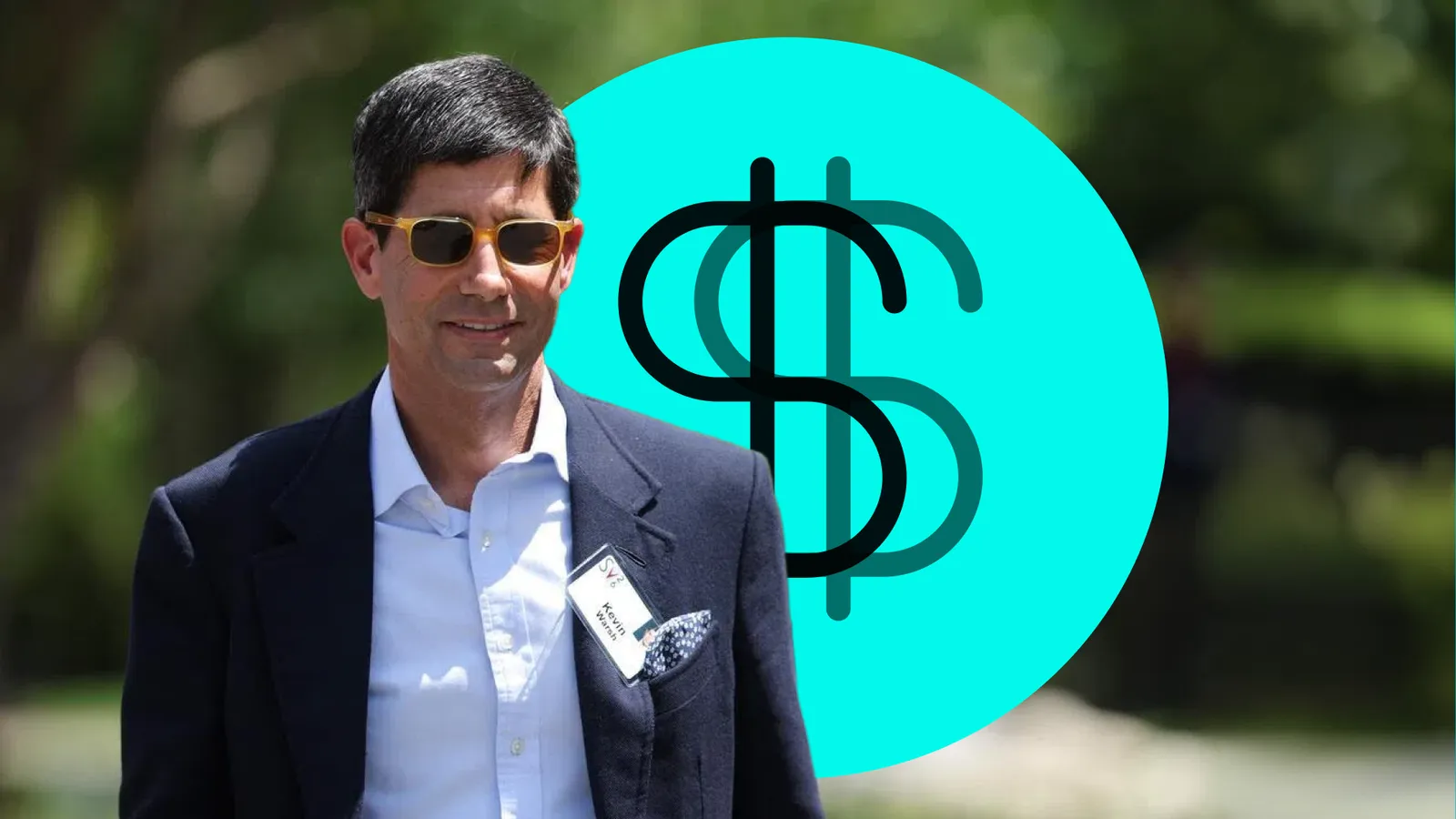
Warsh faces pressure to explain why the Fed kept rates unchanged in July despite three officials favoring a hike.
The 30-year Treasury yield climbed to its highest level since 2007 after his July press conference.
Inflation expectations remained relatively anchored, suggesting the bond selloff reflected more than concerns about Fed credibility.
Weaker retail sales, softer core inflation and a weaker labor market have reduced the immediate case for another rate hike.
Scott Bessent’s Treasury buybacks add another complication by trying to influence long-term yields while the Fed insists markets should set prices.
Jackson Hole has become more important than Warsh expected
Kevin Warsh arrives at Jackson Hole with a communication problem he probably did not expect to become one of the defining issues of his first months as Federal Reserve chair.
His first major speech in the role comes after a difficult July press conference that left investors with more questions than answers about why the Fed kept rates unchanged, how concerned policymakers remain about inflation and whether another hike is still a realistic option.
Warsh has made clear that he wants the Fed to communicate differently. He favors less explicit forward guidance and appears uncomfortable with a system in which investors expect policymakers to prepare markets for every future decision.
The principle itself is defensible. Central banks cannot know exactly where inflation, employment or growth will be several months ahead, so pretending to know the path of rates can create false confidence.
The problem is that reducing forward guidance is not the same thing as reducing explanation.
That distinction is what Warsh needs to establish at Jackson Hole.
The July press conference created the problem
The July policy decision itself was not particularly surprising.
The Federal Open Market Committee voted 9-3 to leave the federal funds rate at 3.50% to 3.75%, marking a fifth consecutive meeting without a change. Lorie Logan, Beth Hammack and Neel Kashkari dissented in favor of a 25-basis-point increase.
The controversy came afterward.
Warsh struggled to give investors a clear explanation for why the majority had chosen to hold. He also avoided presenting another rate hike as an obvious policy tool, even though the minutes later showed that several officials supported tightening and many more believed higher rates could become necessary if inflation remained persistent.
His comments about the Fed’s 2% inflation target created additional confusion after he suggested the framework could potentially be revisited in January.
Investors did not need a promise about September.
They needed to understand the Fed’s reaction function.
Instead, markets were left guessing.
The bond market delivered its verdict
Long-term Treasury yields moved sharply higher after the July meeting, with the 30-year yield eventually reaching its highest level since 2007.
That reaction was widely interpreted as a rebuke of Warsh’s communication style and potentially a sign that investors were becoming less confident in the Fed’s commitment to price stability.
But the evidence is more complicated.
Market-based inflation expectations moved only modestly and remained broadly consistent with the Fed eventually returning inflation toward its 2% objective.
That is important because if investors had genuinely concluded that the central bank was abandoning inflation discipline, breakeven inflation rates should have risen much more aggressively.
Instead, much of the rise in long-term yields appears to reflect other forces: heavy government borrowing, larger corporate issuance, increased AI-related capital spending and higher sovereign yields in Europe and Japan.
Warsh therefore does not need to accept the argument that his press conference alone caused the bond selloff.
He does need to explain why investors should feel confident that the Fed understands the forces behind it.
The Fed can say less without saying nothing
This is the central communication challenge.
Warsh wants to move away from a system where policymakers constantly guide investors toward the next decision. That could make monetary policy more data-dependent and reduce the tendency of markets to treat every speech as a promise.
But markets still need a framework.
There is a meaningful difference between saying, “We do not know what rates will be in six months,” and failing to explain why rates are where they are today.
Investors do not necessarily need a September forecast. They need to know what conditions would make the Fed tighten again, what would justify continued patience and what evidence would eventually allow policy to become less restrictive.
That is the balance Warsh needs to strike at Jackson Hole.
Less guidance can work.
Less clarity cannot.
The economic data now gives Warsh more room
The economic backdrop has changed since the July meeting in a way that should make Warsh’s task somewhat easier.
Retail sales fell in July by the most in more than a year, while core inflation was relatively subdued. Employers unexpectedly cut jobs, and payroll growth in the previous two months was revised lower.
Those figures have weakened the case for an immediate rate increase.
At the July meeting, Fed officials generally viewed the labor market as stable, with supply and demand broadly balanced. The latest data suggest that assessment may already be becoming outdated.
This gives Warsh an opportunity to make a more nuanced argument.
The Fed can remain concerned about inflation without automatically raising rates. If employment and consumer demand are weakening while market-based borrowing costs remain high, holding policy steady can itself remain restrictive.
The challenge is explaining that trade-off clearly.
Long-term yields are tightening financial conditions on their own
One of the most important themes Warsh can address is the difference between the federal funds rate and broader financial conditions.
The Fed has kept its benchmark rate at 3.50% to 3.75%, but long-term borrowing costs have continued rising.
That means monetary conditions can become tighter even without another official rate hike.
Higher Treasury yields push up borrowing costs for households, companies and the government itself. They also raise the discount rate applied to future corporate earnings and increase competition for investment capital.
Warsh acknowledged this dynamic in July when he noted that markets had already done “quite a bit” of the tightening.
That argument has become even more relevant since then.
If financial markets are already imposing significantly tighter conditions, the Fed may not need to add another 25 basis points simply to prove it remains serious about inflation.
Jackson Hole gives Warsh a chance to explain where market-driven tightening fits into the Fed’s framework.
Bessent has made the message more complicated
Treasury Secretary Scott Bessent has added another layer to the discussion.
His decision to buy back longer-dated Treasury securities is intended partly to improve liquidity and reduce pressure on long-term yields. Bessent has argued that some yields are out of line with economic equilibrium and has described the strategy as a form of “Treasury twist.”
Warsh has taken a different tone.
Rather than suggesting yields are too high, he has emphasized that markets should respond according to the information investors see.
That creates an awkward contrast.
The Treasury appears to be trying to influence the long end of the curve at the same time the Fed is saying market prices should be allowed to adjust.
The distinction between debt management and monetary policy remains important, but investors will still want to understand whether the two institutions are working from the same view of financial conditions.
Warsh does not need to challenge Bessent publicly.
He does need to make clear where the Fed’s responsibilities begin and end.
Higher yields are not only a Fed credibility story
Another important point Warsh can address is why long-term yields have risen across several developed economies.
Government bond yields in the United States, Japan, Germany and the United Kingdom have all moved higher. That suggests the pressure is broader than one Fed press conference.
Large fiscal deficits are increasing sovereign issuance. AI investment is creating a surge in corporate borrowing. Inflation risks have not disappeared, and investors increasingly demand more compensation for holding long-duration debt.
In the United States, Treasury issuance is also competing with technology companies that are borrowing heavily to fund data centers and AI infrastructure.
These forces create what is effectively a global competition for capital.
That makes it difficult to argue that the 30-year Treasury yield is purely a measure of confidence in Warsh.
A better explanation would acknowledge that Fed communication matters while separating it from the structural forces lifting global yields.
The 2% inflation target needs clarification
Warsh’s comments about the inflation target may be the easiest issue to resolve.
The Fed’s 2% objective acts as an anchor for households, businesses and financial markets. Any suggestion that policymakers could casually change it risks creating uncertainty around long-term inflation expectations.
Warsh does not need to rule out future reviews of the Fed’s framework.
Central banks regularly reassess how policy is implemented.
But he should distinguish between reviewing the framework and changing the commitment to price stability.
If investors believe the Fed remains committed to returning inflation to 2%, the long end of the Treasury curve can respond primarily to fiscal supply, growth and term-premium dynamics.
If that commitment becomes uncertain, inflation risk itself gets added to long-term yields.
That is precisely the outcome the Fed should avoid.
Transparency does not require forward guidance
This may be the most important message for Warsh to establish.
The Fed can stop telling markets where it expects rates to be three or six months from now and still remain highly transparent.
Transparency means explaining the current decision, identifying the major risks and describing how incoming information will affect policy.
Forward guidance goes further by attempting to shape expectations about future decisions.
The two concepts are not interchangeable.
Warsh appears determined to reduce the second.
His success will depend on whether he can preserve the first.
If he explains why the July hold made sense, what changed since then and what economic developments matter next, investors may be willing to accept a Fed that says less about future rate moves.
Without that framework, reduced guidance simply creates more uncertainty.
What markets need to hear at Jackson Hole
Investors are likely to focus on four issues.
First, Warsh needs to explain how the Fed views inflation after the recent softer data and whether another rate increase remains a realistic option.
Second, markets need his assessment of the labor market after July payroll weakness and downward revisions to previous months.
Third, investors will want clarity on how much tightening is already being delivered through elevated long-term Treasury yields.
Finally, Warsh needs to clarify what he meant when discussing potential changes to the Fed’s inflation framework.
None of those answers requires him to reveal how the committee will vote at its next meeting.
They require him to explain how the Fed thinks.
That is a much more reasonable standard.
Why Warsh’s Jackson Hole speech matters for Fed rates and Treasury yields
Jackson Hole is unlikely to produce a simple signal that rates are going up or down.
Its importance is broader.
Warsh needs to show investors that reducing forward guidance does not mean the Federal Reserve has stopped explaining its decisions. His July press conference created uncertainty because markets struggled to understand why policymakers held rates unchanged while a sizable group inside the committee remained concerned enough about inflation to support higher rates.
The economic data has since made that decision easier to defend. Retail sales weakened, inflation softened and the labor market lost momentum. At the same time, long-term Treasury yields remain elevated enough to tighten financial conditions without another Fed move.
Warsh now has a stronger economic argument for patience than he had in July.
What markets still need is a clearer framework.
If he can explain how inflation, employment and financial conditions fit together without promising the next rate decision, Jackson Hole could begin repairing confidence in his communication strategy.
If investors leave the speech still unsure how the Fed interprets the economy, the problem will no longer be that Warsh refuses to provide forward guidance.
It will be that markets still do not know what the Fed is looking at.