
 Help
Help 
S&P 500 at record highs: is the market still healthy?
The S&P 500 still trading near record highs, but the market underneath the index is becoming harder to read. The headline story remains strong. Large technology companies continue to drive earnings expectations, artificial intelligence remains one of the biggest investment themes, and investors are still willing to pay premium valuations for companies expected to benefit from long-term growth.

Goldman Sachs High-Beta Momentum Index fell around 24% month-to-date through the first half of July, its worst performance since April 2009.
S&P 500 remains supported by a small group of mega-cap companies, increasing concentration risk.
A healthy market does not require every sector to rise at the same time.
The index is strong, but leadership is changing
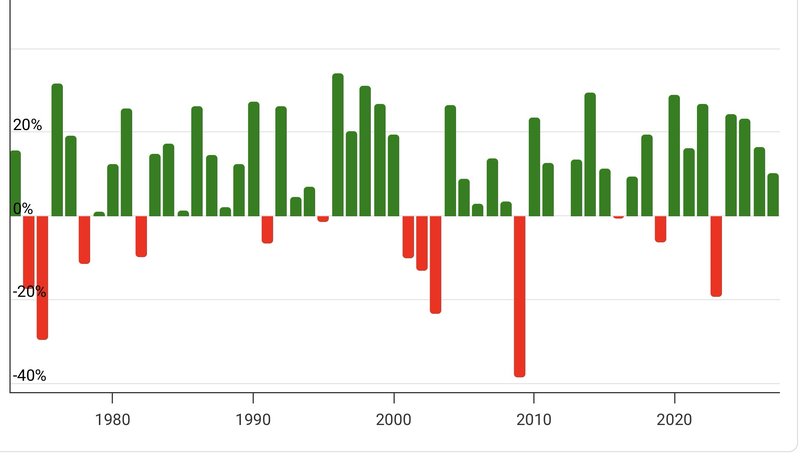
The S&P 500’s performance has been impressive. The index delivered a 10.2% total return in the first half of 2026, supported by strong earnings expectations, artificial intelligence optimism and continued demand for the largest technology companies.
However, the market beneath the index has become less comfortable
Many of the biggest winners of this cycle were built around the same story: AI spending, semiconductor demand and expectations for rapid earnings growth. Investors crowded into companies they believed would benefit most from the next phase of technology investment.
That trade worked because the fundamentals supported it. But when expectations become extremely high, the market becomes more sensitive. A company does not necessarily need bad news to fall. Sometimes the problem is simply that investors expected too much.
Source: Fullratio
Is this a healthy rotation or a warning sign?
The weakness in momentum stocks does not automatically mean the broader market is unhealthy.
Markets rarely move higher in a straight line. After a strong period of leadership, investors often take profits from the biggest winners and move money into other areas that have lagged. That type of rotation can make a bull market more sustainable by reducing excessive concentration.
The question is whether that rotation is happening
If investors are selling crowded AI and technology positions but finding opportunities elsewhere, the market can absorb the adjustment. A healthy market does not require every sector to rise at the same time.
The problem arises when there is no replacement leadership. If technology leaders continue losing momentum and other sectors fail to attract buyers, the market becomes more dependent on a smaller group of companies to keep the index elevated.
AI expectations are now the real test
The S&P 500 has benefited enormously from its largest companies, especially those linked to technology and artificial intelligence.
That strength has been a major advantage, but it also creates vulnerability. When a small number of companies account for a large share of index performance, expectations around those companies become extremely important. Investors are no longer only asking whether these businesses are growing. They are asking whether growth can justify the valuations already priced into the market.
This is especially important for AI-related companies
The market has moved beyond rewarding companies simply for announcing AI investments. Investors now want evidence that those investments are translating into revenue, productivity gains and higher margins.
For semiconductor companies and AI infrastructure leaders, strong earnings may no longer be enough. The market wants results that exceed already elevated expectations.
Will AI growth justify current valuations?
The S&P 500 being near record highs does not mean the entire market is equally healthy. The next phase will depend on whether weakness in momentum stocks remains isolated or starts spreading into broader market segments. If capital rotates into other sectors while earnings remain strong, the current pullback could simply be a reset after a crowded rally.
But if AI leaders, semiconductors and mega-cap technology stocks continue losing momentum while other areas fail to take over leadership, the market could face a deeper adjustment.


