Help
Trump’s Russia diesel deal: energy supplies, oil sanctions and Ukraine talk
Trump’s latest move towards Russia is about more than finding additional fuel supplies. By reopening the route for Russian diesel exports while pursuing negotiations over Ukraine. For now, the agreement is clearer on its immediate commercial implications than on its diplomatic outcome.

Trump announced that Russia would immediately supply more than 300,000 tons of diesel to US and global markets.
Ukrainian drone strikes have repeatedly targeted Russian oil infrastructure.
Putin proposed a November summit with Trump and Chinese President Xi Jinping to discuss a possible Ukraine settlement.
Diesel supplies give both sides an incentive
Trump announced that Russia would immediately supply more than 300,000 metric tons of diesel to US and global markets, followed by 500,000 tons in November and another 1 million tons thereafter.
The US Treasury issued a temporary license authorizing transactions involving Russian-origin diesel. The administration has presented the arrangement to ease fuel costs, while also using renewed commercial engagement to encourage Moscow towards negotiations.
Timing is important
Diesel shortages have intensified as disruptions to energy exports from Russia and the Middle East have tightened supply. Refining margins approached $95 a barrel in September, reflecting the premium placed on converting crude into finished fuel. The International Energy Agency has warned that shortages could persist well into 2027.
For Washington, additional supply could ease pressure on transport, agriculture and industrial businesses, where diesel costs feed directly into operating expenses. For Moscow, exports provide revenue at a time when refinery damage and sanctions have constrained its energy trade.
Yet the commercial benefit should not be confusing with a breakthrough in peace negotiations. The arrangement may create an incentive for Russia to cooperate, but it does not establish that Moscow has agreed to end the war or that the two sides have secured a lasting ceasefire.
Russia’s refining capacity is the real constraint
The biggest obstacle is physical, not diplomatic, Ukrainian drone strikes have repeatedly targeted Russian oil infrastructure, damaging refineries and reducing the country's ability to process crude into diesel and other products, around 40% of Russian refining capacity was offline at the end of July, contributing to a sharp decline in crude processing.
The damage also creates a difficult trade-off for the Kremlin
Russia needs export earnings, but it must maintain domestic fuel supplies while repairing infrastructure and protecting facilities from further attacks. Sanctions relief can make exports easier to arrange; it cannot guarantee that refineries will produce the volumes promised.
Initial shipments show that some trade has resumed
A tanker carrying around 40,000 metric tons of ultra-low-Sulphur diesel left Russia’s Primorsk port and that is evidence of renewed export activity, but not proof that the much larger volumes announced by Trump will be delivered on schedule or flow directly to American buyers.
Russia’s September export figures illustrate the pressure
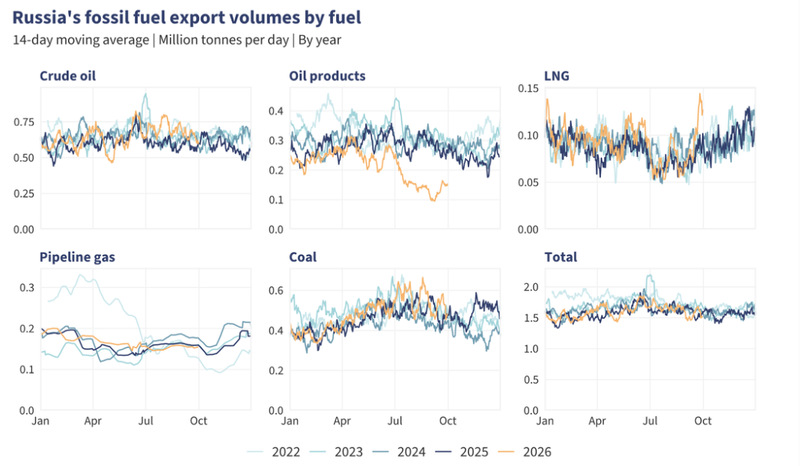
The CREA estimated that fossil-fuel export revenues averaged €625 million a day, broadly unchanged from August despite a 6% decline in volumes. Crude oil revenues fell 8% to €339 million a day, while seaborne oil-product revenues rose 6% to €83 million a day. The latter remained the second-lowest level since Russia's full-scale invasion of Ukraine.
The figures show why the diesel agreement matters to Moscow. Product exports have been particularly weak, leaving scope for revenue to recover if refining and shipping improve, but the potential gain depends on operational capacity, not merely on the removal of a legal restriction.
Source: CREA
Energy trade is becoming part of the peace negotiations
The deal also comes after reports that Vladimir Putin proposed a November summit with Trump and Xi Jinping to discuss a possible Ukraine settlement, the Kremlin has confirmed preliminary discussions, but the agenda remains uncertain and Trump has not committed to attending. The proposal reportedly envisages talks on the sidelines of the APEC summit in Shenzhen.
The diplomatic stakes are significant
Renewed engagement gives Moscow an opportunity to improve relations with Washington and demonstrate that its energy exports remain valuable to international markets. But the prospect of a deal between three major powers also raises questions about Ukraine’s role in negotiations over its own future.
Kyiv has criticized the diesel arrangement, arguing that easing restrictions could strengthen Russia without securing meaningful concessions, those concerns are harder to dismiss while attacks on energy infrastructure continue both sides.
Until a verifiable agreement changes the situation on the ground, increased commercial cooperation should not be treated as evidence that the war is moving towards a settlement.
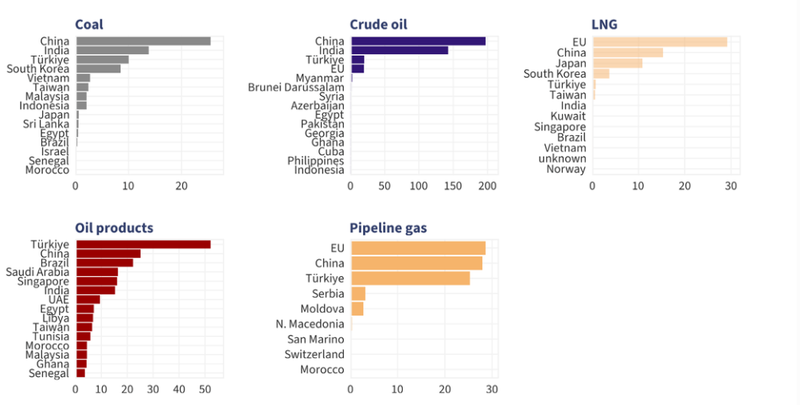
Russia’s dependence on a relatively narrow group of energy customers adds another dimension. China remains central to its crude and coal exports, Turkey is a major buyer of Russian oil products, and the European Union remains an important destination for Russian liquefied natural gas and pipeline gas. Access to additional markets can improve Moscow’s bargaining position, but it does not remove the underlying dependence on a limited set of buyers.
Source: CREA
The market needs deliveries, not announcements
The diesel deal may offer some relief to a strained market, but its effect will depend on how much fuel Russia can produce and export, additional cargoes could ease tightness at the margin, yet they are unlikely to compensate fully for the broader supply losses caused by refinery damage and disruptions across the Middle East.
For Russia, the arrangement offers a potential revenue recovery and a channel for renewed engagement with Washington, it offers a possible means of easing fuel costs while encouraging diplomatic progress, those interests overlap, but they are not identical.
The decisive test will be whether refinery output and export volumes recover without further disruption, until that happens, the agreement is a political open with a limited and uncertain supply benefit. Its broader significance will depend on whether the energy concession produces tangible progress towards peace, rather than allowing commercial ties to improve while the conflict continues.