Help
UK Budget 2026: inflation, BoE rate hikes and gilt yields
The Budget can soften the immediate energy shock, but the way that support is financed will determine whether it reduces pressure on the Bank of England or simply moves it into gilts and sterling.

UK inflation rose to 3.5%, with price pressure spreading beyond fuel.
Higher inflation is also increasing the government’s debt-interest bill.
Funded, targeted support could ease household costs without materially stimulating demand.
Markets largely expect a November rate hike, but the Budget could change how many increases follow.
Inflation has become more than an energy story
The rise in UK inflation to 3.5% was led by transport and motor-fuel costs, but the details make it difficult for the Bank of England to dismiss the increase as a temporary energy shock.
Core inflation rose to 2.8% from 2.6%, while services inflation accelerated to 3.7% from 3.4%. Goods’ inflation also reached its highest level since September 2023. Energy remains the initial source of pressure, but the BoE will be more concerned if businesses begin passing higher costs into a wider range of prices.
That distinction matters because interest rates cannot produce more oil or lower international energy prices. They can, however, reduce the chance that the first increase spreads into wages, services and inflation expectations.
The September meeting showed that this debate had already begun
The BoE held Bank Rate at 3.75% by six votes to three, with three policymakers preferring an immediate increase to 4%. September’s inflation data have since strengthened their argument.
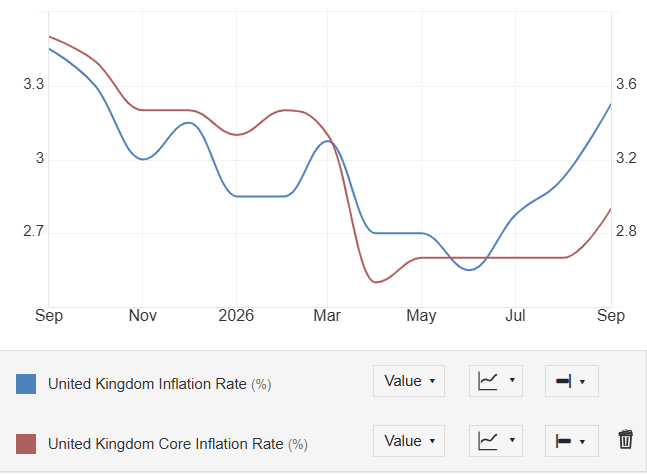
Source: Office for National Statistics
The same inflation shock is narrowing the Chancellor’s room
Inflation is also reaching the Budget through the government’s debt bill. Britain borrowed £24.52 billion in September, while borrowing in the first half of the financial year exceeded the Office for Budget Responsibility’s forecast by £6 billion. Public debt has also passed £3 trillion.
The pressure is not simply about the size of the debt
In 2026, both government spending and revenue are relatively high by UK standards, yet spending still exceeds income. The government is therefore borrowing to finance around 8% of its expenditure, leaving public finances exposed to higher financing costs.
Of the £10.9 billion in debt interest recorded in September, £4 billion came from the inflation adjustment on index-linked gilts. This creates an awkward feedback loop: higher inflation raises household costs while also increasing the cost of government borrowing and limiting the room for support.
The Chancellor enters Wednesday’s Budget facing competing demands
Households want protection from energy prices, the BoE needs evidence that inflation is moving back towards 2%, and gilt investors want reassurance that additional support will not require substantially more borrowing. The measures matter, but how they are financed may matter even more.
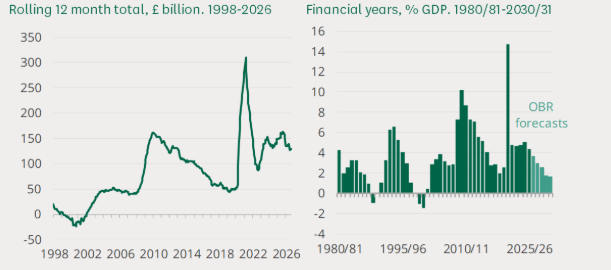
Source: OBR
The Budget could lower inflation and still concern the BoE
Targeted energy support could mechanically reduce measured inflation by lowering the price households pay. If it is temporary and financed through taxes or savings elsewhere, it may also limit the damage to real income without creating a large increase in demand.
A broad package financed through borrowing would produce a more complicated result. It could suppress headline inflation in the short term while leaving households with more disposable income and increasing government financing needs. The BoE might then look through the initial fall in CPI if it believes the package will support demand or delay the return of inflation to target.
Tax increases would move the calculation in the opposite direction by reducing private demand, but their effect would depend on who pays them. Taxes concentrated on higher-income households may produce a smaller reduction in consumption than measures that affect households with less capacity to save.
The Budget’s inflation effect therefore cannot be judged from the headline cost alone. Markets will need to examine who receives support, who finances it and whether the measures are temporary.
Gilt yields will reveal whether investors believe the plan
The UK’s 10-year yield recently moved above 5.5% before easing towards 5.37%. Bond investors have indicated that they want the government to preserve its fiscal rules, use realistic assumptions and retain enough headroom to absorb future shocks.
A credible Budget could reduce the fiscal-risk premium embedded in gilts, lowering government financing costs even if the BoE still raises rates in November.
A poorly funded package could produce the opposite outcome
Higher gilt yields would increase borrowing costs across the economy and further weaken the public finances. If sterling also falls because investors lose confidence in the fiscal outlook, imported energy and goods could become more expensive, adding another source of inflation.
This is why higher yields would not automatically support the pound. Yields rise because investors expect stronger growth or tighter BoE policy carry a different message from yields rise because investors demand compensation for fiscal risk.
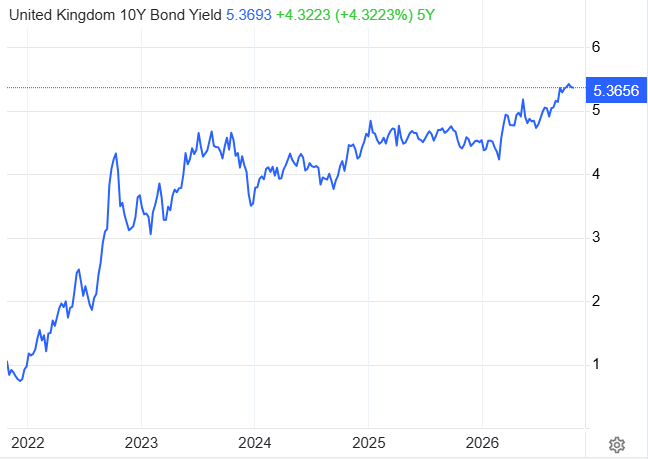
Source: Trading economic
A November hike may be the least surprising part
Markets are treating a quarter-point increase at the BoE’s November 5 meeting as close to certain. September inflation strengthened that expectation, while the earlier three-way vote for a hike showed that part of the Monetary Policy Committee was already prepared to act.
The Budget arrives eight days before that decision
It may be too late to remove the case for a November increase, but it can influence what comes afterwards.
A targeted and fully financed package would give the BoE more room to argue that one increase is sufficient while it watches whether energy inflation spreads. Additional borrowing, stronger demand or pressure on sterling would strengthen the case for a longer tightening cycle.
The central question on Wednesday is therefore larger than whether the Budget helps households through the winter. It is whether fiscal policy absorbs part of the inflation shock or leaves the Bank of England to offset it with higher interest rates.
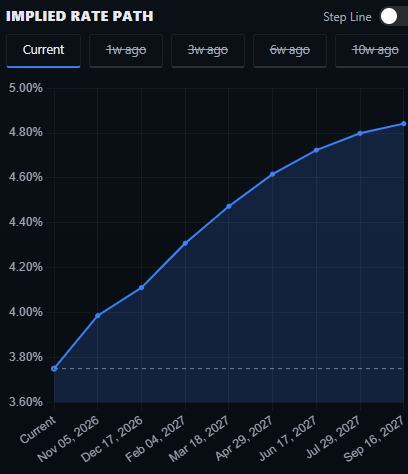
Source: Rate probability