Help
Help What could justify a Fed rate pause or another hike?
The Federal Reserve raised interest rates in September partly to protect its credibility on inflation, but the challenge is that neither inflation nor employment provides a clear signal. Higher energy costs threaten to keep inflation above target, the distinction between headline and core CPI will therefore be central to the next policy decision.
Headline CPI is expected to accelerate from 3.4% to around 3.7% annually.
September payrolls increased by just 29,000.
Persistent oil-price pressure or concerns about longer-term inflation could keep yields elevated.
Headline inflation is rising, but core CPI may offer relief
Headline CPI is expected to rise from 3.4% to around 3.7% annually in September, with monthly inflation accelerating to 0.6% from 0.4% in August. Core CPI is forecast to slow from 0.3% to 0.2% monthly, although its annual rate is expected to edge up to 2.5% from 2.4%.
The gap between the two measures could be important for the Fed. Higher oil prices are pushing up the headline figure, but slower core inflation would suggest that price pressures elsewhere in the economy are not accelerating at the same pace. That would give policymakers less reason to respond immediately to the rise in headline CPI, particularly with hiring and wage growth already losing momentum.
The risk is that higher energy costs begin to feed into transport, production and service prices. If businesses pass those costs on to consumers, the initial increase in oil prices could prove more persistent than the headline figures alone suggest. For now, the Fed needs to establish whether that pressure is spreading or remains concentrated in energy.
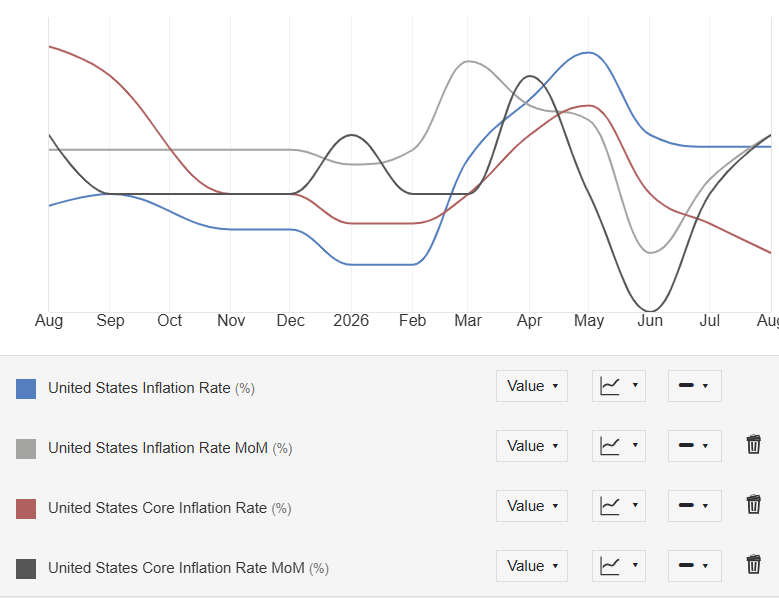
Source: Trading Economics
Weak hiring raises the cost of further tightening
The labour market makes that decision more difficult. September payrolls increased by just 29,000, while downward revisions reduced July and August employment by a combined 60,000. Unemployment remained at 4.2%, and monthly wage growth slowed to 0.1%, bringing annual growth to 3.0%.
These figures weaken the case for another immediate rate increase. Employers are hiring cautiously, and moderating wages provide little evidence of renewed pressure from labour costs.
The wage figures also affect how the Fed should interpret the inflation report. If core CPI slows alongside wage growth, policymakers would have less evidence that domestic costs are reinforcing higher energy prices. Another hike could restrain inflation further, but it could also weaken spending and hiring before the effects of previous tightening become fully visible.
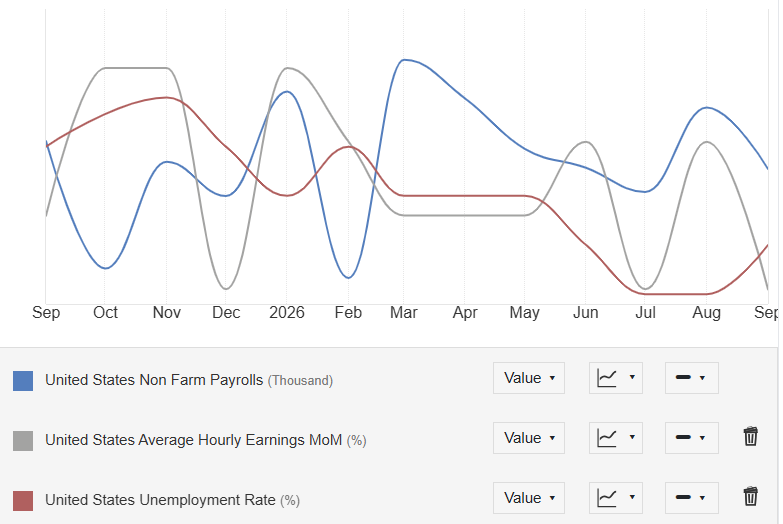
Source: Trading economics
What would justify a pause or another hike?
The October meeting will hinge on whether the incoming data changes the Fed’s assessment of underlying inflation. A softer core CPI reading alongside weak employment would strengthen the case for holding rates and reassessing the outlook in December. The Fed could maintain restrictive policy without immediately adding to it.
Such a pause would not necessarily signal a shift towards no rate hike again. Policymakers would still need evidence that inflation is moving sustainably towards the 2% target. Holding rates would give them time to assess whether the energy shock is spreading and whether September’s increase is sufficiently restraining demand.
A stronger core reading would make waiting more difficult
If underlying prices accelerate despite weaker hiring and moderating wages, the Fed will have greater reason to believe inflation remains persistent beyond the energy shock. Another increase could then be justified even as the labour market loses momentum.
The most challenging outcome would be accelerating core inflation alongside further deterioration in employment. That would leave policymakers confronting persistent price pressure while the economy becomes less able to absorb higher borrowing costs. The decision would depend on whether the risk of entrenched inflation outweighs the potential damage from additional tightening.
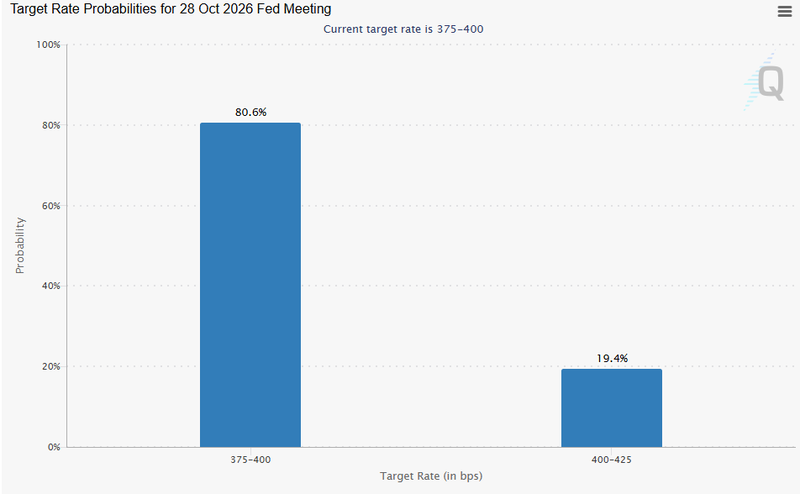
Source: CME Group
Treasury yields and the dollar may react differently
If core inflation moderates, shorter-term Treasury yields could fall as investors reduce expectations for another near-term rate increase. Longer-term yields, however, may not follow the same direction. Persistent oil-price pressure or concerns about longer-term inflation could keep yields elevated, while changes in the term premium could offset the effect of a less aggressively expected Fed path.
The dollar’s reaction is equally conditional
Softer core inflation could weaken support for the currency if US rate expectations decline relative to those abroad. But developments in other major economies, global risk sentiment and demand for safe-haven assets could alter that response.
If core inflation accelerates, shorter-term yields could rise as the probability of further tightening increases. Longer-term yields might also climb if investors demand more compensation for inflation uncertainty, although concerns about weakening growth could complicate the move. The dollar would gain support if US rate expectations strengthened relative to those of other central banks.
Inflation persistence will determine the next move
The September rate increase showed that the Fed remains concerned about protecting its inflation credibility. Wednesday’s report will test whether that concern requires immediate action or whether policymakers can wait for clearer evidence.
The decisive question is whether higher energy prices remain concentrated in headline inflation or begin to reinforce underlying price pressures. The Fed’s next move will depend less on how high headline CPI rises than on whether inflation is becoming persistent enough to justify further tightening despite a weakening labour market.