Help
Help US Treasury yields near 5%: why bond market is ignoring buybacks
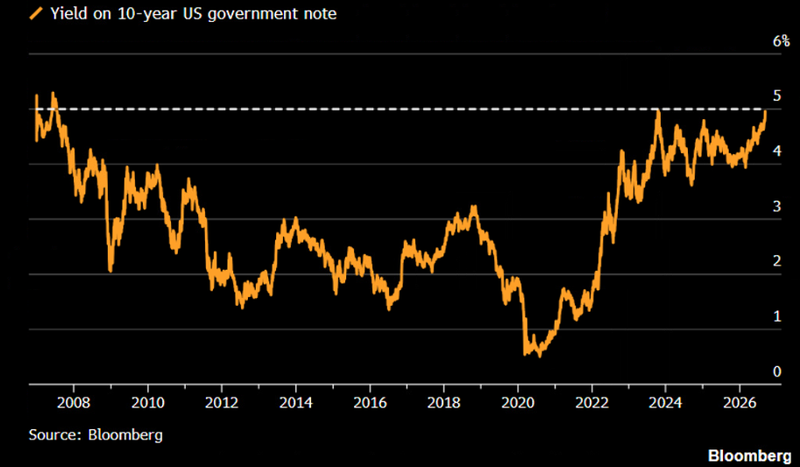
Treasury repurchased $5.2 billion securities in its latest operation, below the $6 billion maximum and only about half of the roughly $10.5 billion offered. Instead of calming the market, Treasury yields continued to rise, with the 10-year yield moving close to 5% and the 30-year yield reaching its highest level in years.

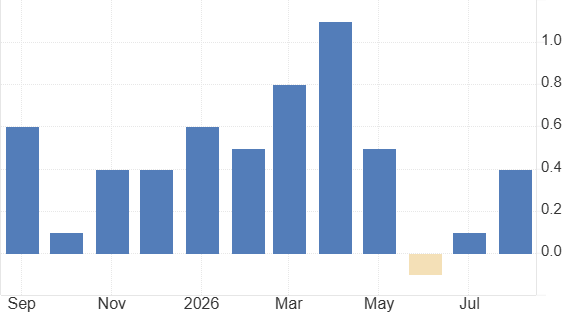
US producer prices rose 0.4% in August.
10-year yield approaching 5% and the 30-year yield climbing to around 5.36%.
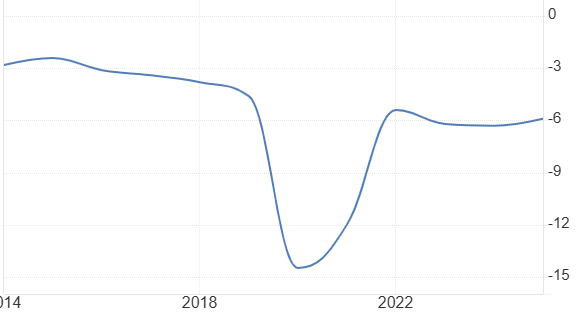
US is running a deficit of roughly 6% of GDP while gross debt has surpassed $40 trillion.
The US Treasury repurchased $5.2 billion worth of bonds.
Treasury buybacks cannot solve a supply problem
Treasury buybacks are intended to improve market liquidity and reduce distortions in less liquid securities. But they do not remove the underlying need to finance the federal deficit. The Treasury still must issue large quantities of new debt.
When supply rises faster than investor demand, bond prices fall and yields rise. That is why a weak buyback is more important as a signal than as a technical failure. The market may simply be showing that liquidity support cannot reverse a broader repricing of US government debt.
Inflation is making the long end more difficult
The latest rise in producer prices adds another problem for bond investors. August PPI increased 0.4% month on month, while final-demand prices rose 5.4% from a year earlier. Energy prices were a major contributor, creating fresh concerns that higher oil prices could keep inflation elevated.
Source: U.S. Bureau of Labor Statistics
But long-term yields depend on much more than the Fed
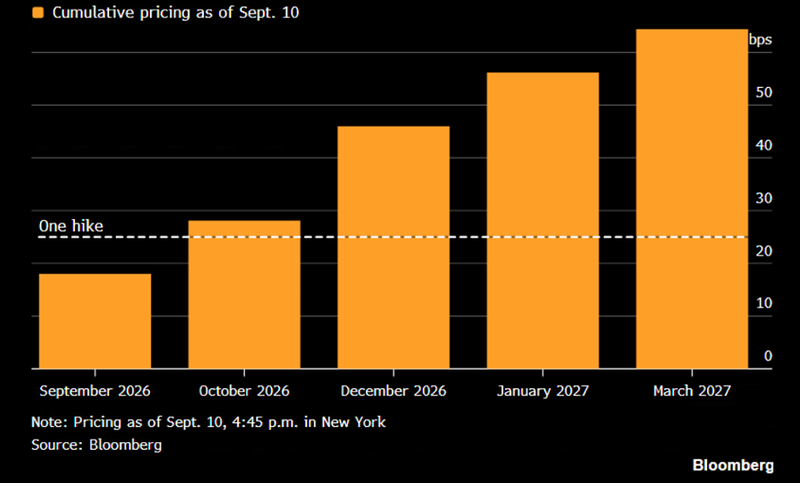
They reflect inflation expectations, future growth, government borrowing and the term premium investors demand for holding duration. That is where the pressure is becoming more serious. Markets are also pricing roughly a 70% probability of a 25-basis-point Federal Reserve rate increase next week. Higher short-term rates directly affect the front end of the Treasury curve.
Source: Bloomberg
AI is competing with Treasury for capital
The US government is not borrowing in isolation. Artificial intelligence is triggering a huge investment cycle in data centres, semiconductors, electricity generation and related infrastructure. Much of that expansion requires debt financing.
That means the Treasury is competing with the private sector for a finite pool of global savings. Investors choosing between government bonds and corporate debt will demand sufficient returns for the risk and duration involved.
As corporate borrowing grows, Treasury yields may need to remain higher simply to attract capital. This creates a powerful structural force that cannot be reversed through small buyback operations.
The term premium is becoming the key variable
The term premium is the additional compensation investors require for holding long-term bonds rather than rolling over short-term debt. It tends to rise when uncertainty over inflation, growth, monetary policy or fiscal policy increases.
That uncertainty is now unusually high
Investors are dealing with large US deficits, heavy Treasury issuance, geopolitical risks, uncertain inflation and a Federal Reserve that may be less able to suppress long-term yields than in previous cycles.
The result is that investors may demand a higher yield even if they expect the Fed eventually to cut rates. This explains why long-term yields can rise while expectations for future short-term rates fall.
Rising yields create a fiscal feedback loop
Higher Treasury yields are creating a feedback loop that Washington cannot ignore. More borrowing pushes debt higher. Higher yields raise the cost of servicing that debt. Larger interest payments widen the deficit. A wider deficit requires even more borrowing, which increases Treasury supply and puts fresh pressure on the market.
The scale already matters
The U.S. is running a federal deficit of roughly 6% of GDP, an unusually large gap outside a recession, meaning the government must keep issuing debt even before refinancing older obligations. That refinancing is becoming much more expensive as bonds issued during the low-rate era mature and are replaced with debt carrying much higher yields.
The United States is not facing an imminent sovereign default. It still borrows in its own currency and benefits from the dollar's role as the world's reserve currency. But the financing equation is changing.
With deficits remaining elevated and interest costs consuming a growing share of federal spending, the Treasury is becoming increasingly sensitive to investor demand every time it comes to market.
Source: US treasury
Why 5% matters for investors
A 10-year Treasury yield above 5% would not automatically mean a crisis. But it would change the pricing of almost every major asset.
Mortgage rates would remain elevated. Corporate borrowing costs would rise. Equity valuations would face a higher discount rate, particularly for long-duration technology stocks.
AI companies would also face a higher cost of capital at a time when the sector is already committing enormous amounts of money to infrastructure.
Higher yields could support the dollar through wider rate differentials, although a rise driven by fiscal concerns would carry a very different signal from one driven by stronger economic growth.
Source: Bloomberg
What investors will watch next
The next Treasury auctions may matter more than the size of individual buybacks. If demand remains strong despite yields near 5%, the market may simply be adjusting to a higher long-term equilibrium. If auctions begin showing weaker demand or greater dealer absorption, concern over Treasury supply will become harder to dismiss.
The Federal Reserve is becoming just as important. A rate increase next week would reinforce the near-term inflation story, but even future rate cuts may not automatically pull long-term yields lower if the term premium and fiscal concerns keep rising. That is why investors should watch the 10-year and 30-year Treasury yields together rather than the policy rate alone.
The 30-year yield has become the clearest gauge
Investors are demanding a bigger premium to finance long-dated U.S. debt. If the 10-year yield holds above 5% for an extended period while auctions become more difficult, markets will start asking whether policymakers need to do more than adjust short-term rates.
One scenario worth watching is whether the Fed begins signaling greater willingness to support the long end of the curve through balance-sheet policy or targeted bond purchases. That is different from Treasury buybacks, which improve market liquidity rather than cap yields. If discussion starts shifting toward measures resembling yield curve control, it will signal that long-term borrowing costs have become a policy issue rather than simply a market outcome.