Help
Help 
Why the Treasury and the Fed are pulling in different directions
The Treasury wants lower long-term borrowing costs. The Federal Reserve is becoming more comfortable with higher yields doing part of the tightening for it. As America's financing needs keep climbing, those two objectives are becoming harder to separate.
The Treasury will double long-term bond buybacks from September 9.
The government expects to borrow more than $10 billion every business day through the second half of the year.
China and Japan have steadily reduced their share of the Treasury market over the past decade.
Warsh and Bessent increasingly view higher bond yields through different lenses.
The buyer base has already changed
One of the biggest shifts happened long before investors started talking about Treasury buybacks.
China has reduced its Treasury holdings by roughly $400 billion since 2011, while Japan's share of the Treasury market has fallen from around 10% to roughly 4%. Neither country has disappeared, but the old assumption that foreign central banks would keep absorbing America's growing debt burden has become much harder to defend.
That matters because the government's financing needs are moving the other way
Washington now expects to raise more than $10 billion in net borrowing every business day through December. At that pace, the Treasury is asking investors to absorb an enormous amount of new supply almost continuously rather than during occasional funding bursts.
The market is no longer asking whether there will be enough debt. It is asking who keeps buying it.
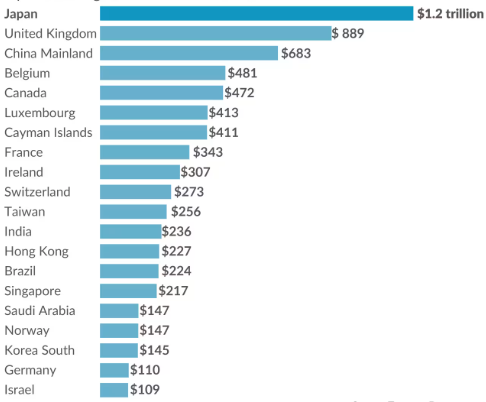
Source: Treasury Department
Bessent is trying to make borrowing smoother
Starting September 9, the Treasury plans to at least double its purchases of long-dated bonds, increasing operations in the 10-to-30-year part of the curve from $2 billion to at least $4 billion each time. The goal is often misunderstood.
The Treasury is not trying to erase the debt problem. It is trying to improve how the market functions while debt keeps growing.
By buying back older, less actively traded bonds, officials hope to improve liquidity, reduce market frictions and make it easier for investors to absorb the steady wave of new issuance coming later. In other words, they are trying to make the market cleaner not necessarily cheaper.
The first reaction made that clear
Yields eased briefly after the announcement before climbing again, suggesting investors welcomed better market plumbing but still demanded compensation for lending to Washington over the long term.
Warsh sees the same market differently
The more interesting divide is happening inside Washington itself. Scott Bessent looks at higher Treasury yields and sees a financing problem. Every move higher increases the government's borrowing costs and makes refinancing a $40 trillion-plus debt burden more expensive.
Kevin Warsh looks at the same yields and sees part of the Federal Reserve's work already being done.
Higher long-term yields tighten financial conditions by making mortgages, corporate borrowing and more expensive consumer credit without requiring another policy-rate increase. From that perspective, the bond market becomes another channel through which inflation slows.
That creates an unusual split
One side is trying to make borrowing easier. The other is willing to let higher market rates keep doing part of the tightening. Neither side is necessarily contradicting the other. They are optimizing different problems.
Buybacks cannot solve the bigger question
That is why investors are looking beyond September's buyback program. Long-term yields continue responding to much larger forces: persistent inflation risks, heavier Treasury issuance, reduced foreign participation and growing questions about America's fiscal trajectory.
Buybacks can make the market trade more smoothly
They cannot manufacture demand. That distinction matters because the government's borrowing calendar is becoming relentless rather than episodic. Every successful auction now reinforces confidence that buyers are still willing to finance Washington. Every weak auction raises fresh questions about how much compensation investors will demand next.
The bigger story is no longer whether one Treasury operation succeeds. It is whether Washington can keep finding enough buyers as traditional foreign demand becomes less automatic and higher yields become both the solution and the problem at the same time.
The market is still pushing yields higher
That tension becomes even more important because investors have not backed away from tighter policy. Markets still price roughly a 66% probability that the Fed delivers another rate hike in September, and that keeps upward pressure on Treasury yields even before the meeting arrives.
If incoming inflation and labor data continue supporting that view, investors will likely keep demanding higher returns to hold long-dated government debt. That leaves Washington facing an uncomfortable reality: the Treasury is trying to make borrowing smoother through buybacks, while the market keeps making that borrowing more expensive by pricing a longer period of restrictive policy.
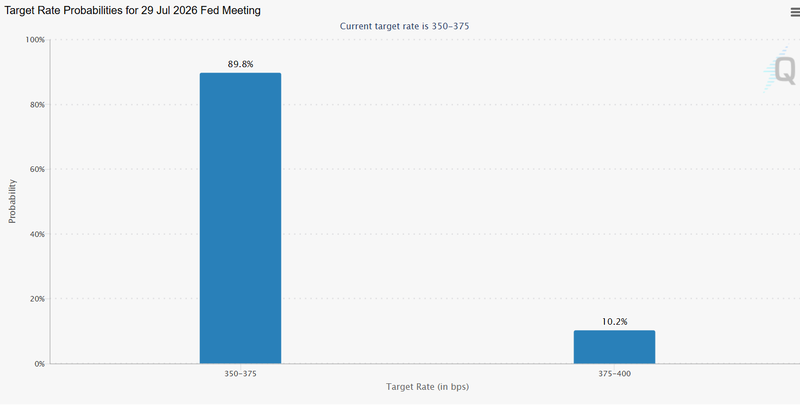
Source: CME Group