Help
Help 
Yesterday's data raised the stakes for Jackson hole
Kevin Warsh's Jackson Hole speech has become more important than another inflation report. Investors already know the economy is slowing. They also know inflation has not cooled enough to declare victory. What they still do not know is how the Fed plans to balance those two realities after abandoning the habit of guiding markets toward every next move.
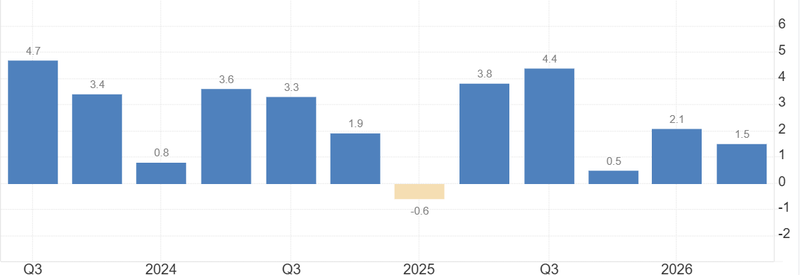
U.S. GDP slowed to 1.5% in the second quarter from 2.1% previously.
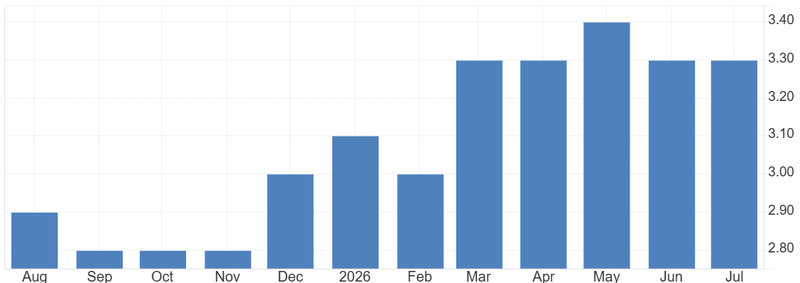
Core PCE inflation remains stuck at 3.3%, well above the Fed's target.
July consumer spending rose only 0.2%, the weakest monthly gain in seven months.
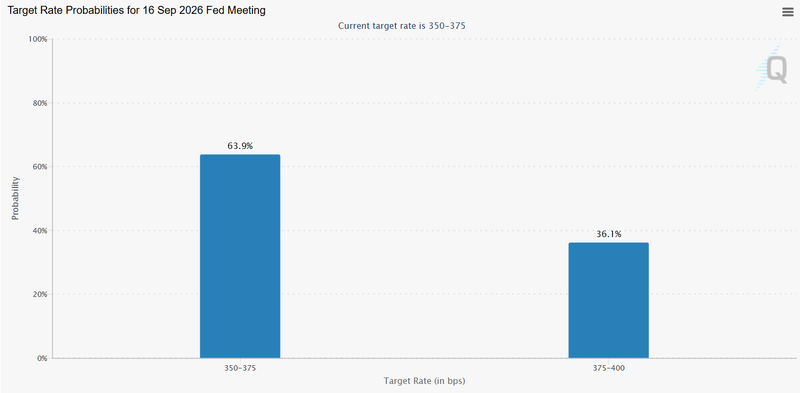
Markets now see roughly a 36% chance of a September rate hike.
The economy is slowing, but not breaking
On paper, the second quarter still produced 1.5% annualized GDP growth. That is not recession territory, but it is a clear step down from the previous quarter. Government spending contributed less, the trade deficit widened, and some of the earlier momentum began fading.
What makes the picture more interesting is what happened inside the numbers
Consumer spending remained surprisingly resilient during the second quarter, expanding by roughly 3.2-3.4%. A few months ago, that would have looked like evidence that households were still willing to keep driving the economy forward.
Source: U.S. Bureau of Economic Analysis
July tells a slightly different story
Personal consumption rose just 0.2%, the slowest monthly increase in seven months. That does not mean consumers have stopped spending. It suggests they are becoming more selective after absorbing higher borrowing costs for much longer than many expected.
That shift matters because household spending remains the largest engine of the U.S. economy. When it starts losing momentum, markets pay attention.
Inflation is refusing to cooperate
The second half of the Fed's problem has not disappeared. Core PCE is still running at 3.3%. That is far below the inflation shock of previous years, but it remains comfortably above the Fed's 2% objective.
That gap explains why officials are still divided
If inflation were falling rapidly, the recent slowdown in growth would make patience much easier. Instead, policymakers are dealing with an economy that is cooling without delivering the clean inflation victory they had hoped for.
Oil adds another complication
Crude has climbed back toward the mid-$80s after geopolitical risks in the Middle East returned to the market. Energy does not automatically determine monetary policy, but sustained pressure there can slow progress on inflation and make officials more cautious about declaring the job finished.
Source: U.S. Bureau of Economic Analysis
Markets have become less convinced about another hike
The probability of another rate increase has slipped from around 40% to roughly 36% as investors weigh softer growth against stubborn inflation.
That change says something important. Traders are becoming more willing to believe that financial conditions may already be doing part of the Fed's work.
Long-term Treasury yields remain elevated, borrowing costs are still restrictive, and tighter credit conditions continue weighing on parts of the economy. Those forces slow activity even without another increase in the policy rate. In other words, the bond market has become part of the tightening story.
Source: CME Group
Why Jackson Hole matters more than the next rate decision
This is where Kevin Warsh's speech becomes different from a normal conference appearance. Warsh has been pushing for a Fed that depends less on forward guidance and more on explaining how officials interpret incoming data. In theory, that gives policymakers more flexibility because markets stop expecting a promise about the next meeting.
The problem is that July exposed the downside
The Fed held rates steady while several officials still favored another increase. Markets left the meeting understanding the decision but not the framework behind it. That is the gap Warsh now needs to close.
Investors do not necessarily need him to hint at September
They need him to explain how inflation, employment, financial conditions and growth fit together inside the Fed's decision-making process. If he can do that without committing to a specific path, Jackson Hole could strengthen confidence in a communication strategy that looked uncertain only a few weeks ago.
The speech could reshape more than rate expectations
The stakes extend well beyond the bond market. Treasury yields, the dollar, equities, gold and cryptocurrencies are all reacting to the same question: how restrictive does the Fed believe policy already is?
If Warsh convinces investors that elevated yields are already tightening financial conditions enough to justify patience, markets may become more comfortable with the idea that another immediate hike is unnecessary.
If his message remains ambiguous, uncertainty could become the bigger risk. The issue would no longer be whether the Fed is about to raise rates.
It would be that investors still do not know what evidence policymakers need before making their next move. That is why this Jackson Hole speech has become more than another appearance on the calendar.
The economy has already shown markets that growth is slowing. Inflation has already shown the Fed that the job is unfinished. Warsh now has the harder task showing investors that less guidance does not mean less clarity.