
 Help
Help Daily discussion thread for August 19, 2026
US national debt reached $40 trillion amidst rising long-term bond yields. Meanwhile, UK inflation rose to 2.9%, and positive cancer vaccine trials boosted shares in Moderna and Merck.

US national debt topped $40 trillion, raising concerns over government spending and escalating interest costs.
US 30-year bond yields reached 5.31%, exerting pressure on future Federal Reserve monetary policy.
UK headline inflation accelerated to 2.9% in July, strengthening the British pound against the US dollar.
Successful Phase 3 trials for a cancer vaccine caused shares in Moderna and Merck to surge.
US debt crosses the $40 trillion threshold as 30-year government bond yields reach a multi-year high
According to reports from Reuters and CNBC, US government debt has surpassed the $40 trillion mark for the first time. This milestone is significant, as essential public spending—including social safety net programmes—could face constraints if interest servicing costs continue to climb.
Additionally, the US budget deficit has widened in recent months amidst tariff refunds, while total national debt has roughly doubled in under a decade. This highlights growing fiscal risks for citizens, given that prospective remedies—such as reduced public expenditure or tax increases—remain deeply unpopular during a period of elevated inflation and cooling employment growth.
Concurrently, the yield on US 30-year government bonds reached its highest level since May 2007 early this week, touching 5.31%. By the market close, the benchmark yield had eased to 5.19% amidst a declining perceived likelihood of further interest rate hikes by the Federal Reserve, given the heightened debt risks. Data from CME's FedWatch Tool indicated that market-implied probabilities of a rate hike this year are now concentrated at the December meeting, standing at a 47% likelihood.
A climate of high national debt alongside elevated benchmark rates inevitably dampens investor confidence, as public expenditure becomes increasingly fiscal risk amidst soaring servicing costs. Consequently, this creates a policy dilemma for the Federal Reserve: while it continues to combat persistent inflation, maintaining higher interest rates risks exacerbating the sovereign debt burden.
By the close of trading, US stock benchmarks ended mixed, whilst the US Dollar Index dropped sharply by 0.88% to 98.78 points, reflecting broader market caution.
UK inflation rate accelerates in line with market expectations
According to data from the UK Office for National Statistics (ONS), headline inflation accelerated from 2.6% in June to 2.9% in July, matching analysts’ expectations. An analysis by Trading Economics indicates that this acceleration was primarily driven by housing and household services, which rose by 4.1% compared with a 2.7% increase in June. Furthermore, gas prices jumped by 14.7%, whilst electricity prices climbed by 3.6%. Meanwhile, core inflation—which excludes volatile energy and unprocessed food prices—remained stable at 2.6%.
Following the release, Sterling appreciated by 0.53% against the US dollar, bolstered by reduced expectations of Federal Reserve rate increases amidst the complex US debt outlook. The GBP/USD pair advanced to $1.3607.
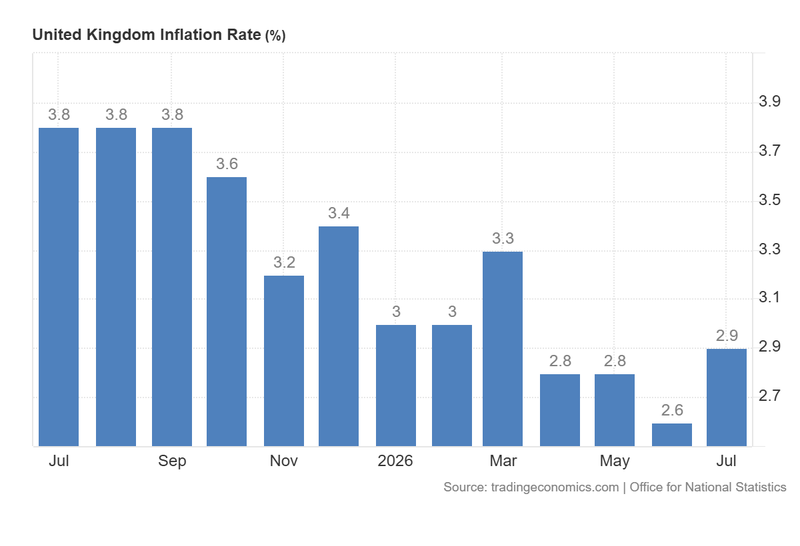
Figure 1. UK Inflation Rate (2025–2026). Source: Office for National Statistics; chart retrieved from Trading Economics.
Moderna and Merck shares rise significantly following positive late-stage cancer vaccine trial results
A report by CNBC highlighted positive preliminary results from a late-stage trial for a cancer vaccine co-developed by Merck and Moderna, bringing the treatment closer to potential regulatory approval. The Phase 3 trial demonstrated encouraging efficacy in high-risk cancer patients, increasing the likelihood of eventual authorization. Crucially, the vaccine utilizes mRNA technology alongside immunotherapy, paving the way for broader therapeutic applications across various cancer types in the future.
Prompted by these trial outcomes, both companies recorded substantial market gains: Merck shares rose by 12.60% to $152.20, whilst Moderna shares surged by 177% to $174.38. These movements underline strong investor confidence in the clinical and commercial potential of the treatment.
