
 Help
Help Renewed geopolitical tensions put US–Iran ceasefire at risk; Oil moves higher
Renewed friction between the United States and Iran has driven Brent and WTI crude prices sharply higher. Despite an unexpected build in US commercial inventories reported by the EIA, global energy markets remain heavily focused on supply vulnerabilities within the Strait of Hormuz.

US President Donald Trump has declared the interim US–Iran ceasefire "over" following overnight bilateral skirmishes, severely undermining the fragile peace agreement.
Brent crude futures surged 5.20% to $78.02 per barrel, while WTI advanced 4.43% to settle at $73.58 per barrel due to renewed threats to Middle Eastern supply channels.
Fixed-income markets are currently pricing in a 51.9% probability of a Federal Reserve interest rate hike in September, pushing 10-year Treasury yields up to a multi-month high of 4.58%.
US crude stockpiles unexpectedly increased by approximately 3 million barrels; however, systemic geopolitical anxieties have completely overshadowed the inventory data.
Geopolitical tensions re-escalate, threatening the US–Iran ceasefire
Renewed geopolitical hostility between the United States and Iran threatens to collapse the ongoing ceasefire agreement, exerting significant upward pressure on global crude benchmarks. According to reports from Reuters, US President Donald Trump stated that the interim agreement aimed at halting hostilities "is over" following overnight cross-border attacks from both sides.
Consequently, the primary oil benchmarks rallied in tandem: the Brent crude futures contract (BRNU6) advanced by 5.20% to $78.02 per barrel, while the West Texas Intermediate (WTI) futures contract (CLQ6) appreciated by 4.43% to close at $73.58 per barrel. The sudden destabilisation of the Strait of Hormuz implies a severe risk of structural deterioration if diplomatic channels fail to secure a deal guaranteeing unhindered transit through the critical maritime corridor.
President Trump’s remarks underscore the extreme fragility of the ceasefire. Crucially, neither Washington nor Tehran stands to benefit from a return to open conflict; the United States is already battling persistent domestic inflationary pressures, whilst the Iranian economy remains severely compromised by protracted economic damage stemming from the conflict.
Simultaneously, expectations that the Federal Reserve will adopt a more hawkish monetary policy trajectory have intensified. According to the CME FedWatch Tool, the market-implied probability of a 25-basis-point interest rate hike at the upcoming September meeting has solidified as the baseline scenario at 51.9%. Furthermore, the probability of a subsequent rate increase at the December meeting has steadily risen to 35.1%.
In turn, the 10-year US Treasury yield climbed by 3 basis points to reach 4.58%, marking its highest level since 22 May. This macro environment indicates that market participants are aggressively pricing in a more restrictive Federal Reserve stance while concurrently evaluating the long-term structural risks to the global energy supply chain should the US–Iran conflict escalate or persist.
EIA crude inventories accumulate above analyst expectations
According to data released by the US Energy Information Administration (EIA), US commercial crude oil inventories rose unexpectedly by 2.998 million barrels, contrasting sharply with Wall Street consensus forecasts which anticipated a draw of 2.4 million barrels. This statistical release is highly significant as it represents the first net inventory build recorded since the second week of April—a shift that may reflect softening domestic refining demand, accelerating domestic supply, or a contraction in crude export volumes.
Under normal market conditions, an expansion in supply coupled with weakening demand dynamics would depress crude prices. At present, however, market participants are prioritising systemic geopolitical risks, recognizing that global energy networks remain acutely vulnerable should a re-escalation of hostilities result in the closure of the Strait of Hormuz.
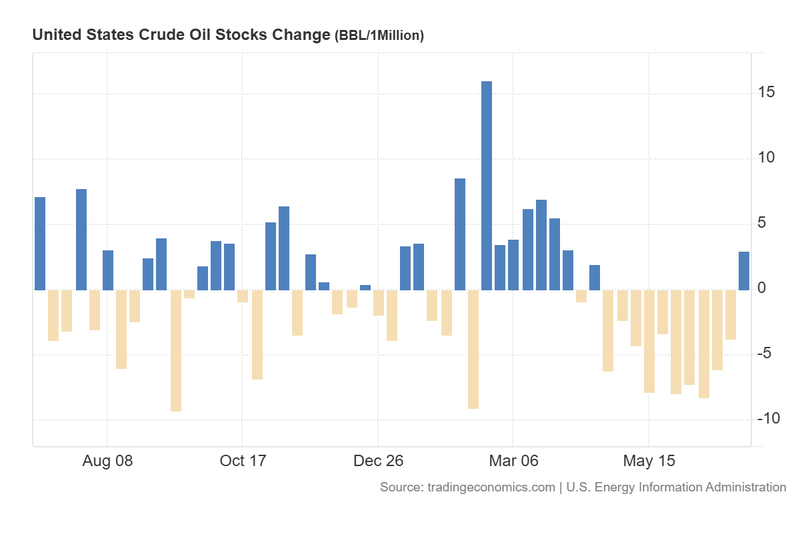
Figure 1. US Crude Oil Stocks Change (2025–2026). Source: Data from the US Energy Information Administration; Figure obtained from Trading Economics.
