
 Help
Help AI stocks outlook: inflation, rising debt and the cost of AI expansion
The latest inflation data has changed the question facing the AI industry. The issue is no longer simply how much computing capacity companies will need, but whether investors are willing to keep financing that expansion at a higher cost of capital.

US producer prices rose 1.3% in September, lifting annual inflation to 6.3%.
Core Weave carries around $50 billion in debt.
Jensen said that Core Weave will need a financial backstop from Nvidia.
Warsh has warned that AI may affect demand before its productivity benefits fully expand supply.
Inflation is changing the economics of AI
US producer prices rose 1.3% in September, lifting annual inflation to 6.3%, the sharpest increase since December 2022. The monthly jump was driven heavily by energy, with final-demand goods prices rising 2.6% and energy prices increasing 10.8%. Yet the pressure was not confined to goods. Final-demand services rose 0.8%, while prices excluding food, energy and trade services increased 0.5%.
Coming after the hotter CPI report, the figures reinforce concerns that price pressures may prove harder to contain. The distinction matters, however. Energy-driven inflation can be volatile, while persistent increases across services and underlying measures would present a more difficult challenge for monetary policy.
For the fed, the implications extend beyond its next rate decision
If inflation remains elevated, borrowing costs could stay restrictive for longer, increasing the return required to justify capital-intensive projects. That creates a particular challenge for AI infrastructure, where data centres, advanced chips and power capacity demand substantial investment well before the full economic return becomes clear.
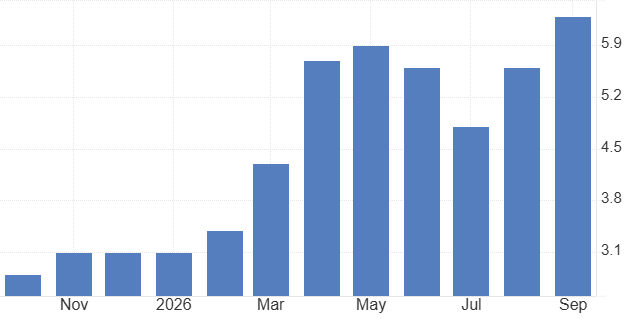
Source: U.S. Bureau of Labor Statistics
Core Weave exposes the financing risk
Core Weave has become a test of how this model holds up under financial pressure. The AI cloud provider carries around $35 billion in Funded debt, while concerns about its financial position have weighed on its bonds and increased the cost of insuring against default. The company points to a substantial revenue backlog, but contracted future business is not the same as cash available today.
Core Weave must still finance construction, acquire computing equipment and service its debt while delivering on customer commitments. If borrowing becomes more expensive or infrastructure takes longer to generate cash, the gap between expected revenue and the money required to sustain expansion can become more difficult to manage.
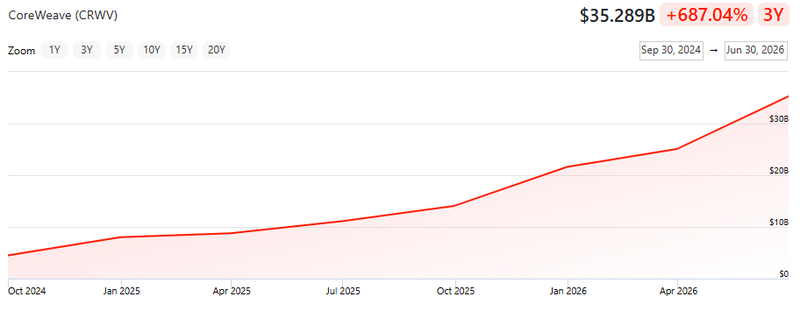
Source: Finance chart
Nvidia CEO Jensen Huang has pushed back against concerns
Jensen said that Core Weave will need a financial backstop from Nvidia. Yet the relationship highlights why investors are examining the structure of AI financing as closely as the demand outlook. Nvidia supplies Core Weave with computing hardware, has invested in the company and has agreed to purchase unused data centre capacity under certain conditions.
These arrangements do not establish that AI demand is artificial. They do, however, make it important to distinguish revenue generated by independent end users from activity supported by a network of investments, supply agreements and financing commitments. The critical question is whether that demand ultimately produces enough cash flow to support the debt and infrastructure built around it.
If funding costs rise while cash generation falls short of expectations, projects can be delayed even when customers still want more computing power. In that situation, the constraint does not necessarily demand itself, but the ability to finance the capacity needed to serve it.
Investors are becoming more selective
That distinction is also emerging in capital markets. Blackstone-backed AirTrunk postponed its planned REIT listing, while Nvidia-backed Firmus and SoftBank-backed SB Energy faced delays or withdrawals in their fundraising plans. These developments do not prove that investors have lost confidence in AI. They suggest that securing capital for large infrastructure projects is becoming more dependent on the terms, valuations and expected returns on offer.
For investors, the calculation is changing. Strong demand projections are no longer sufficient on their own. Projects must also demonstrate that future revenue can cover construction costs, financing expenses and the risks associated with bringing capacity online. When the cost of capital rises, a project that looked attractive under cheaper financing may no longer offer the same return.
South Korea’s equity market has shown how sensitive valuations are
Foreign investors sold roughly 3.5 trillion won in shares as the Kospi fell sharply, with SK Hynix dropping about 11% and Samsung Electronics losing around 9%. The selling does not signal that semiconductor demand is collapsing. Rather, it highlights the exposure of major chipmakers to changes in expectations for AI-related spending, future earnings and the valuations investors are willing to pay for that growth.
If technology companies continue expanding their infrastructure budgets, semiconductor demand may remain resilient. But if financing pressure forces data-centre developers to postpone projects or reconsider their spending plans, the impact could reach chip suppliers well before the longer-term outlook for AI changes materially.
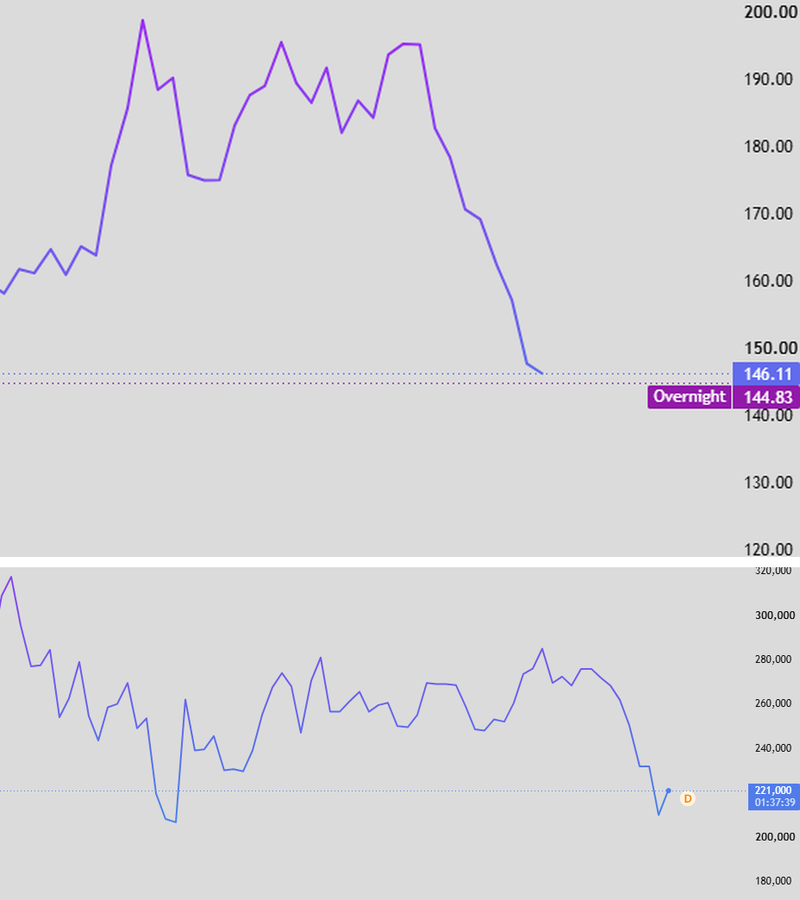
Source: Trading view
The productivity gains may arrive too late for the financing cycle
The timing of AI’s economic benefits presents a further complication for monetary policy. Fed Chair Kevin Warsh has warned that AI may affect demand before its productivity benefits fully expand supply. The distinction is important because the spending required to build AI infrastructure is already adding to demand for chips, electricity, land and labour. The productivity gains that could eventually lower costs and increase output may take longer to materialize.
If investment continues to support demand while inflation remains persistent, the Federal Reserve may have less room to ease policy quickly. That would leave AI developers facing elevated financing costs during a period when many are still trying to convert large capital commitments into sustainable cash flow.
The risk is not that fewer data centres will be built
It is that the returns expected from existing and planned infrastructure may no longer justify the pace of investment. Higher borrowing costs could then encourage companies to delay projects, while investors reassess the earnings growth and valuations of businesses exposed to the AI spending cycle.
The AI boom does not need to collapse for the market to change direction. A shift towards more selective investment could be enough. If the cost of financing rises faster than the cash flows investors can reasonably expect, strong demand will not guarantee attractive returns. The next test is whether the industry can turn its enormous infrastructure spending into durable cash generation before tighter financial conditions force a slower, more disciplined investment cycle.


