
 Help
Help 
Amazon earnings: AWS growth calms AI Capex fears
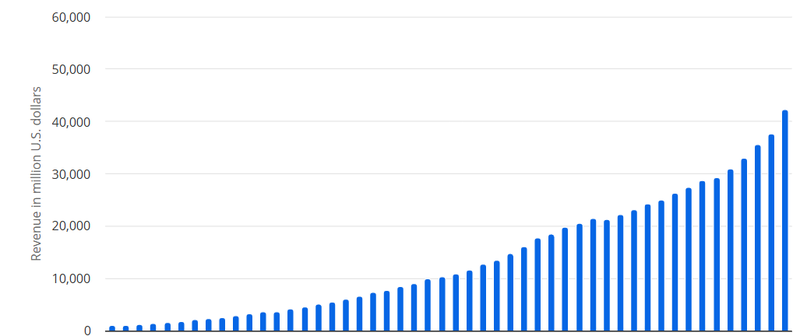
Amazon reported $200.6 billion in revenue, while Amazon Web Services generated $42.2 billion, up 37% from a year earlier. More importantly, management signalled that demand for AI infrastructure remains strong enough to support continued investment, reinforcing a message investor had already begun hearing from Microsoft and other large technology companies.
Amazon reported quarterly revenue of $200.6 billion, while AWS revenue rose 37% year-on-year to $42.2 billion.
Strong cloud growth reinforced the view that AI infrastructure spending is translating into higher revenue.
Wall Street is becoming more willing to reward AI investment when earnings continue accelerating.
AWS is giving investors a different way to think about AI spending
For much of the AI boom, investors were willing to accept higher spending if they believed future demand would justify it. The problem was that there was little evidence showing when those investments would begin generating meaningful returns.
Amazon's latest earnings helped answer part of that question
AWS generated $42.2 billion in second-quarter revenue, up 37% from a year earlier, as businesses continued expanding their use of cloud infrastructure to build, train and deploy AI models. The results suggest that demand for AI computing is no longer driven by expectations alone. It is already contributing to faster cloud growth at one of the world's largest providers.
That is changing how investor’s view AI spending
Only a few quarters ago, rising capital expenditure was largely seen as a risk because technology companies were investing far ahead of visible revenue. Today, strong cloud growth is making it easier for the market to see those investments as supporting future earnings rather than simply increasing costs.
The shift is subtle but important. Investors are becoming less concerned about how much companies are spending on AI and more interested in whether customer demand continues growing fast enough to keep filling the infrastructure being built.
Source: Statista
AI demand is becoming easier to measure
For much of the AI boom, investors relied heavily on management commentary and long-term projections.
Today, they are beginning to see evidence in quarterly results
Microsoft recently reported accelerating Azure growth. Amazon has now delivered another quarter of strong AWS expansion. Together, the results suggest enterprise demand for AI infrastructure remains stronger than many investors expected at the beginning of the year.
That does not mean concerns over spending have disappeared
Building data centres, expanding cloud capacity and purchasing advanced semiconductors remain expensive. But investors appear increasingly comfortable with those costs when they are accompanied by faster revenue growth and improving cloud demand. The debate is gradually shifting from how much companies are spending to how effectively they are monetising those investments.
Bezos Sells $4.1 Billion in Amazon Shares
Alongside the earnings report, Jeff Bezos filed notice with the US Securities and Exchange Commission to sell 15 million Amazon shares, worth approximately $4.1 billion. The proceeds are expected to help fund Blue Origin, his privately owned space company.
Large insider sales often attract attention, but context matters
Bezos has regularly sold Amazon shares over the years to finance other ventures and philanthropic activities. The latest filing appears to be part of that broader pattern rather than a signal that he has become less confident in Amazon's long-term prospects. For most investors, the company's operating performance remains far more important than changes to Bezos' personal holdings.
The next test is no longer spending but demand
Amazon's earnings have not settled the debate around AI valuations, but they have changed the way many investors look at the sector. Technology companies still trade at demanding multiples, and expectations remain high across the industry. The difference is that investors are becoming less focused on the size of capital expenditure budgets and more interested in whether demand continues expanding fast enough to justify them.
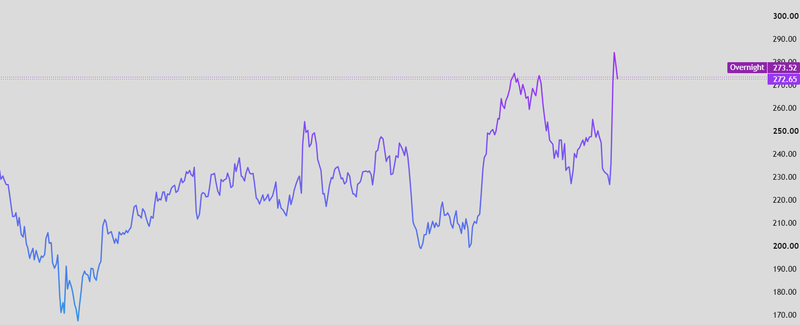
The market's reaction reflects that shift. Amazon shares have climbed about 21% since reporting earnings, suggesting investors are increasingly willing to reward companies that can pair heavy AI investment with accelerating cloud growth and stronger financial results.
The next test will be whether that momentum continues. Future AWS growth, cloud utilisation rates and enterprise AI adoption are likely to matter far more than headline capital spending figures. If businesses keep expanding AI workloads at the current pace, confidence in the sector's investment cycle is likely to strengthen. But if cloud growth begins to slow while capital expenditure continues rising, questions about returns could quickly move back to the centre of the debate.
Source: Trading view


