
 Help
Help 
Burry bets against AI chips as investors reassess the semiconductor boom
Michael Burry is leaning further into his bearish view of the AI trade, increasing his exposure to QQQ options and adding to his short position in Micron Technology. He has also maintained bearish exposure to names including Nvidia, Palantir and Tesla. The timing is notable. Semiconductor stocks have just staged a powerful rebound after one of their sharpest selloffs in years.

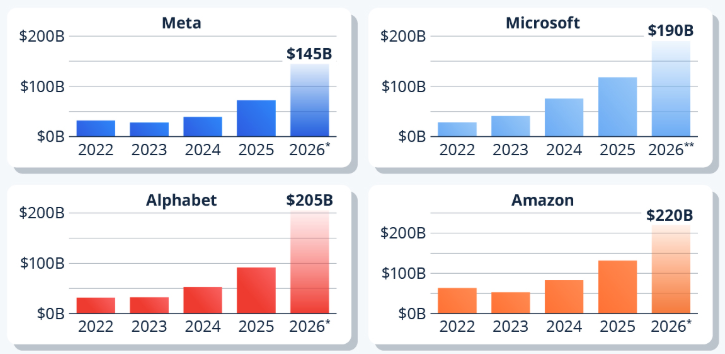
Hyperscalers are buying GPUs, memory, networking equipment and data-center capacity at an extraordinary pace.
Weaknesses in Micron would not automatically mean that Nvidia's AI business is weakening.
The semiconductor sector suffered a major selloff in July as investors questioned AI capital spending.
Burry is questioning the next stage of the AI cycle
The bearish argument is no longer that AI has no economic value. The market has already seen enough revenue growth to dismiss that idea. The harder question is what happens after companies have spent hundreds of billions of dollars building the infrastructure needed to support AI.
Hyperscalers are buying GPUs, memory, networking equipment and data-center capacity at an extraordinary pace. That spending has created a powerful earnings cycle for semiconductor companies. But it has also raised the bar for future growth.
If spending continues accelerating, today's valuations may still be justified. If growth merely slows from exceptional to strong, however, investors could start questioning how much future earnings are already reflected in share prices.
Source: Statista
Micron and Nvidia tell different stories
The semiconductor angle is particularly interesting because Micron and Nvidia are exposed to different parts of the AI investment cycle. Nvidia sits closer to the center of AI computing demand. Its accelerators are essential to the large computing clusters being built by cloud providers and enterprises. Micron benefits from the same buildout through high-bandwidth memory, but its earnings remain more closely tied to the broader memory cycle, pricing and supply discipline.
Burry’s Micron short is notable
That difference means weakness in Micron would not automatically mean that Nvidia's AI business is weakening. Micron can struggle because memory prices turn lower, new capacity comes online or investors become concerned that margins have peaked. Nvidia requires a broader deterioration in AI infrastructure demand to face the same fundamental problem.
This is why Burry’s Micron short is particularly notable. He is betting that memory-cycle economics can weaken even while AI demand remains strong. Micron trades at roughly 21 times trailing earnings, leaving investors to question how much of the current earnings strength is already priced in. Burry has also pointed to Micron’s cyclical business, heavy investment requirements and the risk that additional memory capacity eventually puts pressure on prices and margins. Strong earnings make the bearish case harder
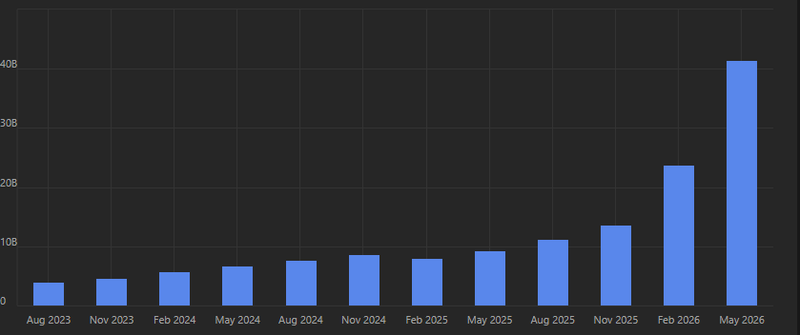
The problem for Burry is that Micron's operating numbers are still extremely strong. The company recently reported $41.46 billion in quarterly revenue and guided toward roughly $50 billion in the following quarter. Demand for high-bandwidth memory remains strong as AI systems require increasing amounts of memory alongside advanced processors.
Source: Fullratio
Nvidia is a different bet
Nvidia presents a much tougher challenge for the bears. The company remains the central supplier of AI accelerators, and demand for its products continues to support enormous capital spending across the technology industry. That makes a simple short based on weakening AI demand difficult to justify today.
The more credible bearish argument is valuation
Nvidia does not need to report poor results for the stock to fall. It only needs to deliver results that are strong but no longer strong enough to exceed the expectations already embedded in the share price.
That is a very different risk
When investors value a company on years of extraordinary growth, even a small reduction in the expected pace of expansion can produce a large change in valuation. Burry's Nvidia position is therefore better understood as a bet against future expectations, rather than against the company's current business.
July showed how quickly sentiment can change
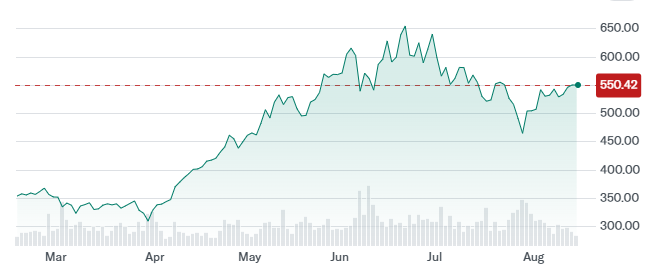
Burry has already had evidence supporting his thesis. The semiconductor sector suffered a major selloff in July as investors questioned AI capital spending, valuations and the sustainability of the trade. The iShares Semiconductor ETF fell roughly 21% during the month, its worst monthly performance since 2008. Burry had positioned against the sector before the decline.
But the rebound that followed is equally important
Semiconductor stocks recovered sharply from their July lows as investors returned to companies with strong AI exposure. That recovery suggests the market did not view the selloff as evidence that the AI investment cycle had ended.
Source: Yahoo
This creates the biggest problem for Burry: timing
Being right about the bubble is not enough markets can remain expensive for much longer than investors expect.
Burry may be correct that AI valuations are stretched and that semiconductor earnings are eventually going to normalize. But if Nvidia continues beating expectations, Micron maintains strong pricing and hyperscalers keep increasing capital expenditure, investors may continue paying premium valuations.
That does not invalidate the bearish thesis. It simply means the catalyst has not arrived. This distinction has mattered throughout previous market cycles. Identifying excessive valuations is easier than identifying the moment when investors stop accepting them.
What would confirm Burry's semiconductor view?
The next warning would not be one weak stock. Slower hyperscalers capital spending, weaker semiconductor orders, falling memory prices, lower utilization rates and more cautious earnings guidance.
If Micron's margins begin deteriorating while Nvidia continues reporting exceptional demand, the problem may be limited to the memory cycle. If Nvidia's data-center growth also begins slowing, the argument becomes much broader.
That would suggest the issue is no longer valuation alone but a genuine change in the AI infrastructure cycle.


