
 Help
Help 
Micron falls: value opportunity or cycle trap?
Micron has become one of the biggest beneficiaries of the AI boom. Demand for high-bandwidth memory used in AI accelerators has transformed a company that only a few years ago was struggling with one of the industry's deepest downturns into one of the strongest earnings stories in the semiconductor sector.
Micron trades at roughly five times forward earnings, making it one of the cheapest large AI-related semiconductor stocks.
AI demand continues to support record pricing for high-bandwidth memory used in advanced AI chips.
Memory has historically been one of the most cyclical parts of the semiconductor industry, with periods of strong profitability often followed by sharp corrections.
Why Micron still trades like a cyclical stock
Memory has never enjoyed the same reputation as other parts of the semiconductor industry. For years, the business followed a familiar pattern. Demand would strengthen, manufacturers would rush to expand capacity, and before long the market would find itself producing more chips than customers needed.
Prices would fall, profits would disappear and investors would once again abandon the sector. That history explains why memory stocks have rarely received premium valuations, even when earnings were at their strongest.
Micron is facing the same skepticism today, despite reporting some of its strongest financial performance in years, the stock continues to trade at a valuation that looks unusually low compared with many other companies benefiting from artificial intelligence.
Why this cycle may be different
The difference this time is that demand is coming from a market that barely existed a few years ago. Training large language models and running AI applications require enormous amounts of high-bandwidth memory (HBM), transforming what was once considered a commodity chip into one of the most valuable components inside AI servers.
Unlike previous memory cycles, demand is no longer being driven primarily by smartphones or PCs. Instead, it is being fuelled by the global race to build AI infrastructure, where supply remains tight and customers continue competing for access to advanced memory.
Most industry forecasts expect the HBM market to grow by around 100% this year, reflecting just how quickly demand has accelerated. That has given memory manufacturers something they rarely enjoyed during past cycles: meaningful pricing power.
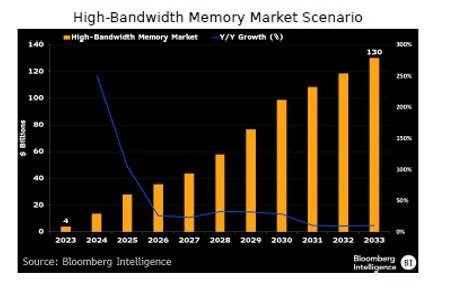
Source: Bloomberg
Wall Street is still not convinced
Micron's valuation shows that investors remain cautious despite the company's record earnings. The stock trades at roughly five times forward earnings, a level that would normally be associated with businesses facing slowing growth rather than one benefiting from one of the strongest investment themes in global markets.
That discount reflects the market's reluctance to assume today's profits will become the new normal. Investors have seen memory companies report exceptional earnings before, only for margins to come under pressure once additional supply entered the market.
For Micron to command a higher valuation, investors will likely need more than another strong quarter. They will want evidence that AI-driven demand can continue absorbing new production as memory manufacturers expand capacity over the coming years.
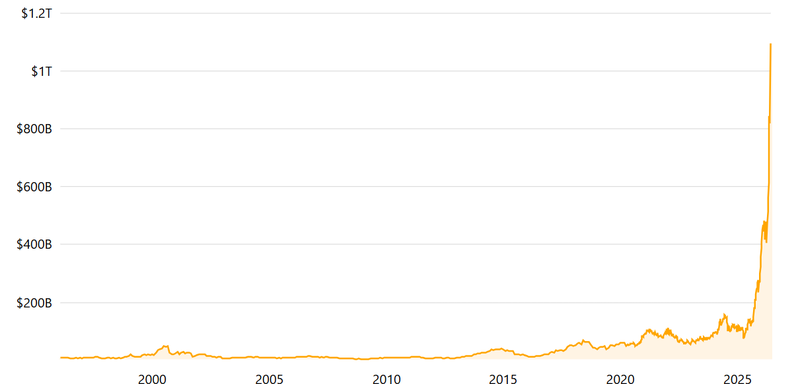
Source: Companiesmarketcap
The rest of the sector tells a mixed story
Recent moves across semiconductor stocks suggest investors have not yet reached a clear conclusion. Micron continues to benefit from exceptionally strong AI-related demand, yet several companies with broader exposure to the memory market remain well below their recent highs.
That suggests investors are rewarding businesses with the clearest AI tailwinds while remaining cautious about companies whose earnings could still be vulnerable to the traditional memory cycle. Whether that gap continues will largely depend on one question: can AI demand keep growing faster than new supply?
Why investors also watch South Korea
South Korea sits at the centre of the memory industry, with companies such as Samsung Electronics and SK Hynix playing a dominant role in global DRAM and HBM production. As a result, trading in Seoul is often treated as an early indicator of sentiment toward memory stocks before Wall Street opens.
When heavy selling pushes the KOSPI sharply lower, the weakness rarely stays local. Semiconductor companies make up a significant share of the index, and declines can spread through index funds, exchange-traded funds and quantitative trading strategies. By the time US markets open, that pressure has often reached American chipmakers, including Micron, even when there has been no company-specific news.
Since reaching its June high, Micron has fallen by about 41%, with the decline reflecting not only company-specific concerns but also a broader reassessment of semiconductor valuations as investors took profits across the AI supply chain.
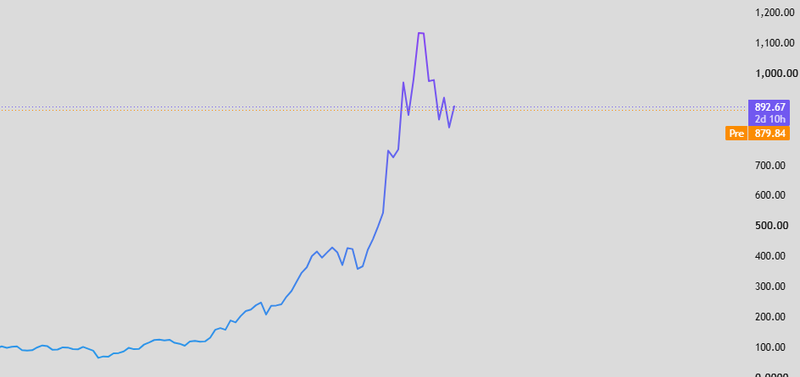
Source: Trading view
The next few quarters may settle the debate
Micron's 41% decline since June has done little to settle the debate. For bullish investors, the pullback has made one of the AI sector's strongest earnings stories significantly cheaper at a time when demand for high-bandwidth memory continues to outpace supply.
Sceptics see something different. They argue that memory has repeatedly looked strongest near the top of the cycle and that history offers plenty of examples of profits and valuations falling much faster than expected once supply begins to recover.
The next few quarters should provide a clearer answer. If AI infrastructure spending continues to expand and demand for advanced memory remains tight, Micron's recent decline could prove to be a valuation opportunity. If pricing begins to soften as new capacity enters the market, investors may conclude that this cycle has been stronger than previous ones but not fundamentally different.


