
 Help
Help 
SpaceX after the 50% drop: buying opportunity or a warning Sign?
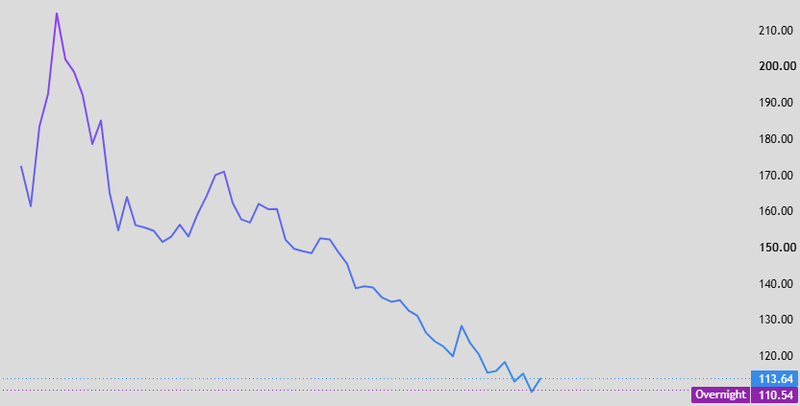
SpaceX's post-IPO rally has ended. After an explosive debut, the stock has suffered a sharp correction as investors reassess valuation, capital requirements and insider selling. What initially looked like an unstoppable momentum trade has evolved into a much more balanced debate over whether SpaceX deserves its premium or whether the market has simply become more realistic about the road ahead.

SpaceX has lost more than $600 billion in market value in just three trading sessions.
Heavy short positioning has pushed SPCX into the top 10 most-shorted U.S. stocks.
Investors are increasingly focused on funding requirements after the planned $20 billion bond sale.
SpaceX loses momentum as investors reassess the story
Only weeks ago, SpaceX appeared to be one of the market's strongest momentum trades. Strong retail participation, enthusiasm around artificial intelligence infrastructure and confidence in the company's long-term growth prospects combined to push the shares sharply above their $135 IPO price.
That narrative has shifted quickly
A decline of roughly 50% from recent highs including a 23% slide over three consecutive sessions has erased more than $600 billion in market value. Although the company still demands a valuation of just over $2 trillion, investors are no longer treating SpaceX as a stock that can only move in one direction.
The change in sentiment has less to do with the company's technological leadership than with the questions investors are now asking. Instead of focusing solely on future growth, attention has turned to how much capital will be required to finance that growth and whether current valuations already reflect years of future success.
Source: Trading view
Bond sale shifts the conversation
One of the biggest catalysts behind the recent weakness has been the company's planned $20 billion bond offering.
Large debt sales are not unusual for companies investing heavily in long-term expansion. However, the timing has encouraged investors to look more closely at SpaceX's funding needs as it continues to invest aggressively in launch capacity, satellite infrastructure, artificial intelligence computing and next-generation spacecraft.
Markets often react differently once a high-growth company moves from discussing future opportunities to discussing how those opportunities will be financed
Rising short interest highlights growing skepticism
SpaceX has become the ninth most-shorted stock in the United States, with approximately $25 billion in short positions outstanding.
Large short interest doesn't automatically signal further declines. In many cases it simply reflects growing disagreement between investors. Some believe the recent correction has gone too far and presents an attractive entry point into a company that continues to dominate the commercial space industry.
Others argue that the stock's valuation still assumes years of flawless execution despite substantial capital requirements and an expanding share base. This divide is likely to keep volatility elevated in the weeks ahead.
The lock-up expiry could keep pressure on shares
Beyond valuation concerns, investors are also preparing for one of the largest lock-up expirations ever seen in a newly listed technology company. Following the upcoming earnings release, approximately $116 billion worth of previously restricted shares are expected to become eligible for trading, representing an estimated 164% increase in the public float.
Upcoming Earnings Coincide with Lock-up Period Expiration
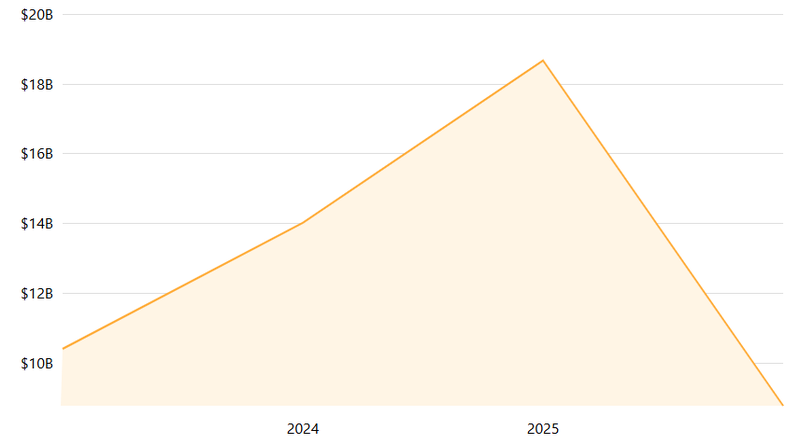
The timing is particularly significant given the company's current financial profile. While SpaceX is expected to generate approximately $6.98 billion revenue for Q2 2026, investors continue to value the company at more than $2 trillion. That reflects exceptionally high expectations for future growth, leaving the stock more sensitive to events that could shift investor sentiment or increase selling pressure.
History suggests that lock-up expirations of this scale often weigh on share prices, even when the long-term investment case remains intact. As additional shares become available, early investors, employees and venture capital holders may choose to realize part of their gains. The resulting increase in share supply can create temporary downward pressure, particularly if institutional demand is not strong enough to absorb the additional float immediately.
Source: Companiesmarketcap
What history tells us
History doesn't repeat itself exactly, but it often provides a useful framework for understanding how markets react to major lock-up expirations. Past mega-cap IPOs have shown that the outcome largely depends on two factors: the amount of new shares entering the market and investors' confidence in the company's ability to generate cash.
Businesses with strong and predictable cash flows have generally absorbed the additional supply relatively quickly, as institutional investors stepped in to buy the shares released by early holders. Others, particularly companies with ambitious growth plans and heavy investment requirements, have tended to experience a more prolonged period of selling before eventually finding support.
At this stage, SpaceX appears closer to the latter group
The company continues to invest aggressively in areas such as reusable launch systems, satellite infrastructure and artificial intelligence, all of which reinforce its long-term growth story. However, those projects also demand significant capital, and investors are becoming increasingly focused on the cost of financing that expansion rather than growth alone.


