Help
Brent price surge as Houthi-Saudi tensions persist
Persistent geopolitical conflict in the Middle East, driven by Houthi attacks on Saudi Arabian energy facilities, has heightened fears of severe supply disruptions, propelling Brent crude prices to a multi-month high.

Brent crude rose by 4% to $113.17 per barrel, reaching its highest level since May 2026.
Persistent Houthi attacks forced Saudi Aramco to evacuate staff from its headquarters in Dhahran.
Attacks on critical infrastructure have renewed fears that regional energy exports could face severe disruptions.
Reports of a potential combined US–Israel strike on Iranian territory keep energy traders cautious regarding supply stability.
Date: 23 October 2026 (GMT+3)
Can Brent extend its rally amid persistent geopolitical tensions in the Middle East?
The Brent crude futures contract (BRN) surged by 4% to settle at $113.17 per barrel, driven by escalating tensions between the Houthi movement and Saudi Arabia in the Middle East. Notably, this marks its highest price level since May 2026, exerting upward pressure on global inflation rates as fuel costs become increasingly expensive for both producers and consumers.
Over recent days, Houthi attacks on Saudi Arabian infrastructure have reinforced concerns that energy supply disruptions across the region could deteriorate further. This comes despite crude oil exports have improved considerably in recent months, approaching volumes recorded prior to the outbreak of the US–Israel–Iran conflict in February. Furthermore, as reported by Reuters, Saudi Aramco was forced to evacuate staff from its headquarters in the eastern city of Dhahran.
Additionally, several international media outlets have reported the possibility of a coordinated strike by the United States and Israel following the upcoming US mid-term elections.
Consequently, ongoing instability in the region has prompted significant caution among energy traders, given that the normalisation of energy flows remains far from guaranteed.
Technical analysis of the Brent futures contract
From a technical perspective, the Brent crude futures contract exhibits a robust short-term bullish impulse. A detailed examination of the underlying market structure highlights several critical dynamics:
- Trend Context: Over recent months, the Brent contract has transitioned into a highly volatile pricing regime. Nevertheless, from a structural standpoint, price action has established itself firmly above the 50-day, 100-day, and 200-day Simple Moving Averages (SMAs), confirming a dominant bullish bias. In the short term, this upward momentum has accelerated, with the asset surpassing the key $110.00 threshold.
- Momentum Indicators: The Moving Average Convergence Divergence (MACD) indicator continues to trend upwards, signalling that short-term bullish momentum could persist. However, the Relative Strength Index (RSI) has entered overbought territory, suggesting caution regarding the immediate sustainability of the upward trajectory.
- Resistance Levels: Should the bullish momentum extend further, the primary technical resistance ceiling is positioned at $115.00. A decisive breakout above this mark would bring the secondary resistance level at $119.00 into focus.
- Support Levels: In the event of a price retracement, key downside supports are situated at $100.00 and $90.00 per barrel, aligning with the Volume Profile's Point of Control (POC) and the 200-day SMA, respectively.
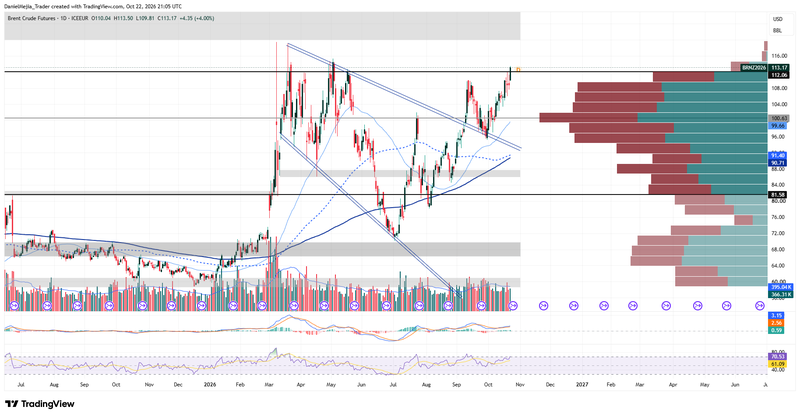
Figure 1: Brent Futures Contract (2025–2026). Source: Data from ICE Futures Europe; author's analysis conducted via TradingView.