Help
Help 
Euro finds itself caught between the ECB and the Dollar
The ECB has done enough to keep September's rate hike almost fully priced, but that has not translated into a stronger euro. Instead, the currency is being pulled by a different force: U.S. bond yields are rising again, oil has become another tailwind for the dollar, and Kevin Warsh has shifted the conversation back toward the Federal Reserve's inflation credibility.

Eurozone inflation held at 3.3%, keeping September's ECB hike firmly priced.
Warsh's Jackson Hole speech pushed Treasury yields and the dollar higher.
Oil's rebound is widening the pressure on Europe's terms of trade.
The 1.140 area has become the market's first checkpoint.
The ECB has almost finished pricing September
Headline inflation held at 3.3%, almost exactly where investors expected, but that was enough to keep the ECB on its current path. After July's minutes revealed that several policymakers were already comfortable with tightening again, another rate hike now looks less like an open debate and more like the market's base case.
The more interesting reaction happened in bonds
European yields stayed under pressure because inflation remains high enough to justify tighter policy while energy costs continue making the outlook less predictable. That combination keeps borrowing costs elevated even as growth continues losing momentum across parts of the eurozone. The ECB has largely won the argument about September.
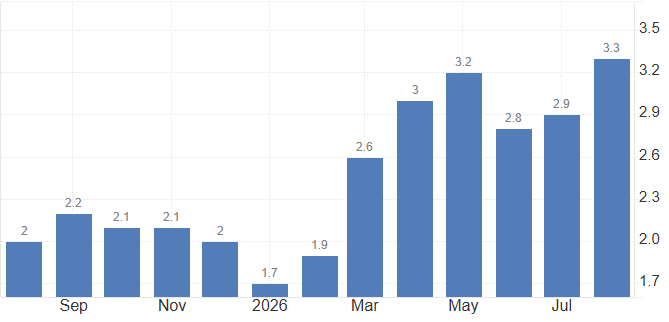
Source: EUROSTAT
Warsh changed the dollar's story again
Kevin Warsh used Jackson Hole to defend the Fed's willingness to keep financial conditions restrictive, arguing that higher Treasury yields are already doing part of the tightening without requiring another immediate rate increase. That message mattered because markets had started treating softer GDP and weaker consumer spending as reasons to look toward easier policy.
Warsh pushed back
Instead of reassuring investors that cuts were getting closer, he shifted attention back to inflation and the need for credibility. Treasury yields moved higher, and the dollar started benefiting from a relationship that had weakened earlier in the summer: higher U.S. yields once again became dollar positive.
Oil has become another problem for the euro
The rebound in oil is hitting Europe differently than the United States because the eurozone remains much more exposed to imported energy costs. Higher oil prices make Europe's inflation problem harder to solve while also weighing on the region's trade balance.
That explains why two familiar relationships have started moving together again. Oil is putting upward pressure on European yields, but it is also strengthening the dollar through the terms-of-trade channel. Instead of helping the euro through higher rate expectations, expensive energy is making investors more cautious about Europe's broader economic outlook.
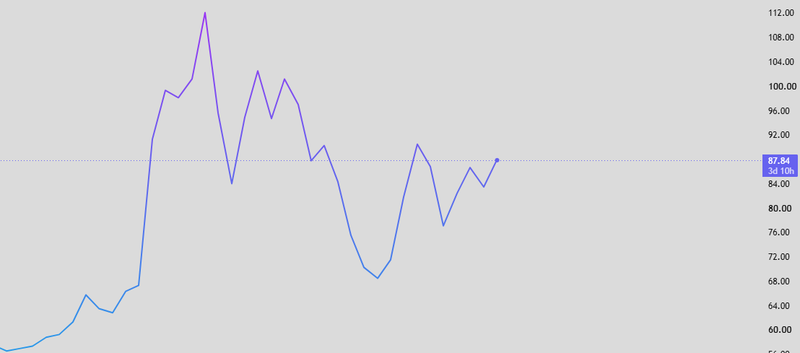
Source: Trading view
The bond market is starting to matter more than the ECB
Normally, a widening two-year rate differential would offer a cleaner signal for EUR/USD. This time, Treasury yields are dominating the conversation because investors increasingly believe the U.S. can absorb higher borrowing costs more comfortably than Europe.
That creates an unusual backdrop
The ECB is still tightening. The euro is still struggling. The difference is that markets have become much more focused on where capital earns the stronger real return rather than simply which central bank raises rates next.
The next move belongs to U.S. data
The ISM manufacturing and services surveys arrive first, offering another read on whether higher borrowing costs are slowing business activity as much as investors expect. Friday's Nonfarm Payrolls report carries even more weight because another resilient labour-market reading would reinforce Warsh's argument that restrictive financial conditions have not done enough to rule out further tightening. That leaves the euro facing an uncomfortable setup. The ECB has already convinced markets about September. The dollar still has another chance to convince markets about what comes next.
Technical Outlook
Instead of making lower lows, EUR/USD has started building higher ones, holding above its long-term rising trendline and reclaiming the 126-day moving average around 1.124. That shift matters because buyers are no longer fighting to stop the decline; they are trying to turn the recovery into something bigger.
The next obstacle has not disappeared
Price is trading around 1.159, with the descending trendline from the 1.25 peak still hanging over the market. That trendline has rejected every meaningful rally for months, making it the level that separates another rebound from a genuine change in the bigger trend.
Scenarios Ahead
The 1.140 area has become the market's first checkpoint. It was resistance before the latest move higher, and now it is the first place buyers need to defend if they want another run at the overhead trendline. Holding above that zone keeps the recovery intact and leaves 1.208 as the next level that could change the chart much more dramatically. Clearing that ceiling would bring the longer-term highs near 1.254 back into the conversation.
A pause would put the recovery to the test
If EUR/USD loses momentum beneath the trendline and slips back below 1.140, the latest rally starts looking much less convincing. The first-place traders would look next is the 126-day moving average around 1.124, which has already proved it can attract buyers. Losing that floor would shift attention much lower, with 1.018 becoming the next major area where the broader cycle has previously found support.
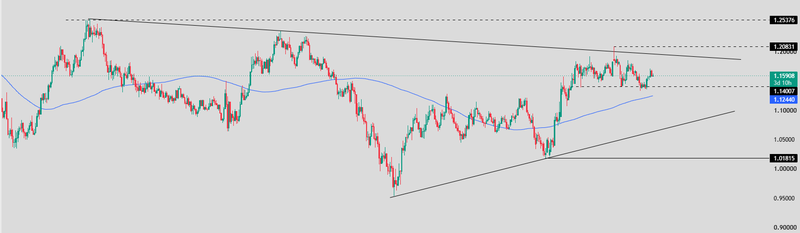
Source: Trading view