Help
Help Eurozone inflation accelerates, but uncertainty keeps EUR/USD range-bound
Eurozone inflation spiked in May, with headline CPI reaching 3.2% and core CPI hitting 2.5%, driven by a 10.9% surge in energy costs linked to Middle East conflicts. Despite hawkish central bank rhetoric, the EUR/USD remains range-bound near 1.1628 as neutral technical indicators reflect deep market uncertainty.

Eurozone headline inflation accelerated to 3.2% while core CPI unexpectedly hit 2.5%, fueled by a sharp 10.9% spike in volatile energy costs.
Rising energy prices, with Brent at $96.06 and WTI at $93.54, directly strain European supply chains and complicate the ECB's monetary strategy.
Central banks remain hawkish; Fed's Hammack hinted at potential rate hikes, while ECB officials stated they stand ready to act if pressures persist.
Headline and core inflation accelerates in the European Union, pressuring ECB decisions
According to data released by Eurostat, the annual headline inflation rate in the Eurozone accelerated from 3.0% in April to 3.2% in May, aligning precisely with consensus forecasts. This current level represents the highest reading since September 2023, intensifying pressure on the European Central Bank (ECB) ahead of its upcoming monetary policy decisions. Concurrently, Eurostat revealed that the core inflation rate—which strips out the volatile components of energy and unprocessed food—increased from 2.2% to 2.5%, surpassing the market consensus forecast of 2.4%. Economists are expressing growing concern that persistent energy price pressures are beginning to permeate core inflation, presenting a significant challenge for policymakers given that core inflation is traditionally the stickiest component to tame.
An analysis from Trading Economics highlights that the most significant upward pressure on headline inflation stemmed from energy costs, which jumped by 10.9%—marking the highest increase since February 2023. Additionally, while service-sector inflation and non-energy industrial goods also accelerated, their trajectories were more moderate. Consequently, inflation dynamics within the Eurozone remain heavily tied to the current US–Israel–Iran conflict in the Middle East, which has disrupted the energy supply chain and distribution networks serving European nations.
Both the ECB and the Federal Reserve are closely monitoring inflation metrics to implement more assertive monetary policy decisions amidst these mounting energy shocks. This ongoing assessment occurs as global crude prices had a marginal recovery from recent depreciations. At the market close, the Brent crude futures contract (BRNQ6) increased by 1.15% to $96.06 per barrel, while the West Texas Intermediate (WTI) futures contract advanced by 1.81% to settle at $93.54 per barrel. Furthermore, as reported by Reuters, Cleveland Federal Reserve President Beth Hammack stated that the Fed may need to raise interest rates soon if inflationary pressures continue to mount. Conversely, ECB officials have reiterated that the Eurozone central bank remains prepared to act if price pressures persist or intensify.
In response to these developments, foreign exchange markets saw limited directional movement, with the euro recording a marginal depreciation of 0.04% against the US dollar to trade at 1.1628.
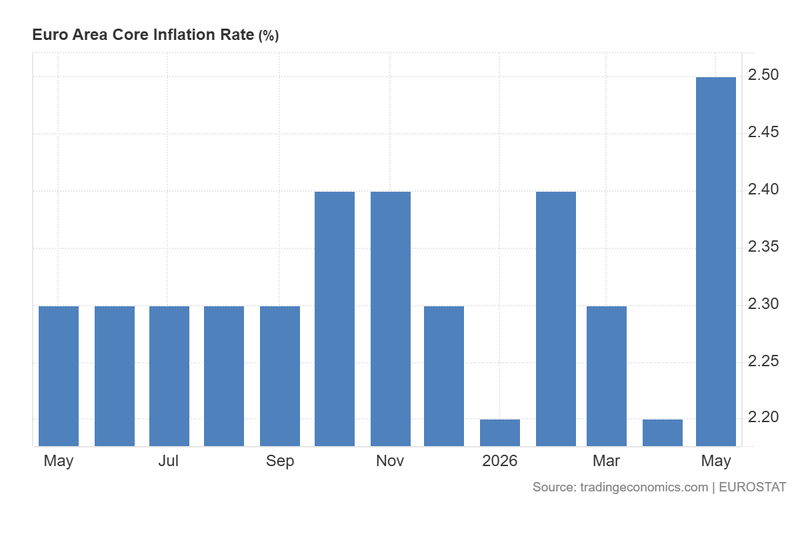
Figure 1. Euro Area Core Inflation Rate (2025–2026). Source: Data from Eurostat; Figure obtained from Trading Economics.
Technical analysis of the EUR/USD pair
From a technical standpoint, the EUR/USD pair maintains its long-term bullish trajectory, although immediate price action is navigating a short-term consolidation pattern. Key observations include:
- Trend Context: Over the long term, the pair has preserved a market structure defined by a structural sequence of higher highs and higher lows. Nevertheless, the price is currently trading below its 50, 100, and 200-day Simple Moving Averages (SMAs) while compressed within a tight consolidation range.
- Resistance Levels: Should the structural long-term resistance at $1.1800 be breached to the upside, the next major technical ceiling is identified at the psychological barrier of $1.2000. A decisive breakout above this level would signal potential for further extension toward higher valuations.
- Support Levels: If the immediate support at $1.1600 is compromised, the next critical structural floor is situated at $1.1470. A breach of the $1.1470 zone would significantly increase the probability of a deeper market correction.
- Momentum Indicators: Both the Moving Average Convergence Divergence (MACD) and the Relative Strength Index (RSI) are tracking within neutral territory, reinforcing the thesis that deep market uncertainty is preventing the establishment of a predominant directional trend.
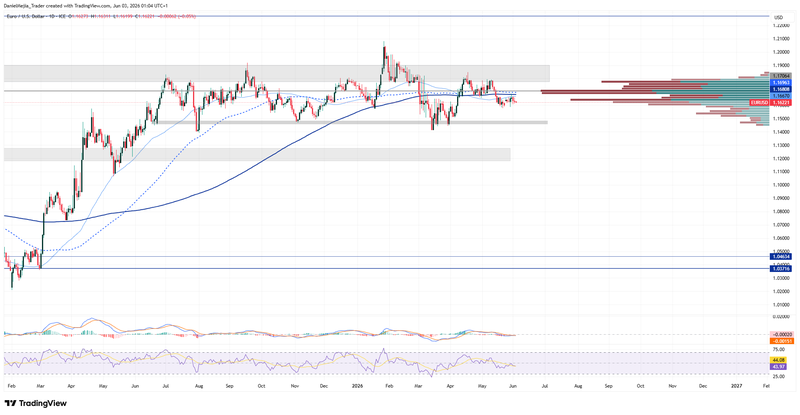
Figure 2. EUR/USD Pair (2025–2026). Source: Data from the Intercontinental Exchange (ICE); own analysis conducted via TradingView.