Help

EUR/USD rises as the dollar weakens, but can the euro hold Its gains?
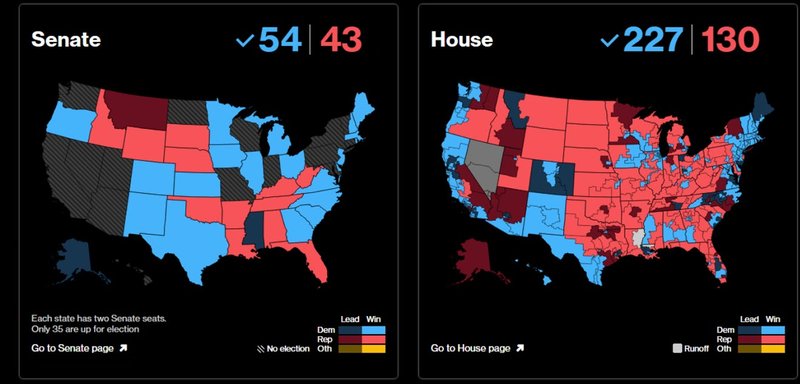
EUR/USD has moved towards 1.1250 after the Democratic Party secured control of both chambers of Congress, pushing Treasury yields lower and weakening the dollar. However European inflation is accelerating while services are losing momentum, leaving the euro supported by expectations of higher interest rates rather than stronger economic growth.

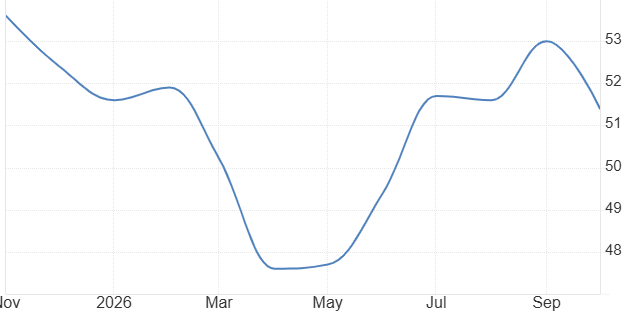
Eurozone services PMI was revised down to 51.4 in October from 53.0 in September.
Annual inflation accelerated to 4.0%, driven by a 20.8% increase in energy prices.
Democratic control of Congress has reduced some of the fiscal and inflation risks previously supporting US yields.
Holding above 1.1100–1.1190 could allow a rebound towards 1.1286.
The euro is benefiting from a change on the US side
The latest US political developments have added another variable to the dollar outlook. Democratic victories in the House and Senate could make it harder to advance further tax cuts, tariffs or other measures that might increase fiscal pressure and inflation risks.
Markets have interpreted the result as a potential restraint on those policies, with Treasury yields easing and the dollar index falling to a one-month low.
That reaction matters because the dollar’s recent support has partly reflected expectations that US interest rates would remain elevated. If investors begin to price in less fiscal stimulus or a lower risk of renewed inflation, the yield advantage supporting the dollar could narrow.
But the election result does not determine the direction of monetary policy. Strong employment and wage data could revive expectations of further fed tightening, lifting yields and putting the dollar back on firmer ground.
Source: Bloomberg
Four percent inflation is an uncomfortable source of support
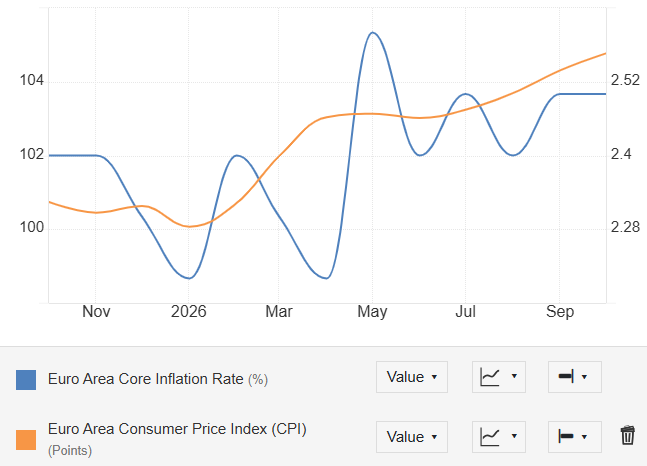
Eurozone inflation accelerated from 3.8% to a flash estimate of 4.0% in October, its highest level in three years. Energy prices rose 20.8% year on year, while services inflation edged up to 3.3%. Core inflation, which excludes energy and food, remained unchanged at 2.5%.
The headline figure increases pressure on the ECB, but the composition of inflation matters more than the total alone. Higher energy costs can push inflation up quickly without signaling that demand across the economy is overheating.
Interest-rate increases cannot bring down global energy prices; their role is to prevent the initial shock from feeding into wages, services costs and inflation expectations.
The rise in services inflation keeps that risk in view, although stable core inflation suggests that broader price pressures have not accelerated at the same pace as the headline measure.
The ECB must therefore judge whether the energy shock is likely to spread or whether tighter policy would add to the strain on an economy already losing momentum.
That distinction matters for EUR/USD. Expectations of higher European rates can support the euro by narrowing the yield gap with the US.
Yet if a December increase is followed by guidance that growth is too weak to justify further tightening, the currency could struggle to extend its gains.
Source: Eurostat
The services data reveal the cost of that response
October’s business surveys show why the ECB cannot treat the increase in inflation; the services PMI was revised down to 51.4 from an initial estimate of 51.7 and fell sharply from 53.0 in September.
The sector is still expanding, but new business declined slightly, outstanding work fell again and services employment contracted for the first time since May. France returned to contraction, while growth slowed across Germany, Italy and Spain.
The weakness in new orders is particularly relevant; companies are facing higher energy and financing costs without a comparable improvement in demand.
That makes it harder to pass on the entire cost increase to customers, it also explains how headline inflation can accelerate while parts of the domestic economy are already losing momentum.
Source: S&P Global
The two central banks are facing different versions of the same risk
For now, the relative policy outlook favours EUR/USD: US yields have eased, while eurozone inflation has kept another ECB increase in play.
But that support could fade quickly if US data pushes Treasury yields higher or if weaker European activity leads markets to scale back expectations for further tightening.
Even a December hike would not settle the question
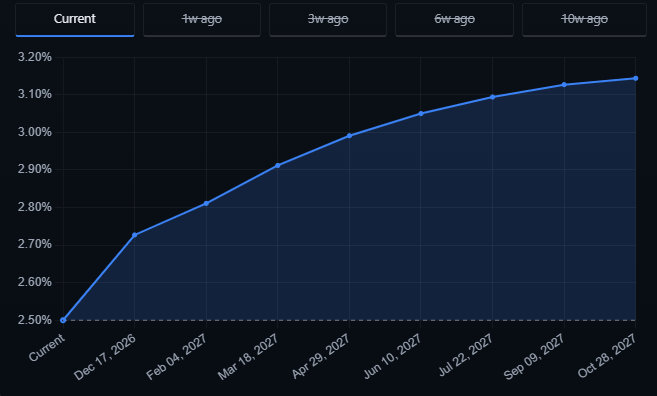
Expectations are 88% probability of rate hike, however investors would look to the ECB’s guidance for evidence of whether more increases are likely or whether policymakers intend to pause. The euro’s recovery will be harder to sustain if the expected rate advantage proves temporary.
Source: Rate probability
Technical outlook
EUR/USD is trading near 1.1259, attempting to stabilize after falling sharply from the 1.2083 high. The broader trend remains bearish, but the pair is approaching an important support area where horizontal demand meets a rising long-term trendline. Whether this zone holds could determine if the euro stages a recovery or extends its decline.
The bearish structure remains clear, with a series of lower highs forming since the 1.2083 peak. Selling pressure intensified after the pair broke below 1.1686 and 1.1499, while the falling moving average near 1.1459 continues to weigh on the recovery.
EUR/USD is now consolidating around the 1.1100–1.1200 area, where the rising trendline provides additional support. Buyers may attempt to defend this zone, but a rebound alone would not signal a trend reversal. The pair needs to reclaim key resistance levels to show that selling pressure is easing.
Scenarios ahead
Holding above 1.1100–1.1190 could allow a rebound towards 1.1286, followed by the 1.1459–1.1499 resistance zone. A sustained move above this area would strengthen the recovery and challenge the prevailing bearish structure.
However, a decisive break below 1.1100 and the rising trendline would weaken the support case, exposing 1.1000 and then 1.0745.
For now, the broader bias remains bearish, although the current support zone leaves room for a temporary rebound. A break below 1.1100 would reinforce downside pressure, while a move back above 1.1286 would offer the first indication that sellers are losing control.
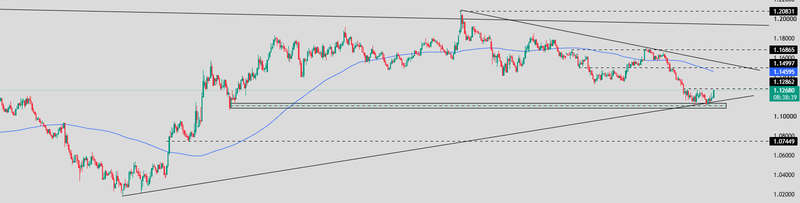
Source: Trading view