
 Help
Help 
Gold price forecast: will the Fed delay the next gold rally?
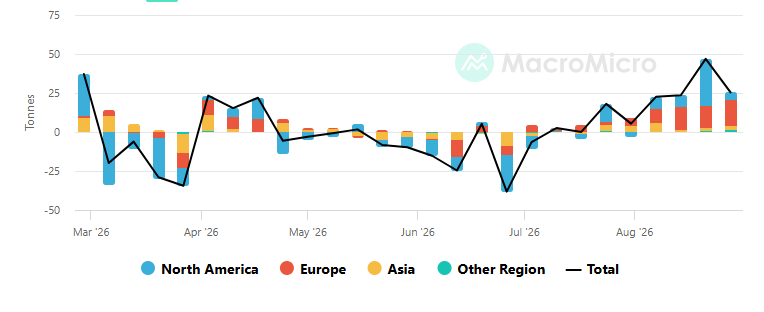
After global gold ETFs attracted a record $18 billion net inflows in August, the pace of Western buying has begun to look less aggressive as investors reassessed the interest-rate outlook. Asian demand, however, remains comparatively resilient, creating a market increasingly divided between tactical Western positioning and more persistent Asian accumulation.

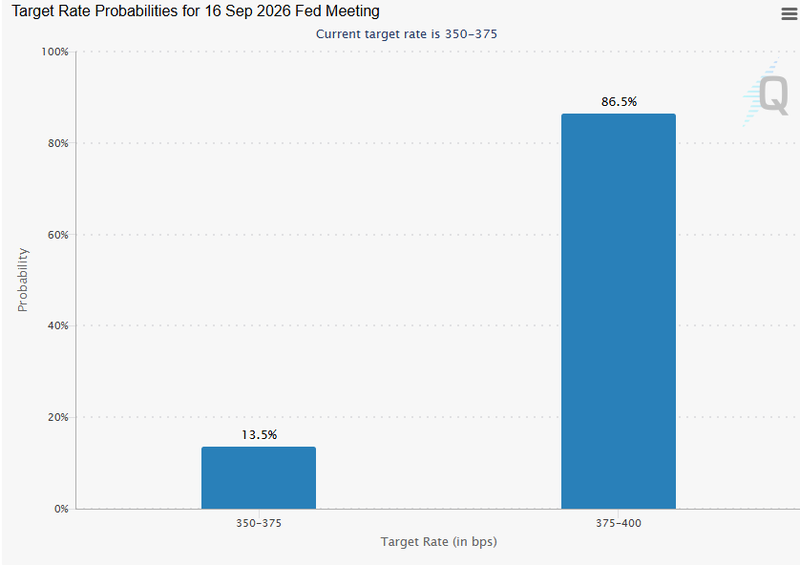
Markets now assign close to an 86% probability to a 25-basis-point Fed hike in September.
Asian-listed funds attracted about $2 billion in August.
A move back above 4,450 would be the first sign that momentum is returning.
The Fed is becoming the immediate obstacle
The August jobs report initially strengthened the case for another Federal Reserve rate increase.
US non-farm payrolls increased by 162,000 in August, while unemployment held at 4.1%, pointing to an economy that has retained more momentum than investors had feared.
Then inflation added another complication
Producer prices rose 0.4% in August and 5.4% year on year, while August CPI also accelerated 0.4% month on month. Energy costs were a major contributor to both reports.
Markets now assign close to a 86% probability to a 25-basis-point Fed hike at the September 15–16 meeting, up sharply from before the latest inflation data.
Source: CME Group
Structural drivers have not disappeared
August's ETF surge was not driven by one factor alone. The World Gold Council linked the move to concerns around currency intervention, fiscal sustainability, Treasury-market stress and strong price momentum.
The US fiscal deficit remains large, long-term Treasury yields are elevated, and geopolitical tensions continue to keep demand for safe-haven assets alive.
Asian demand is particularly important here
Asian-listed funds attracted about $2 billion in August, their strongest month since February, with China accounting for most of the regional inflows. That suggests the gold market is not simply losing buyers.
Source: MacroMicro
The Fed decision could determine the next direction
A September hike is now the dominant market expectation, but the decision itself is not the only variable.
The Fed could argue that recent inflation has been heavily influenced by temporary energy shocks and that more evidence is needed before committing to a prolonged tightening cycle. Policymakers could also point to the rise in long-term Treasury yields as an additional tightening of financial conditions.
Technical outlook
Gold has entered a much more interesting phase. The break above the descending trendline ended months of lower highs, and the rally toward 4,600 was the clearest sign yet that buyers had started rebuilding control. The latest pullback has not undone that shift. Instead, price is returning toward the former breakout area, which keeps the move looking more like a Wave (2) reset than a break in the broader recovery.
The first level that matters now is 4,450. It sits close to the breakout zone and is where buyers have the chance to turn old resistance into support. If the pullback deepens, 4,300 becomes the stronger structural floor, while 3,943 remains the level that keeps the higher-timeframe recovery intact.
Scenarios ahead
The strongest setup would be for Wave (2) to finish around 4,200–4,300, where the breakout area and longer-term structure meet. Holding that zone would leave the Elliott Wave sequence intact and create room for Wave (3), which is often the strongest phase of the cycle.
A move back above 4,450 would be the first sign that momentum is returning. Clearing 4,600 would strengthen the breakout further and shift attention toward 4,900, followed by 5,420 before a larger consolidation develops.
Losing support changes the structure
The alternative view is that the rally, from 3,950 was only a corrective rebound. That argument becomes stronger if gold breaks below 4,270, bringing 4,000 back into focus where long-term trend support meets previous demand.
A decisive move beneath that area would weaken the recovery considerably and leave 3,950 exposed again. If that floor fails, the next major support sits near 3,885, where the broader trend would face its biggest test.
Source: Trading view


