
 Help
Help 
Week ahead: Inflation, central banks and the yen could set the tone for global markets
This week left investors with fewer easy answers. The ECB tightened policy again as energy prices complicated Europe's inflation outlook. U.S. inflation refused to cool cleanly enough for the Fed to relax. Treasury yields climbed even after Washington expanded bond buybacks, while the yen staged one of its strongest rallies in months.
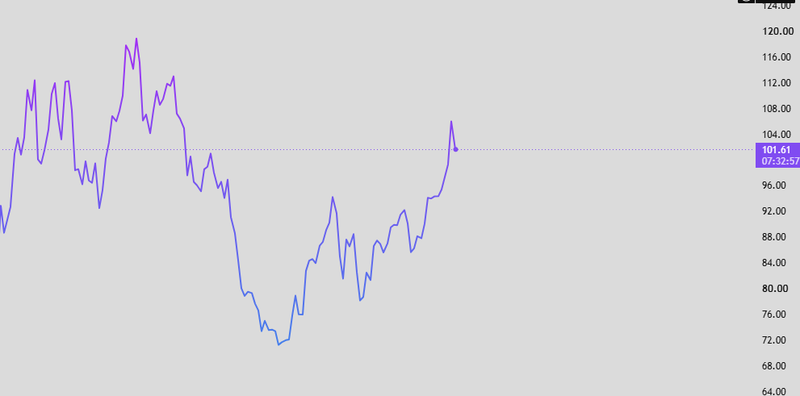
Brent settled above $101 a barrel after the latest escalation in the Middle East.
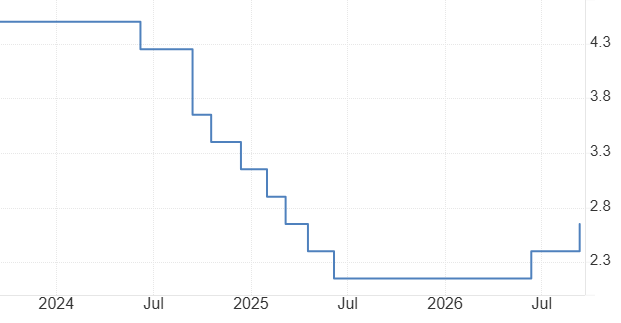
ECB raised its key rates by 25 basis points on September 10, taking the deposit rate to 2.5%.
Treasury latest operation eventually repurchased $5.2 billion.
USD/JPY has fallen dramatically from above 160 to around 152.89.
What shaped markets this week
Europe's inflation story has become an energy story
The ECB's latest rate hike was less about another 25 basis points and more about acknowledging that inflation risks have changed.
Oil is no longer just affecting transport costs. It is becoming a broader policy problem. The ECB now expects inflation to remain above target well into 2027, raising the possibility that restrictive policy stays in place longer than markets expected.
The difficult part is that growth has not collapsed. Credit demand remains relatively resilient, labour markets have avoided a sharp deterioration, and that gives policymakers room to keep fighting inflation even as financing conditions tighten.
For the euro, the debate has shifted. The question is no longer whether rates are high enough today, but how long Europe can tolerate restrictive policy if energy costs remain elevated through winter.
Source: European Central Bank
U.S. inflation kept the Fed boxed in
The latest U.S. inflation reports did not produce a disaster. They produced a dilemma.
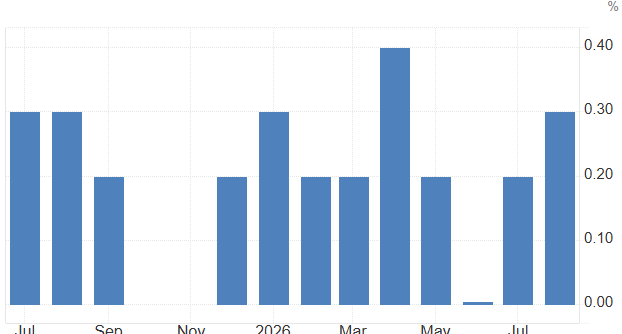
Producer prices rose 0.4%, consumer prices also increased 0.4% on the month, and energy accounted for much of the renewed pressure. Core inflation continues moving lower on an annual basis, but the monthly pace is proving much harder to tame.
That distinction matters because the Fed is trying to finish the last part of the inflation fight without creating unnecessary damage elsewhere.
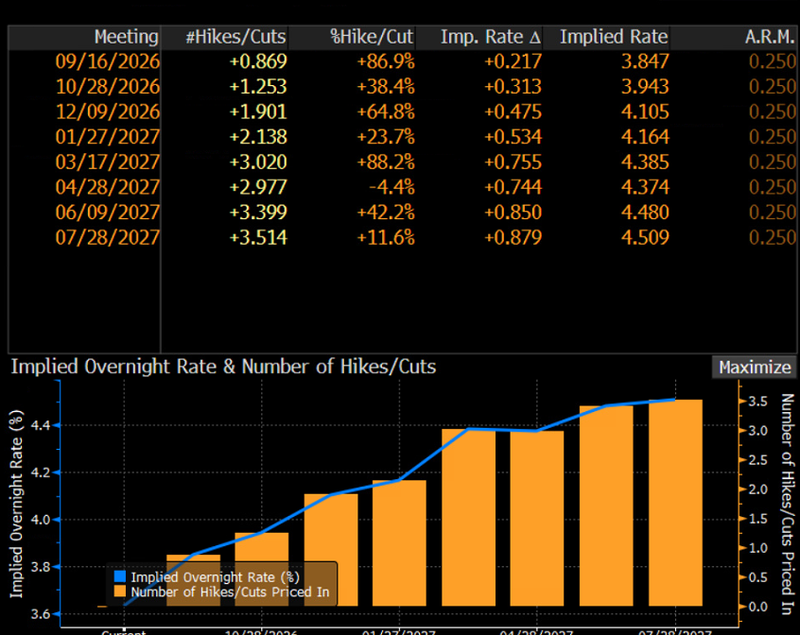
Markets are now entering the next Fed meeting expecting policymakers to sound cautious rather than comfortable with probability of 86% of a rate hike. Oil near $100, firmer producer prices and resilient activity have made it much harder to argue that inflation has fully returned to a predictable path.
Source: U.S. Bureau of Labor Statistics
Oil rebuilt its geopolitical premium
Brent climbed above $101 because traders stopped treating the Middle East as a temporary headline risk.
The Strait of Hormuz remains the market's biggest concern. Even though shipping continues, investors are pricing the possibility that freight costs, insurance premiums and export disruptions stay elevated rather than disappear overnight.
That matters beyond energy
Higher oil prices feed directly into inflation expectations, influence central-bank decisions and push bond yields higher long before fuel costs fully reach consumers.
Source: Trading view
The bond market ignored Washington's help
Washington tried to improve Treasury market liquidity. The market responded by demanding even higher yields.
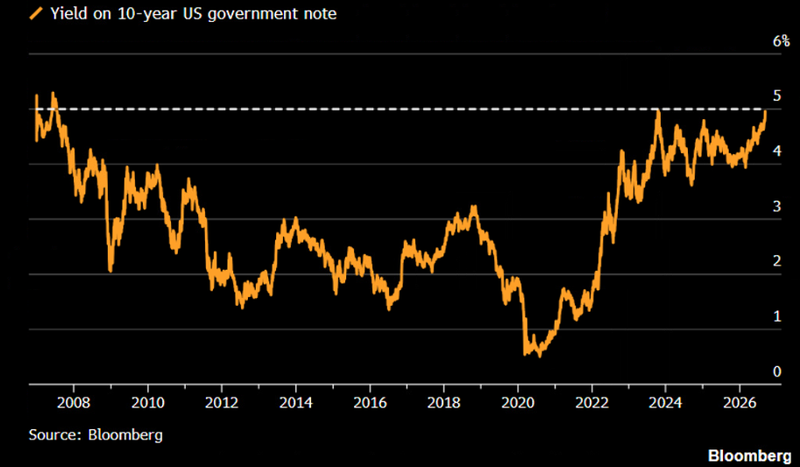
The Treasury expanded its longer-dated buyback operation, eventually repurchasing about $5.2 billion, but investors focused on a much larger issue: persistent inflation, elevated oil prices and a government still running a deficit of roughly 6% of GDP.
The 10-year Treasury moved closer to 5%, while the 30-year yield climbed above 5.3%.
That changes more than government borrowing
Mortgage costs, corporate financing and equity valuations all become harder to justify when long-term yields stay elevated. The bond market has become the strongest transmission channel for the entire macro story.
Source: Bloomberg
Britain's economy bought the BoE more time
The UK quietly delivered one of the week's more important surprises. GDP grew 0.4% in July after another solid reading in June, suggesting higher borrowing costs have not pushed the economy into stagnation.
That strengthens the Bank of England's position
A firmer economy gives policymakers more flexibility if inflation stays sticky, particularly with energy prices creating another upside risk. Sterling now heads into next week's inflation data with stronger economic momentum behind it than many investors expected.
The yen changed the global FX conversation
The week's biggest currency move came from Japan.
USD/JPY fell from above 160 to around 153 as markets increasingly priced another Bank of Japan rate hike and the gradual end of ultra-loose Japanese policy.
The move matters because of what it says about positioning
For years, investors borrowed cheap yen to buy higher-yielding assets elsewhere. As Japanese yields become more attractive, those carry trades become less rewarding, increasing the risk that capital keeps flowing back toward Japan.
What could move markets next week
Federal Reserve
The Fed meeting will dominate the week, but the tone may matter more than the decision itself.
The latest inflation reports have materially changed expectations. After stronger-than-expected CPI and PPI readings, markets are now pricing roughly an 86% probability of a rate hike, leaving policymakers under greater pressure to reinforce their inflation-fighting credibility rather than signal an early pivot.
That puts Chair Kevin Warsh's press conference at the centre of the week. If he argues that inflation remains the priority despite higher borrowing costs, Treasury yields and the dollar could extend their gains as investors price restrictive policy lasting longer.
A more balanced tone that acknowledges progress on inflation without committing to further tightening could ease pressure on yields and give equities and gold room to recover.
Source: Bloomberg
Bank of Japan
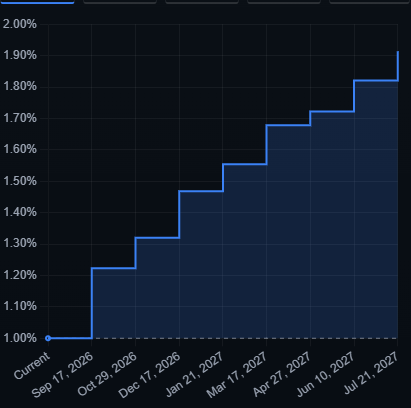
The BOJ meeting may become the biggest FX event of the week. Markets already expect another 25bp increase, making the guidance more important than the hike itself.
If officials signal that further tightening remains likely, the yen could strengthen further and add pressure to global carry trades that have already begun unwinding.
Source: Rate probability
UK inflation and the Bank of England
Britain faces a rare combination of stronger growth and higher energy costs. That makes CPI especially important because a firm reading would arrive just before the Bank of England's policy decision, leaving policymakers with fewer reasons to soften their stance. The combination of inflation and the BoE meeting could become the biggest driver for sterling and gilt yields.
Canada CPI
Canada's inflation report arrives with oil prices doing part of the market's work already. A stronger CPI reading alongside expensive crude would reinforce expectations that inflation pressures are becoming more persistent rather than purely imported.
For the Canadian dollar, commodity prices and inflation expectations are now pulling in the same direction.
Gold technical outlook
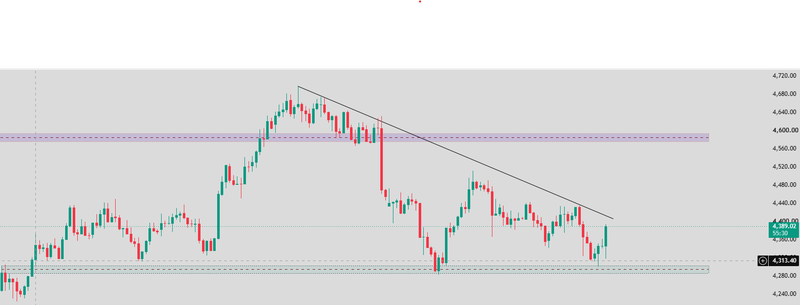
Gold has regained momentum after bouncing from the 4,313-support zone, but the broader picture still shows the market trading beneath a descending trendline from the recent highs. The rebound toward 4,390 is encouraging because buyers stepped in before price could retest the lower support range, yet the recovery has not been strong enough to break the pattern of lower highs.
The key battleground now sits between 4,390 and the 4,580-resistance zone, where previous supply repeatedly capped rallies. That area also aligns with the descending trendline, making it a high-conviction resistance cluster. On the downside, 4,313 remains the first level buyers need to defend, while 4,203 is the next major support if selling pressure returns.
Source: Trading view
WTI technical outlook
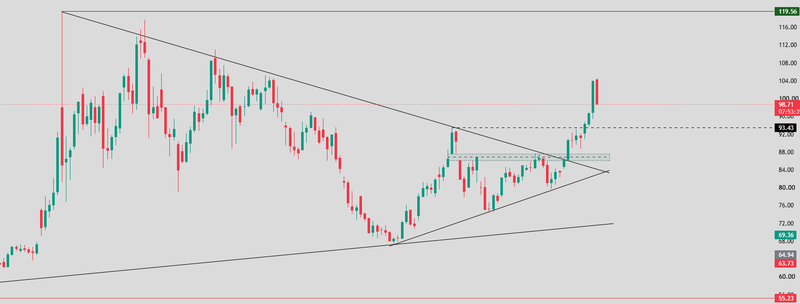
WTI has confirmed a bullish breakout after finally escaping the large symmetrical triangle that had contained price for months. The move above the descending trendline and the 87.95–93.40 resistance zone signals that buyers have regained control, with the breakout driven by sustained higher lows pressing against weakening overhead resistance.
The immediate focus is whether oil can hold above the former breakout area, now a key support zone. If price remains above 87.95, the breakout remains technically valid and keeps 119.56 in focus as the next major resistance. However, a move back below 87.95 would signal a failed breakout, exposing the rising trendline near 69.36 and potentially reopening the path toward the long-term support around 55.23.
Source: Trading view
USD/JPY technical outlook
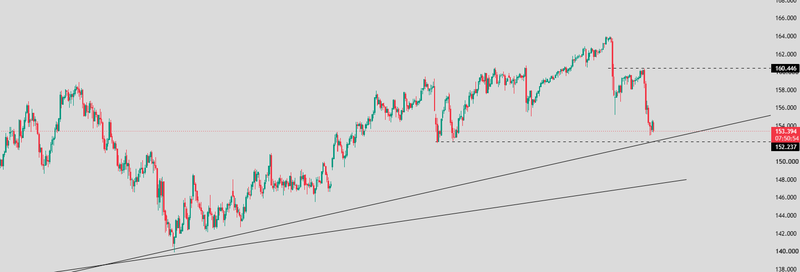
USD/JPY has shifted into a corrective phase after Japan's intervention and rising expectations of a Bank of Japan rate hike triggered aggressive selling. The pair has broken below the 160.45 resistance and is now testing the key 152.20 support area, where the longer-term ascending trendline converges.
This zone is critical, as it marks the boundary between a temporary pullback and a broader change in trend, while weaker bullish momentum suggests traders are reassessing long-dollar positions.
Source: Trading view


