
 Help
Help Week Ahead: stronger US growth meets softer inflation and weak labour market
The US rate story has become harder to trade in one direction. Inflation is easing, but growth is stronger than previously thought and the labour market is still showing limited signs of stress. Europe faces the opposite problem; energy is pushing inflation higher just as consumer momentum remains fragile.

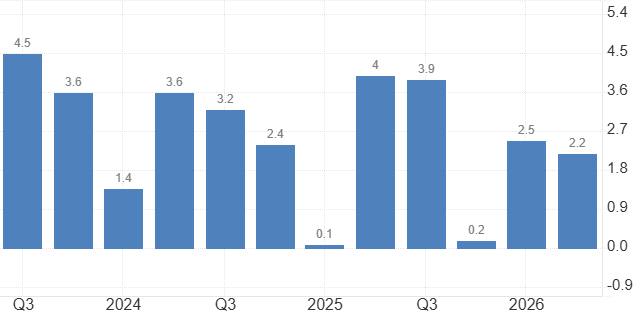
The US economy grew at a 2.2% annualized rate in Q2.
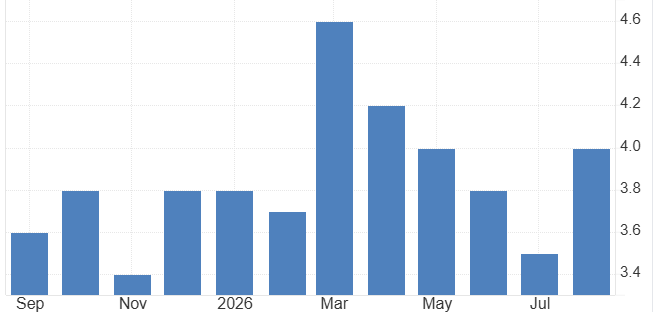
Headline CPI accelerated to 4.0% in August from 3.5%.
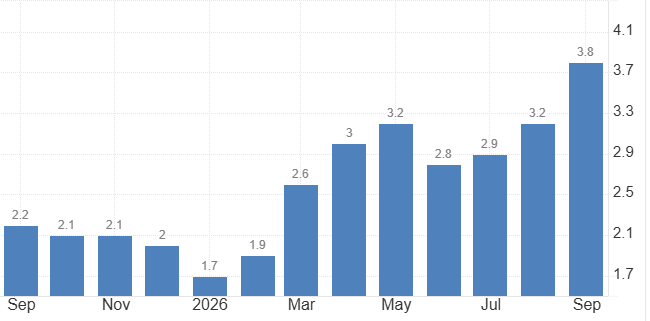
Eurozone inflation accelerated to 3.8% in September from 3.2%.
What drove markets this week?
US inflation gives the Fed room, but not a clear exit
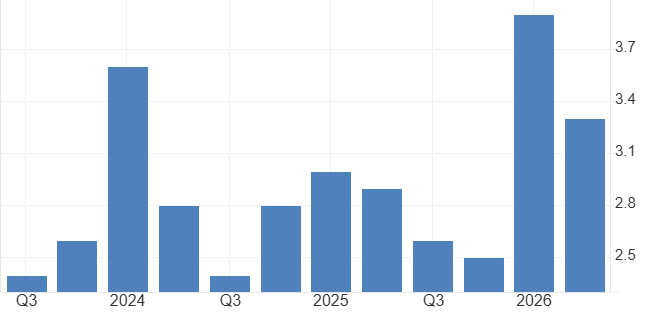
The latest PCE data offered some relief on inflation, with core prices rising 0.2% month on month in August while headline PCE increased 0.3%. Yet consumer spending jumped 0.9%, suggesting that demand remains firm.
That combination matters for rates. Inflation is moving in the right direction, but demand has not weakened enough to force the Fed into an aggressive easing cycle. The bond market therefore needs evidence of a broader slowdown before lower inflation can translate into a sustained decline in yields.
Source: U.S. Bureau of Economic Analysis
Stronger GDP changes the meaning of softer inflation
The US economy grew at a 2.2% annualized rate in Q2, well above the previous 1.5% estimate. Stronger consumption and investment show that domestic demand entered the second half on firmer ground than earlier data suggested.
That creates a different policy equation. Softer inflation alongside weak growth would strengthen the case for lower rates. Softer inflation alongside stronger growth gives the Fed more time to wait.
Source: U.S. Bureau of Economic Analysis
US jobs report sharply weakens the case for an October hike
The September jobs report changed the Fed debate almost overnight. The US economy added only 29,000 jobs, far below the roughly 90,000 expected, while unemployment rose to 4.2% and annual wage growth eased to 3.0%.
The significance is not simply the weak payroll headline... it is the combination of slower hiring, higher unemployment and softer wage pressure. Coming after the softer August PCE data, the report gives markets another reason to question whether the Fed needs to tighten again immediately.
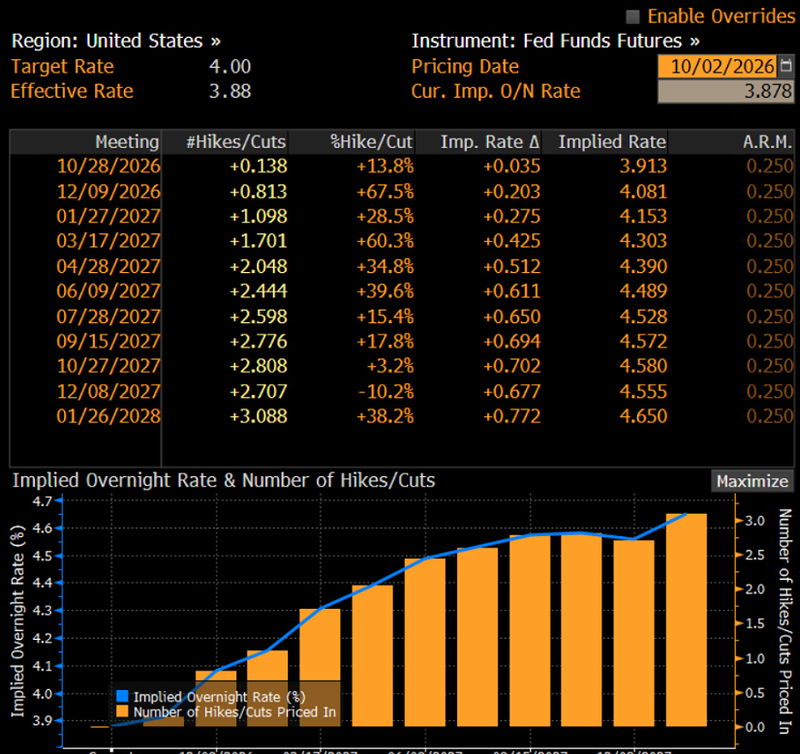
That repricing is already visible in interest-rate markets. Expectations for an October hike had been around 70% earlier in the week but moved sharply lower as Fed officials signalled there was no urgency and the labour data weakened. Market pricing subsequently moved toward roughly 20–25% for an October increase.
For Treasury yields, the message is straightforward the inflation problem has not disappeared, but the labour market is now providing the Fed with a stronger reason to wait.
Source: Bloomberg
US manufacturing is expanding, but input costs are rising again
ISM manufacturing slipped only marginally to 54.5, while new orders and employment improved. The bigger signal came from prices paid, which surged to 77.9.
That creates a difficult combination for policymakers. Activity remains expansionary, but companies are facing renewed cost pressure. Energy prices and supply disruptions could therefore feed back into inflation even while the economy continues to grow.
Australia’s inflation split keeps the RBA cautious
Headline CPI accelerated to 4.0% in August from 3.5%, while trimmed-mean inflation remained at 3.6%. The distinction matters. Higher fuel and housing costs are pushing headline inflation sharply higher, but underlying inflation has not accelerated.
The RBA therefore must determine whether the latest increase is mainly an external price shock or evidence that domestic inflation pressure is becoming more persistent.
Source: Australian Bureau of Statistics
Eurozone inflation exposes the ECB’s energy dilemma
Eurozone inflation accelerated to 3.8% in September from 3.2%, while core inflation reached 2.5%. Energy inflation surged to 18.8%.
That makes the ECB’s problem more complicated than the headline suggests. Energy can lift inflation without necessarily creating stronger domestic demand. If consumers simultaneously reduce spending, policymakers face the risk of tightening against an externally driven shock while growth is losing momentum.
Source: Eurostat
Japan’s Tokyo inflation puts the BOJ back under pressure
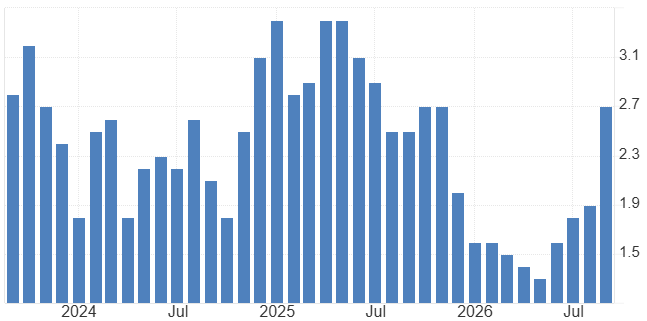
Tokyo’s core inflation accelerated to 2.7% year on year in September, up from 1.8% in August and above expectations of 2.4%. It was the fastest pace in ten months and the first time since January that the measure had exceeded the BOJ’s 2% target. A measure excluding fresh food and fuel rose 3.0%, while service inflation also accelerated.
This matters because the BOJ is no longer confronting an isolated increase in imported prices. Stronger service inflation suggests that higher costs are increasingly feeding into domestic prices, while a still-tight labour market gives firms more room to pass wage costs through.
The result is a growing tension between the BOJ’s inflation objective and market expectations for the pace of tightening. With the policy rate already at 1.25%, September’s inflation data give further weight to the argument for another increase, even as markets continue to debate whether that comes in October or December.
Source: Ministry of Internal Affairs & Communications
What to watch next week?
Can US services keep the growth story alive?
The ISM Services PMI will test whether the resilience seen in manufacturing is extending across the broader economy. A firm reading would keep demand strong and make the Fed more cautious about easing. A significant slowdown would give the softer inflation data much greater weight.
FOMC minutes could reveal how divided the Fed really is
The September meeting minutes will matter because the latest data have created competing signals. Softer inflation argues for patience, while stronger GDP and limited layoffs argue that the economy can tolerate restrictive policy.
Markets will therefore be looking for the balance of risks inside the committee rather than simply repeating the previous rate decision.
Eurozone retail sales will test the cost of higher energy prices
The next question for Europe is whether households are beginning to pull back as energy inflation accelerates. Weak retail sales alongside 3.8% inflation would reinforce the ECB’s growth dilemma, while stronger consumption would suggest that the economy is absorbing more of the shock.
Canada’s labour market adds another signal
Canada’s unemployment data will show whether domestic employment is weakening enough to offset support from elevated oil prices. A softer labour market would increase expectations for easier Bank of Canada policy, while stronger employment would complicate that view.
What could markets do next?
In the US, inflation is becoming less threatening, but growth is proving harder to break. In Europe, inflation is moving higher while demand risks moving lower. Japan sits somewhere between the two, inflation is accelerating enough to keep pressure on the BOJ, but policymakers still must balance tightening against the recovery in domestic demand.
That leaves bond yields as the main transmission mechanism across markets. Stronger US services data or a less dovish Fed discussion could push Treasury yields and the dollar higher. Evidence of slowing activity would give the opposite side of the argument more room.
Gold – technical outlook
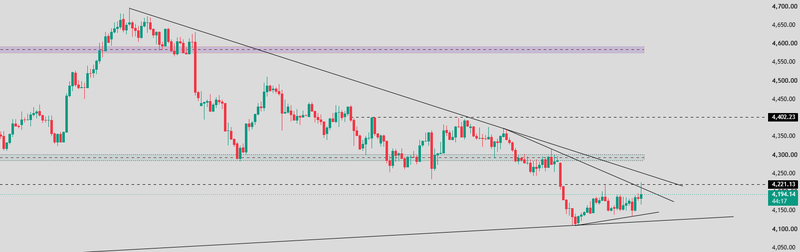
Gold is trading around 4,217, after breaking below the 4,280–4,300 support zone and extending the broader decline from the 4,680 area. The short-term structure remains bearish, with price still capped by the descending trendlines.
However, the rising longer-term trendline is providing support near 4,100–4,120. A recovery above 4,280–4,300 would improve the short-term structure and expose 4,360–4,400, while failure to reclaim that zone keeps pressure on 4,100, followed by 4,040.
Source: Trading view
EURUSD – technical outlook
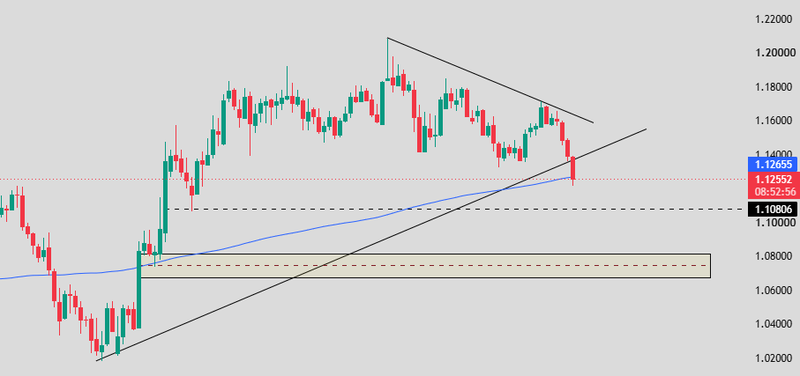
EUR/USD is trading around 1.1239, testing the rising trendline and the 126-period moving average near 1.1265 after failing to hold above the 1.14 area. The recent lower highs beneath the descending trendline show weakening upside momentum, while the current support test is technically important.
A sustained break below 1.1200–1.1180 would weaken the structure and expose the 1.1080 support, followed by the 1.0750–1.0800 demand zone. Conversely, holding the rising trendline and reclaiming 1.14 would restore bullish momentum, with 1.16–1.17 becoming the next resistance area.
Source: Trading view
USDJPY – technical outlook
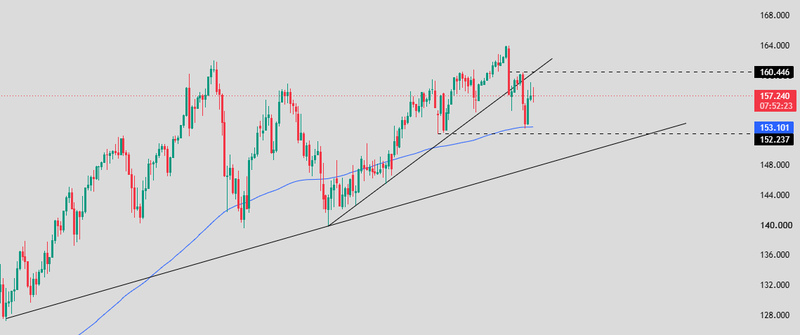
USD/JPY remains in a broader bullish structure, but the latest rejection from 164 has produced a sharp correction. Price is now around 157.17, sitting above the 153.10 moving average and the 152.24 horizontal support. The short-term ascending trendline has been broken, weakening near-term momentum.
A recovery above 160.45 would restore bullish momentum and reopen 162.5–164. Conversely, a sustained break below 152.24–153.10 would deepen the correction toward the broader rising trendline around 148–150.
Source: Trading view


