Help

Contango vs backwardation: what futures curves tell traders
Contango and backwardation reveal how futures markets price supply, demand, and the cost of holding commodities over time. Understanding the difference helps traders interpret market conditions, identify trading opportunities, and manage the hidden costs of futures positions.
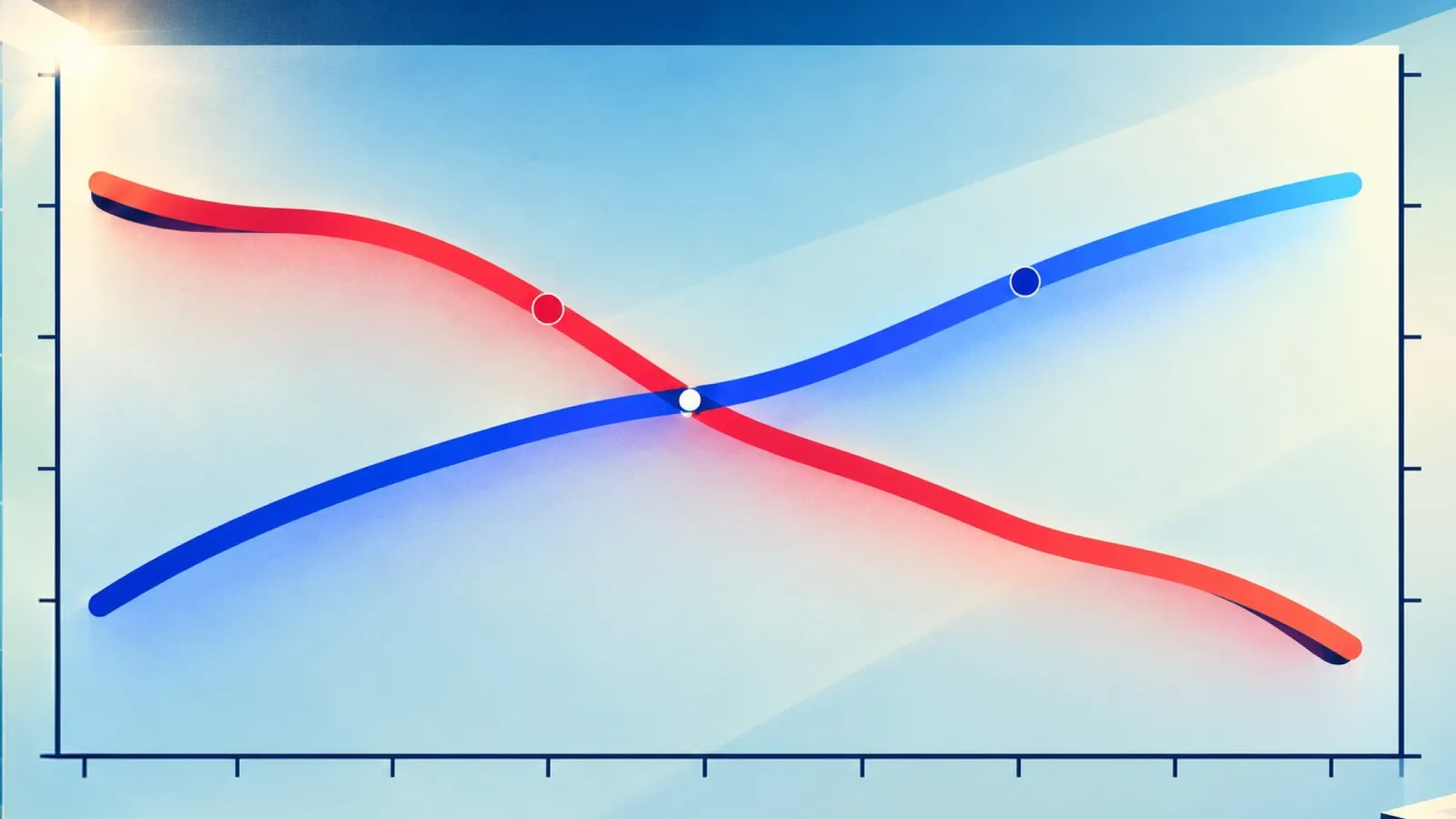
Contango occurs when longer-dated futures contracts trade above near-term contracts, often reflecting storage and financing costs.
Backwardation develops when near-term contracts command a premium, frequently signaling immediate supply shortages or strong demand.
The shape of the futures curve influences trading returns through roll yield, even when the underlying commodity price remains relatively stable.
Futures curves provide valuable insight into inventory conditions, market expectations, and potential changes in commodity prices.
What are contango and backwardation in futures trading?
Two oil traders can agree that crude prices will rise over the coming months and still experience very different investment returns. The difference may have little to do with their forecasts. It can come from the structure of the futures market itself.
Every futures contract has an expiration date, and contracts covering different delivery months frequently trade at different prices. When these prices are plotted according to their expiration dates, they form what traders call a futures curve.
The shape of that curve reveals how the market values immediate delivery compared with delivery several months into the future. Two conditions dominate this relationship: contango and backwardation.
Contango describes a market in which futures contracts with later expiration dates trade at higher prices than contracts with earlier expirations. Backwardation describes the opposite condition, with near-term contracts trading above longer-dated contracts.
Both structures are particularly important in commodity markets, where storage availability, transportation costs, interest rates, and physical supply constraints influence the relationship between prices across different delivery dates.
What is contango, and why does it happen?
Imagine West Texas Intermediate (WTI) crude oil trading at $70 per barrel for delivery next month, while a contract expiring six months later trades at $74. The futures curve slopes upward, indicating contango.
The $4 premium may initially suggest that traders expect oil to become more expensive. However, the relationship is more complicated. Holding physical crude oil involves storage, insurance, financing, and transportation expenses. A future delivery price can reflect these costs without implying that traders necessarily expect spot oil prices to rise by $4.
Contango frequently develops when physical supplies are plentiful relative to immediate demand. Producers and traders may prefer to store surplus oil rather than sell it immediately, provided the premium available in futures contracts compensates them for the cost of carrying inventory.
The relationship is particularly visible in oil markets because storage capacity is limited and inventories require significant infrastructure. When storage facilities become increasingly full, the premium attached to later delivery can widen substantially.
What is backwardation, and what does it reveal?
Backwardation tells a different story about physical supply.
Suppose the nearest crude oil futures contract trades at $85 per barrel, while the six-month contract trades at $79. Buyers are paying an additional $6 for earlier delivery.
Such a premium can emerge when refiners need oil immediately, inventories are falling, or supply disruptions threaten near-term availability. Under these circumstances, access to physical inventory becomes particularly valuable.
Commodity traders describe this benefit as the convenience yield, the economic advantage of having a commodity available when it is needed. A refinery, for example, may be willing to pay more for crude oil today to avoid interrupting production.
Backwardation often indicates that immediate market conditions are tighter than the balance expected further into the future. However, it does not guarantee that commodity prices will fall. Spot prices and the entire futures curve can rise together if a supply shortage becomes more severe.
Why futures curves matter more than the headline oil price
Most financial headlines concentrate on the price of the nearest oil contract. A barrel of WTI trading at $80 attracts attention, especially when prices are rising sharply.
Professional commodity traders also examine the difference between delivery months because that relationship can reveal developments that the headline price alone cannot capture.
Consider oil rising from $75 to $80 while the premium on near-term contracts over later contracts widens. That combination may suggest immediate supply conditions are tightening faster than the market previously anticipated.
Now consider oil rising while its futures curve moves deeper into contango. Traders may interpret that combination differently, particularly if the longer-dated contracts are rising faster because of expectations about future production, demand, or carrying costs.
These differences help explain why inventory reports, production disruptions, refinery demand, and seasonal consumption patterns can influence futures spreads even when the outright oil price changes relatively little.
How contango and backwardation affect trading returns
One of the most overlooked aspects of futures trading is roll yield, which describes the return effect associated with futures prices moving along the curve as contracts approach expiration.
Futures traders who want continuous exposure must eventually close expiring contracts and open new positions in later-dated contracts. This process is called rolling.
In contango, a trader maintaining a long position typically sells the cheaper expiring contract and buys a more expensive later-dated contract. If the upward-sloping curve persists and other market conditions remain unchanged, the new contract tends to decline as it approaches maturity. This creates a negative roll-return effect.
Backwardation can create the opposite result. A long trader rolls from a relatively expensive nearby contract into a cheaper deferred contract. If the curve remains backwardated, the new contract may appreciate as it approaches expiration, providing a positive roll-return contribution.
Importantly, buying the more expensive contract does not create an immediate cash loss equal to the price difference. The economic effect develops through subsequent futures price movements. Actual returns also depend on changes in the entire curve, transaction costs, collateral income, and market direction.
Why oil ETFs can perform differently from oil prices
The influence of roll yield extends beyond professional futures accounts.
Some exchange-traded commodity products gain exposure through futures contracts rather than holding physical assets. Their performance can therefore diverge considerably from movements in the underlying commodity's spot price.
An investor might correctly anticipate that oil prices will remain stable or rise modestly, yet a futures-based product could underperform because of persistent contango and the accompanying negative roll-return effect.
Backwardation can provide a tailwind to long futures-based exposure, although gains are never guaranteed. Changes in the underlying oil price, the shape of the curve, operating expenses, and the fund's contract selection all influence the eventual return.
Understanding this distinction is particularly important for investors planning to hold commodity funds over extended periods.
The 2020 oil collapse: when storage became more valuable than crude
One of the most remarkable examples of futures market stress occurred on April 20, 2020, when the expiring May WTI futures contract settled at negative $37.63 per barrel.
The pandemic had caused an extraordinary collapse in oil demand, while production continued and storage facilities became increasingly constrained. Traders unable or unwilling to accept physical delivery rushed to exit expiring contracts.
The result was an extreme dislocation in near-term futures prices. The episode demonstrated how delivery obligations, inventory capacity, and the timing of contract expiration can overwhelm conventional assumptions about commodity valuations.
For traders, the lesson extended far beyond the unusual negative price. The futures curve contains information about the physical market that can become critical when supply chains are under stress.
How traders use contango and backwardation in their strategies
Futures curves can support several approaches to market analysis, particularly when combined with inventory data and broader supply-demand research.
A trader expecting an oil shortage to intensify might monitor whether the premium on nearby contracts increases relative to later deliveries. That relationship can be expressed through a calendar spread, which involves buying one contract month and selling another.
For example, buying the nearby contract and selling a later contract creates exposure to a widening near-term premium. The position can benefit if backwardation strengthens, although it can lose money if the spread narrows instead.
Contango can also create opportunities for physical commodity merchants able to purchase inventory, store it, and sell futures contracts against it. The strategy becomes economically attractive when the locked-in futures premium exceeds storage, financing, insurance, and other associated costs.
These strategies carry meaningful risks, including changing spreads, margin requirements, unexpected delivery complications, and liquidity constraints.
Can contango predict falling prices and backwardation predict rising prices?
A common misconception is that contango signals a bearish market while backwardation guarantees higher prices.
In reality, futures curves describe the relationship between prices across delivery dates. They are influenced by expectations, but they are not direct forecasts of future spot prices.
Gold, for instance, can trade in contango because financing and carrying costs contribute to futures premiums, even during a strong bullish trend.
Oil can remain backwardated while spot prices decline if immediate supply conditions are still tighter than those expected later.
This distinction is fundamental. Traders examining futures curves should evaluate outright price trends, calendar spreads, inventories, financing conditions, and the economic forces influencing physical supply together. The strongest market interpretation comes from understanding how those variables interact.
What the futures curve ultimately tells traders
Contango and backwardation offer a perspective that ordinary price charts often miss. They reveal the market's changing valuation of time, inventory, and immediate access to commodities.
An upward-sloping curve can highlight carrying costs, ample supplies, or expectations of tighter conditions later. An inverted curve often reflects the premium attached to scarce near-term inventory. Both structures can change quickly as economic conditions evolve.
For traders, understanding the futures curve adds another dimension to commodity analysis. It helps explain why similar movements in oil prices can produce different investment returns, why supply shocks reshape market structure, and why the relationship between contract months sometimes matters as much as the outright price.
FAQs
What is the main difference between contango and backwardation?
Contango means later-dated futures are more expensive, while backwardation means near-term contracts command a premium.
Is contango bullish or bearish?
Neither necessarily. It reflects the futures price structure, often influenced by storage costs and supply conditions.
Does backwardation benefit futures traders?
It can provide positive roll returns for long positions, although price movements can outweigh that benefit.
What is roll yield in futures trading?
It is the return effect associated with futures prices converging toward spot prices as contracts approach expiration.