Help
Help GDP meaning: What gross domestic product tells you
Gross Domestic Product, or GDP, measures the value of goods and services produced by a country over a set period. It helps assess economic growth and investment conditions, although it does not capture every aspect of social development.
Real GDP uses the deflator to remove the effects of inflation, making it easier to compare a country’s structural growth over time.
During an expansion phase, consumption and investment usually rise, although excess demand can create inflationary pressure across the wider economy.
Investors follow GDP closely because economic booms can often signal longer upward trends in global stock markets.
GDP does not measure social welfare or income distribution, so strong output can exist alongside high levels of domestic inequality.
What GDP measures and why it matters
GDP as a snapshot of economic activity
Gross Domestic Product (GDP) is defined as the total monetary value of all finished goods and services produced within a country's borders during a specific period. This metric is uniquely relevant because it reflects the economic momentum of major macroeconomic aggregates, such as production, capital investment, and consumer spending. Consequently, it demonstrates to market participants whether a nation is experiencing expansion or contracting due to underlying economic hardship.
Economic growth and business cycles
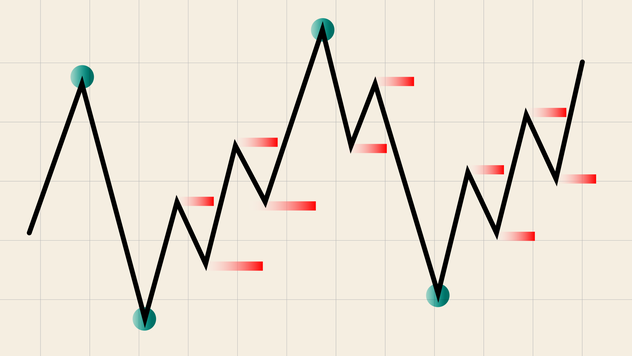
The trajectory of GDP is inherently non-linear, fluctuating between movements of expansion and contraction in what is textually defined as the business cycle. Although the theoretical framework outlines various descriptive stages of an economic cycle, four phases are considered fundamental to understanding its mechanics: expansion, boom, contraction, and recession.
The expansion stage is characterised by robust consumer spending, which allows corporations to develop and execute their capital investment projects since profit margins remain elevated due to consistent demand. Concurrently, public expenditure is high and employment remains strong because both private enterprises and the government continue to hire, providing widespread economic well-being. However, expansion typically reaches a growth ceiling when intense consumption drives up the prices of goods and services; aggregate supply eventually fails to satisfy aggregate demand, thereby generating an inflationary process.
When inflation permeates the business cycle, aggregate demand begins to decline as consumers suffer a loss of purchasing power. In response, central banks and fiscal authorities implement restrictive monetary and fiscal policies, such as elevating benchmark interest rates or increasing taxes, with the explicit aim of cooling consumption and returning inflation to controlled levels. Under higher borrowing rates and increased tax burdens, consumers reduce their expenditure, which directly impacts corporate profit margins. This contraction puts downward pressure on the employment sector, leading to reduced hiring or outright layoffs if the macroeconomic environment complicates further. If the business cycle ultimately deteriorates into a state of recession, governments and central banks pivot toward expansionary policies to stimulate activity, causing the cycle to regain its upward momentum.
How GDP is used by investors
Investors closely monitor a country's economic cycle because macroeconomic conditions eventually map directly onto the performance of equity markets. If an economy is expanding or booming, stock markets tend to reflect sustainable uptrends. This correlation exists because listed corporations can successfully implement growth projects while their profit margins remain structurally strengthened. In stark contrast, if the business cycle is contracting for prolonged periods, this retrenchment is reflected in the equity markets through bear markets.
How GDP is calculated
Gross Domestic Product is calculated by summing all the monetary exchanges implicit in the production of final goods and services within a nation. The standard formula utilised is as follows:
- GDP = C + I + G + (X - M)
Where:
- C = Private consumption
- I = Private investment
- G = Government expenditure
- X = Exports
- M = Imports
If the consumption, investment, and production components exhibit continuous increases, it can be inferred that the economy is expanding. Meanwhile, if these constitutional components of GDP are declining, it can be inferred that the economy is in a process of contraction—or entering a formal recession if these periods of contraction accumulate sequentially.
Nominal GDP vs Real GDP
Inflation and the GDP deflator
Gross Domestic Product is generally measured in current market prices, known as nominal GDP, and constant prices, known as real GDP. The core differentiator between the two metrics is the GDP deflator, a statistical tool that allows the inflationary price component of goods and services produced within a country to be isolated and eliminated.
Real GDP for comparing over time
Real GDP is the metric conventionally deployed to evaluate a country's authentic growth over time, as it is completely insulated from the price components of inflation that can skew raw results. For example, if nominal GDP reflects a year-on-year growth rate of 12%, but deflating the figure to obtain real GDP yields an actual growth rate of 4%, the trajectory of real GDP provides a more realistic representation of economic output. Under these conditions, the country analysed may be suffering from a significant, distortive inflationary process.
Limitations and criticisms of GDP
Unpaid work and the informal economy
Although the application of GDP as a preponderant metric of a country's economic health is universally accepted, major criticisms exist regarding its structural evaluation methodology. For instance, GDP completely omits activities of utmost importance to the well-being and stability of a society, such as domestic labour and caregiving, because these activities are not categorised as paid work. Simultaneously, widespread informal economic activities fail to register within official GDP calculations, which can represent a highly relevant weighting of total output in developing economies.
Income distribution and standard of living
Another of the most pressing criticisms is that GDP does not evaluate the holistic development of a country, but rather focuses exclusively on the transactional volume of its economy. GDP fails to capture broader social welfare, the equitable distribution of domestic wealth, balanced capital investment to meet the infrastructure needs of marginalized communities, or equal opportunity. Consequently, a nation could post exceptional economic strength and expansionary behaviour while its wealth remains centralized within a minority sector of the population, leaving the majority trapped in a state of poverty or systemic social inequality.
Conclusion
The Gross Domestic Product remains the foundational macroeconomic indicator to diagnose systemic health and anticipate the broader movements of global financial markets. However, as the preceding analysis highlights, economists, analysts, and investors must never interpret this metric in complete isolation. Understanding the distinction between nominal and real terms, accurately identifying the current phase of the business cycle, and recognizing what the metric structurally omits—such as economic informality and distribution inequality—is absolutely essential to obtain a reliable economic snapshot that supports truly strategic financial decision-making.
If you're interested in trading indices, foreign exchange, shares, or commodities, consider exploring the CFD contracts offered by Equiti Group. Please note that trading leveraged derivatives involves a high level of risk and may not be suitable for all investors.
FAQs
What is the central difference between nominal GDP and real GDP?
The difference lies entirely in how inflation affects each metric. Nominal GDP calculates total economic output using current market prices, which can artificially inflate growth figures if prices are rising rapidly. By contrast, real GDP measures output at constant base-year prices by utilizing the GDP deflator. This distinction is vital for analysts, since real GDP eliminates inflationary bias, thereby reflecting the true increase or decrease in the actual physical volume of goods and services produced by a nation.
How do business cycles influence central bank decisions?
When an economy enters a boom phase and intense consumption drives inflation upward, central banks intervene by applying restrictive monetary policies, primarily by raising benchmark interest rates. This makes credit more expensive and effectively cools aggregate demand. Conversely, if GDP data reveal a prolonged contraction or a formal recession, policymakers implement expansionary policies, cutting interest rates to stimulate borrowing, revive private investment, encourage corporate hiring, and restore growth momentum to the overall business cycle.
What are the main economic activities that GDP fails to account for?
GDP has intrinsic methodological limitations in that it completely ignores unpaid work, such as household management and family care, which are foundational to society. It also excludes the informal economy, which encompasses legitimate commercial transactions that are simply not registered with the relevant tax authorities. This latter omission is especially critical in developing countries, where the informal sector often accounts for a high percentage of total economic activity, meaning that the real GDP of these nations could be significantly underestimated in official statistics.