Help
Help 
How to tell a bull market is happening: bull market guide
A bull market is often marked by optimism, rising stock prices and growing investor confidence. While these conditions can support strong gains, they can also lead to overconfidence when investors expect prices to keep climbing.
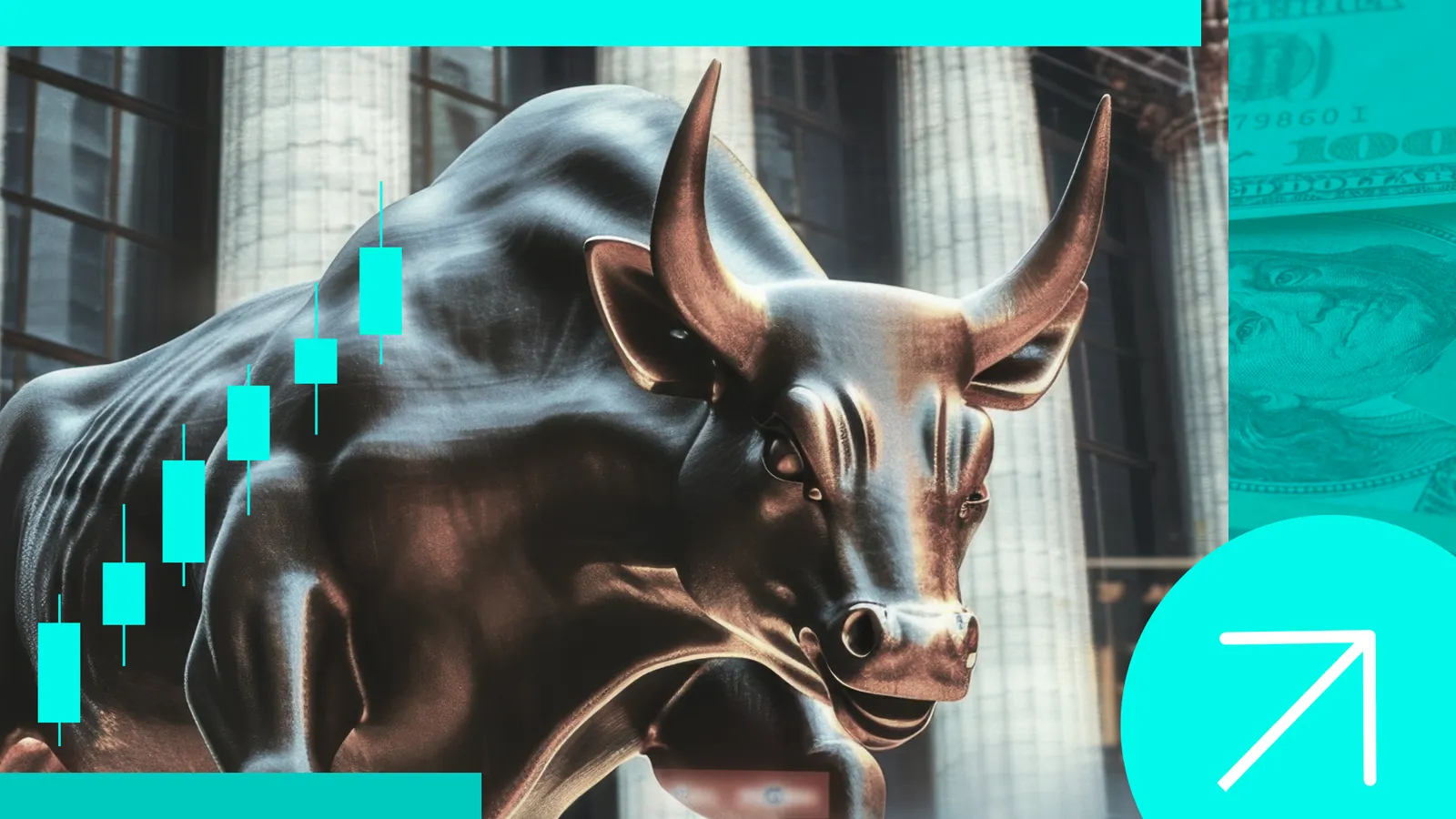
A bull market is a sustained period where asset prices move higher and investor confidence strengthens.
Bull markets are often driven by strong economic growth, improving corporate earnings and supportive monetary policy.
Bull markets usually unfold in phases, rather than rising in a straight line.
What is a bull market?
A bull market is a sustained period during which the prices of assets rise over time, supported by improving economic conditions and growing investor optimism. While many investors use a 20% rise from a recent market low as a practical benchmark, there is no single rule that officially marks the beginning of every bull market.
What matters is the overall trend
During a bull market, buyers consistently outnumber sellers, pushing prices to higher highs while temporary pullbacks attract new demand rather than triggering widespread selling. The positive momentum often spreads across multiple sectors, reflecting stronger confidence in both the economy and corporate profitability.
Bull markets are most associated with stock markets, but they can also occur in commodities, currencies, bonds and cryptocurrencies whenever prices remain in a sustained upward trend. Rather than being driven by a single event, bull markets usually develop as investors become increasingly confident that economic conditions will continue improving.
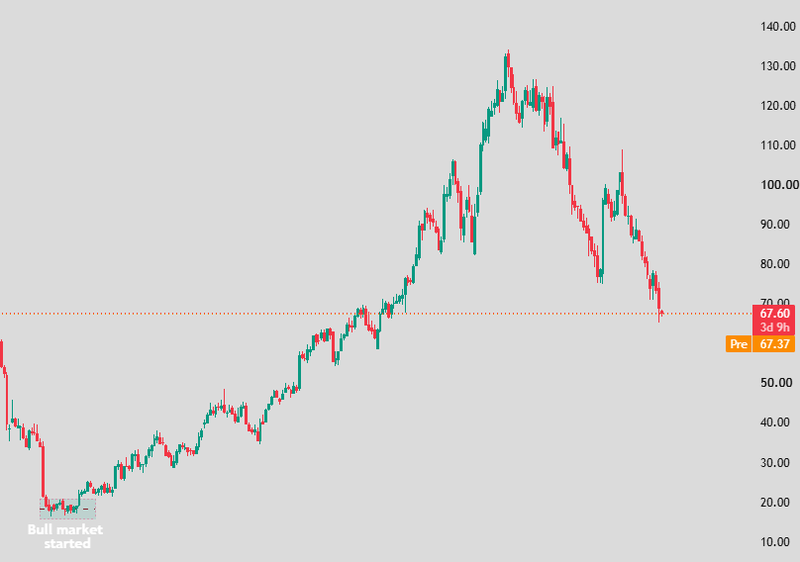
Source: Trading view
Why is it called a bull market
The term "bull market" comes from the way a bull attacks. A bull drives its horns upward, symbolizing rising prices and upward market momentum.
Its opposite is a bear market. Bears tend to strike downward with their paws, making them a natural symbol for falling prices and declining investor confidence.
Over time, these two animals became widely recognized as simple ways to describe the overall direction of financial markets. Today, investors use the terms around the world regardless of the asset being traded.
What causes a bull market?
A healthy economy is one of the strongest foundations for a bull market. As economic activity expands, businesses generally sell more products and services, unemployment remains relatively low and consumer spending increases.
Stronger demand allows many companies to generate higher revenues, supporting better financial results and encouraging investors to buy shares.
Economic growth also improves business confidence, leading companies to invest more, hire additional workers and expand operations, creating a cycle that can support rising asset prices.
Falling interest rates
Lower interest rates can provide another powerful boost to financial markets. When borrowing becomes cheaper, businesses often increase investment while consumers find it easier to finance major purchases such as homes and vehicles.
Lower rates also reduce financing costs for companies, helping support future earnings growth. At the same time, lower bond yields can make stocks appear more attractive as investors search for higher long-term returns.
Not every bull market begins with falling interest rates, but accommodative monetary policy has historically provided a supportive backdrop for many extended market rallies.
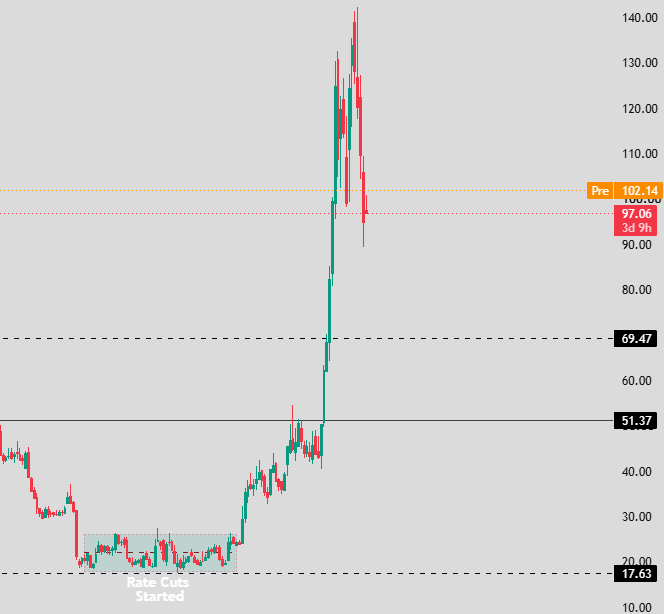
Source: Trading view
Rising corporate earnings
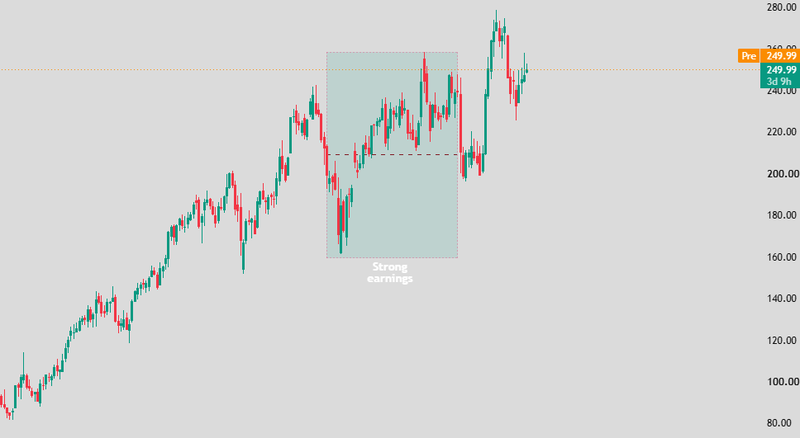
When businesses consistently report stronger profits, investors become more willing to pay higher valuations because they expect future cash flows to continue growing.
This is why earnings seasons often play an important role during bull markets. Strong corporate results reinforce confidence that higher stock prices are supported by improving fundamentals rather than speculation alone.
If earnings continue expanding across a broad range of industries, the bull market often becomes more durable.
Source: Trading view
Investor confidence
As prices continue rising, investors gain confidence that the positive trend will continue. More buyers enter the market, institutional investors increase their exposure, and retail participation often accelerates.
Positive sentiment alone cannot sustain a bull market forever, but it can strengthen existing momentum when supported by healthy economic conditions and rising corporate profits.
That combination of improving fundamentals and growing confidence is what typically drives the strongest and longest-lasting bull markets.
How do you know a bull market has started?
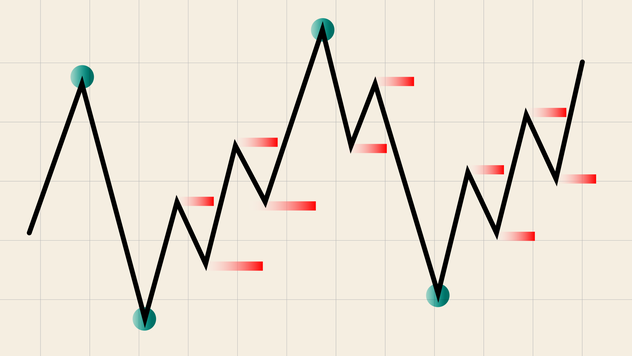
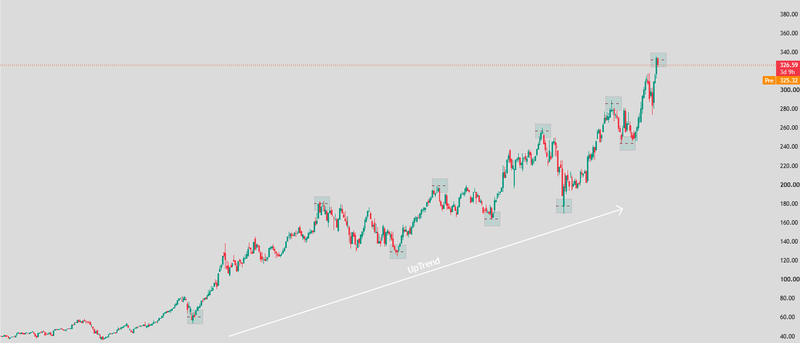
One of the clearest signs of a bull market is a consistent pattern of higher highs and higher lows.
Rather than making new lows after every rally, the market begins recovering from pullbacks at increasingly higher levels. Buyers step in sooner, selling pressure fades and the overall trend gradually turns upward.
This pattern reflects growing demand and often marks the point where confidence starts returning to the market. It's important to remember that bull markets are rarely smooth. Short-term declines are normal, but they tend to be temporary pauses within a broader upward trend.
Source: Trading view
Broad market participation
As confidence improves, gains spread across different sectors and industries. Technology, financials, industrials, consumer stocks and other sectors begin moving higher together, showing that investors expect broader economic improvement rather than isolated growth.
Market breadth is closely watched because it helps distinguish a sustainable rally from one driven by only a few heavyweight stocks.
When more companies participate in the advance, the trend is generally viewed as stronger and more resilient.
Strong trading volume
When prices rise alongside increasing trading activity, it suggests investors are committing fresh capital rather than simply reacting to short-term news.
Institutional investors, including pension funds and asset managers, typically become more active as confidence improves. Their participation helps support longer-lasting trends because they usually invest with a long-term outlook rather than seeking quick gains.
Although volume alone doesn't confirm a bull market, rising prices supported by healthy trading activity tend to carry greater credibility.
Improving economic data
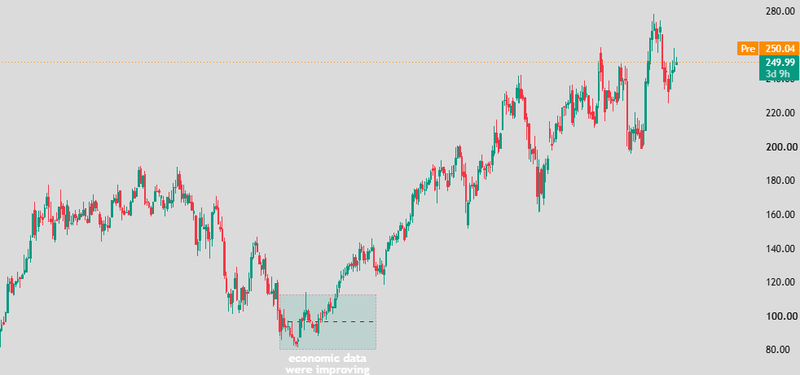
Investors pay close attention to indicators such as GDP growth, employment figures, consumer spending, manufacturing activity and inflation. Stronger economic data suggests businesses are likely to generate higher earnings, supporting higher valuations across financial markets.
Source: Trading view
Bull market lifecycle
Bull markets rarely move in a straight line from beginning to end. Like the broader economy, they tend to evolve through different stages, with investor behaviour changing as confidence grows.
Understanding where the market may sit within the cycle can help investors avoid making emotional decisions during periods of optimism or uncertainty.
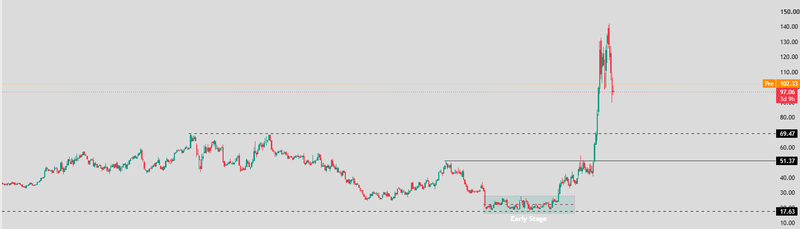
Early stage
Economic news may still appear mixed, and many investors remain cautious after recent losses. However, markets begin responding positively to improving fundamentals before the broader economy fully recovers.
At this point, valuations are often relatively attractive because investor sentiment remains fragile. Long-term investors who recognize improving conditions early may benefit as confidence gradually returns.
Source: Trading view
Growth stage
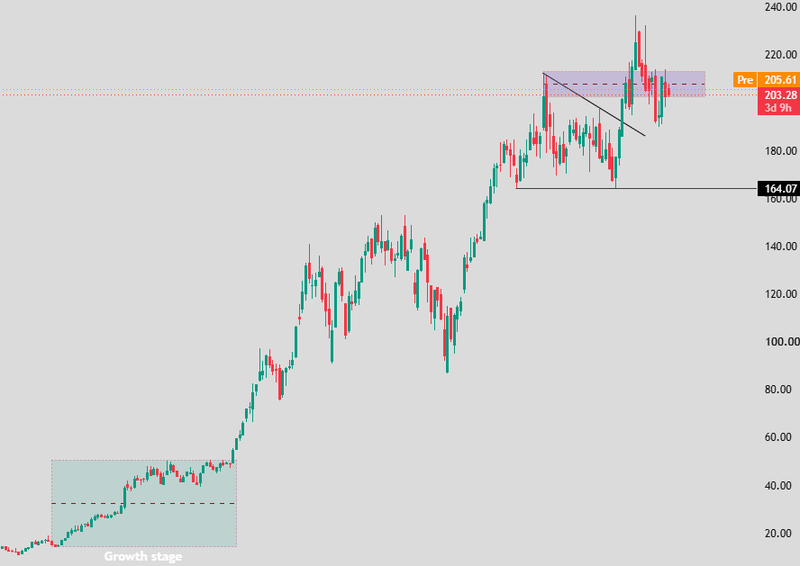
Corporate earnings accelerate, unemployment declines, consumer spending remains healthy and investor confidence continues building. This is typically the period when participation broadens across sectors, institutional investors increase their exposure and market momentum becomes more established.
Although occasional pullbacks occur, they are often viewed as buying opportunities rather than signs of a trend reversal. Many of the largest gains during a bull market are generated during this stage.
Source: Trading view
Mature stage
Markets continue rising, but the pace of gains often begins to moderate as valuations become more demanding. Companies are still reporting solid earnings, yet investors are becoming increasingly selective because expectations are already high.
During this stage, markets often become more sensitive to interest-rate decisions, inflation data and corporate guidance. Positive news may produce smaller gains, while disappointing developments can trigger sharper corrections.
Late stage
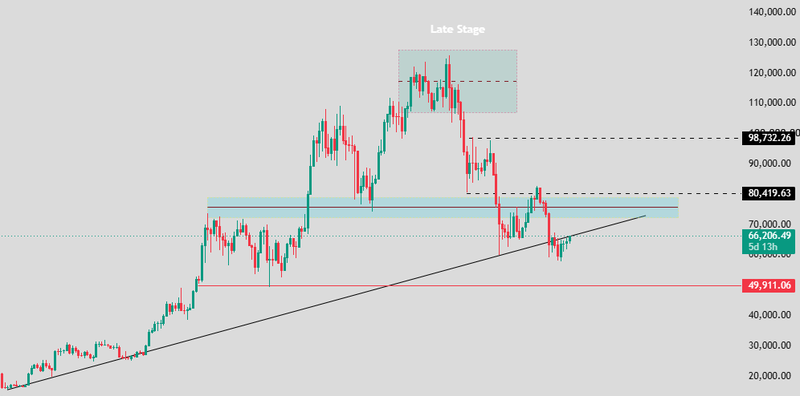
Retail participation usually accelerates, financial headlines become increasingly bullish, and investors may begin if prices will continue rising indefinitely. Speculative assets often outperform as investors become more willing to accept higher levels of risk.
While the market may continue reaching new highs, valuations can become increasingly difficult to justify based solely on earnings growth. History shows that periods of excessive optimism frequently develop near the end of major bull markets, although identifying the exact turning point remains extremely difficult.
Source: Trading view
Market peak and transition
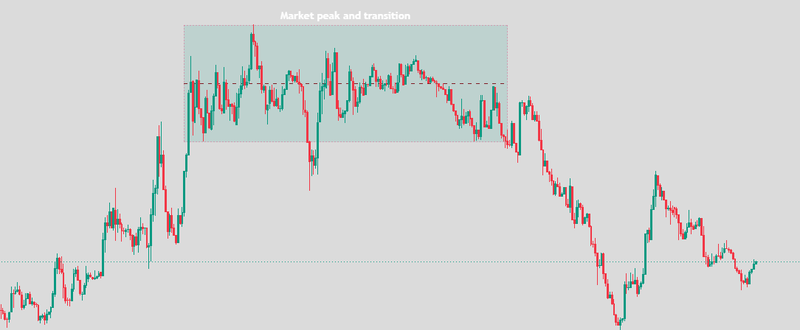
Some end because inflation forces central banks to raise interest rates aggressively. Others lose momentum after economic growth slows, corporate earnings weaken or an unexpected financial or geopolitical event changes investor sentiment.
The transition rarely happens overnight
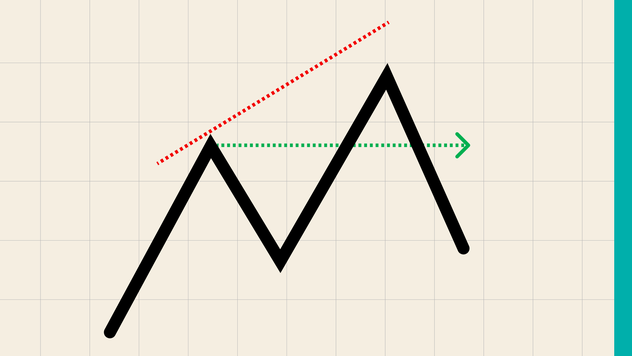
Instead, markets often become more volatile as investors reassess future growth prospects. Larger pullbacks become more frequent; confidence begins fading and buyers become less willing to push prices to new highs.
Recognizing these changes is important, but predicting the exact market peak is almost impossible. For most long-term investors, maintaining discipline and managing risk tends to be more effective than trying to perfectly time every market cycle.
Source: Trading view
Strategies during a bull market
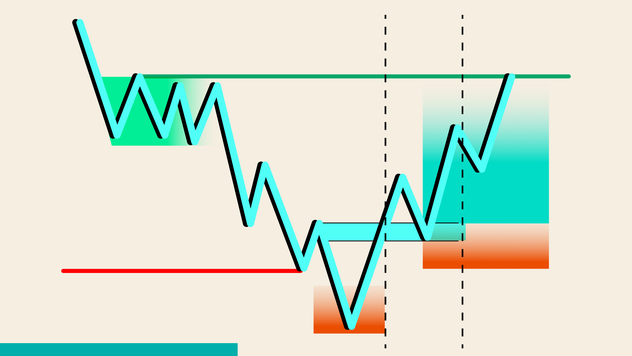
Trend-following strategy aims to stay invested while prices continue making higher highs and higher lows. Rather than attempting to buy at the exact bottom or sell at the exact top, trend followers focus on participating in most of a sustained market move.
Many traders use moving averages, support levels or other technical indicators to help identify whether the broader trend remains intact. Although no indicator is perfect, following the trend can help investors avoid making emotional decisions during periods of market volatility.
Source: Trading view
Dollar-cost averaging
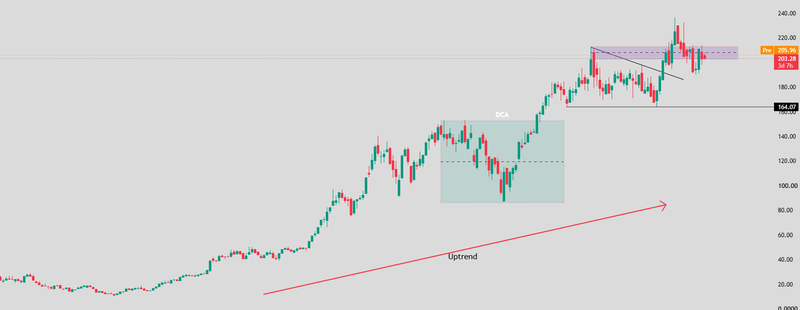
Trying to invest all your money at the perfect time is extremely difficult, even for professional investors. Dollar-cost averaging removes much of that pressure by investing a fixed amount at regular intervals, regardless of market conditions.
When prices rise, each investment buys fewer shares. When prices fall, the same amount purchases more. Over time, this approach helps smooth the average purchase price while reducing the emotional impact of short-term market fluctuations. For long-term investors, consistency often matters more than trying to perfectly time the market.
Source: Trading view
Taking profits gradually
Rather than trying to identify the exact market peak, many experienced investors choose to take profits gradually. Selling part of a winning position allows them to lock in gains while maintaining exposure if the broader uptrend continues.
This balanced approach reduces the pressure of making an all-or-nothing decision and can also provide cash for future investment opportunities.
How to manage risk in a bull market
Instead of expecting every investment to continue rising indefinitely, establish realistic return objectives before entering a position. Having clear targets can help remove emotion from investment decisions and make it easier to lock in gains when appropriate.
Use stop-loss orders carefully
Stop-loss orders can help limit losses if market conditions change unexpectedly. However, they should be used thoughtfully. Setting stops too close to the current market price may result in selling during normal day-to-day volatility, while placing them too far away may reduce their effectiveness. Investors should consider the typical volatility of an asset rather than applying the same stop-loss level to every investment.
Rebalance your investments
As some investments outperform others, your portfolio allocation naturally changes over time. Periodic rebalancing helps restore your desired mix of assets by reducing positions that have grown too large and increasing exposure to areas that now represent a smaller share of the portfolio. This process helps maintain an investment strategy that remains aligned with your long-term objectives.
FAQs
What is a bull market?
A bull market is a prolonged period in which the prices of financial assets, such as stocks, continue to rise. It is usually supported by improving economic conditions, growing corporate earnings and stronger investor confidence.
How long does a bull market usually last?
There is no fixed duration for a bull market. Some last only several months, while others continue for many years. The length depends on factors such as economic growth, interest rates, corporate earnings and investor sentiment.
What is the difference between a bull market and a bear market?
A bull market is characterized by rising prices and optimistic investor sentiment, while a bear market involves falling prices and widespread pessimism. Investors generally expect economic growth during a bull market, whereas bear markets are often associated with slowing economic activity or increased uncertaint
What causes a bull market?
Bull markets are typically driven by a combination of strong economic growth, rising corporate profits, lower interest rates, improving employment and increasing investor confidence. Together, these factors encourage investors to buy assets, pushing prices higher over time.
How do you know when a bull market starts?
There is no official signal that marks the beginning of a bull market. However, common signs include higher highs and higher lows in prices, broad market participation, rising trading volume, improving economic data and stronger corporate earnings.
Can you make money during a bull market?
Many investors aim to benefit from rising prices during a bull market by investing in stocks, ETFs, mutual funds or other financial assets. However, profits are never guaranteed, and investment returns depend on market conditions, the assets you choose and your investment strategy.