Help
Help 
Judas Swing explained: how ICT traders identify the false move before the real trend
A Judas Swing is a false price move or engineered breakout at the start of a major trading session that traps retail traders before the market reverses into its true daily direction.
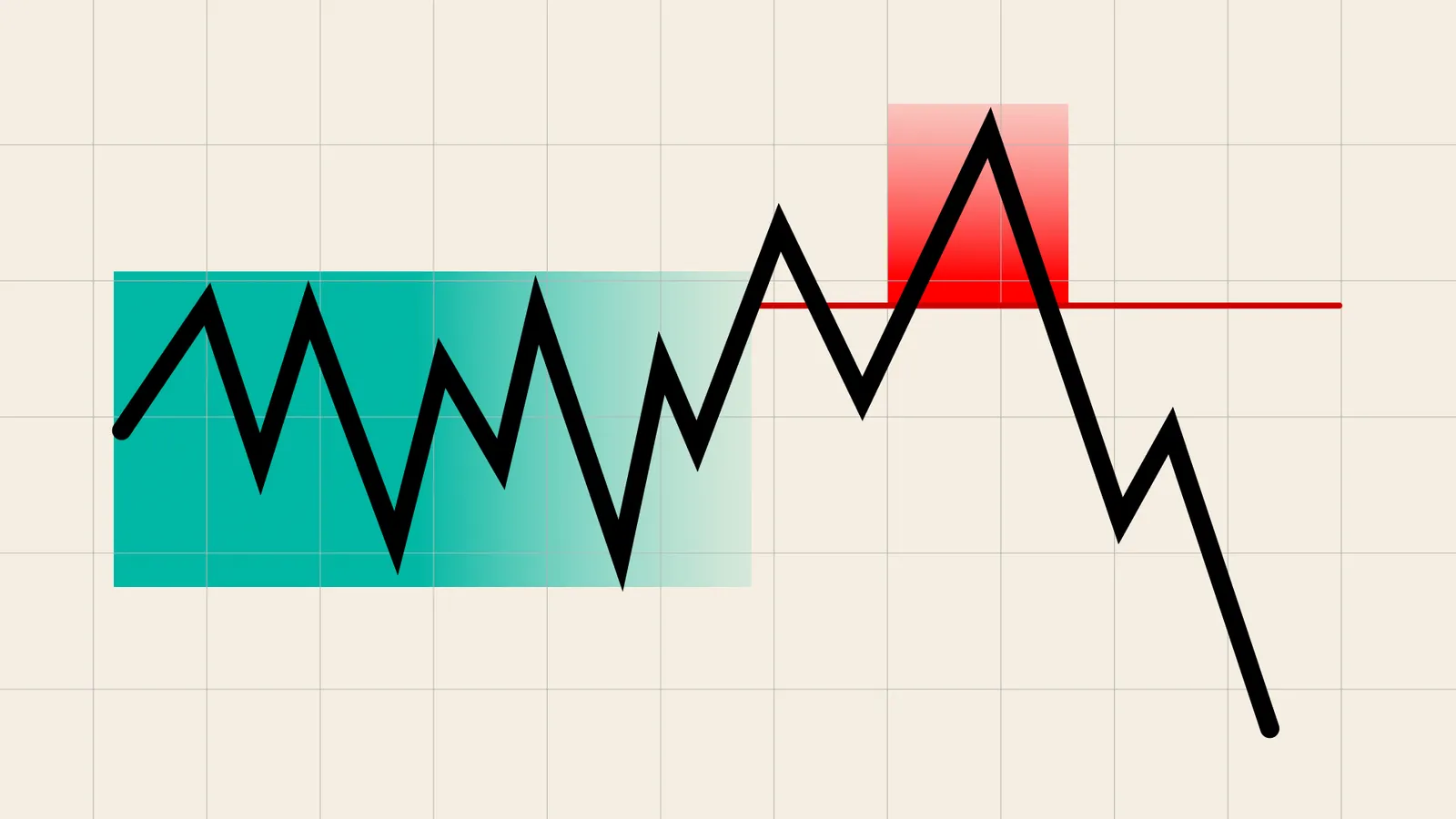
The Judas Swing is an ICT liquidity-based reversal pattern.
It usually begins after a quiet Asian-session range.
The first breakout often becomes the trap, not the real trend.
Confirmation comes from displacement and a Market Structure Shift (MSS).
Fair Value Gaps and Order Blocks help refine entries after the reversal.
What is Judas Swing?
The Judas Swing is a price move that deliberately breaks away from a consolidation before reversing into the market's larger directional move.
The concept was popularized by Michael Huddleston, better known as ICT, who described it as the false move that appears before institutions begin the day's primary expansion. The name comes from the idea of deception: the market appears to offer one opportunity while preparing another.
Unlike an ordinary failed breakout, the Judas Swing is closely tied to liquidity. The breakout itself is important because of the orders it triggers, not because of the direction it initially takes.
Why the market creates a Judas Swing
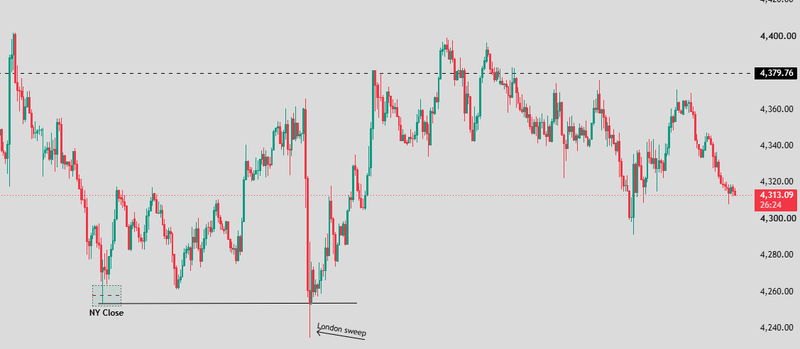
The ICT framework assumes that markets are driven by liquidity rather than moving randomly from one price level to another. Large institutions cannot always execute significant positions instantly without moving prices against themselves. Areas where many stop-losses and breakout orders are clustered naturally provide more available liquidity.
The Judas Swing often appears because obvious highs and lows attract predictable behaviour. Long traders place stops below support. Short traders place stops above resistance. Breakout traders place entry orders beyond those same levels.
When price pushes through those areas, many orders are activated simultaneously. That increase in order flow creates the conditions needed before the market moves toward its larger objective.
Source: Trading view
The psychology of the trap
The Judas Swing works because it exploits expectations. After watching prices consolidate for hours, traders become increasingly confident that the first breakout will continue. Buyers chase strength above resistance, while sellers chase weakness below support.
The problem is that everyone is reacting to the same obvious level
Once enough orders have accumulated, the market can quickly reverse after collecting that liquidity. Breakout buyers suddenly become trapped above the highs, while stopped-out traders watch prices move in the opposite direction.
The emotional pressure becomes part of the move itself
Instead of thinking about manipulation, it is more useful to think about where the market found enough liquidity to create the next expansion.
Source: Trading view
The three phases of a Judas Swing
The setup becomes much easier to recognize when it is viewed as a sequence instead of a single candle.
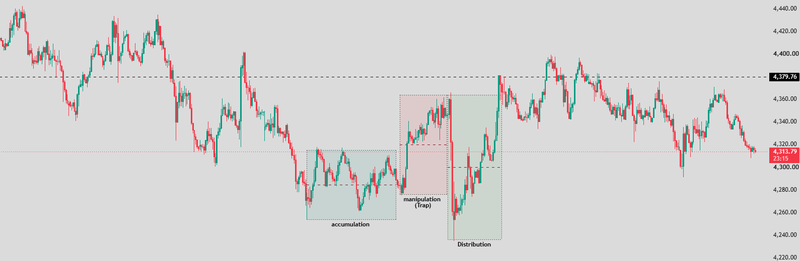
The accumulation phase
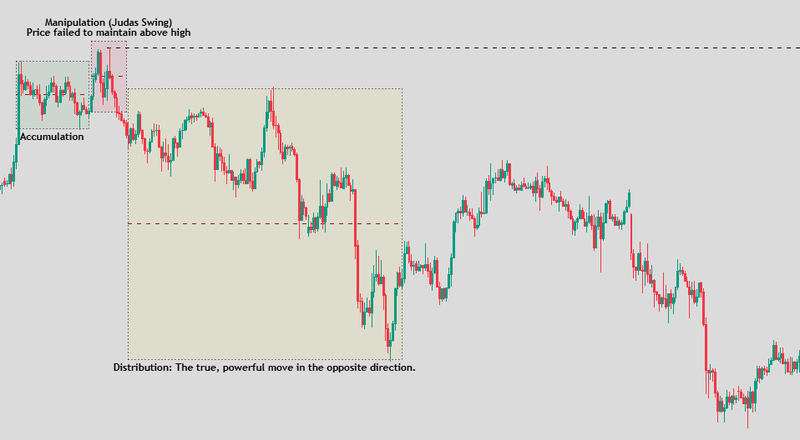
Every Judas Swing begins with a relatively quiet market. This accumulation phase often develops during the Asian trading session, when volatility tends to be lower than during London or New York. Price moves inside a tight range, creating clear highs and lows that become obvious reference points.
These range boundaries matter because they begin attracting liquidity. The longer the range remains intact, the more traders place stops and breakout orders around its edges. The cleaner the Asian range looks, the more interesting it becomes once London approaches.
The manipulation phase
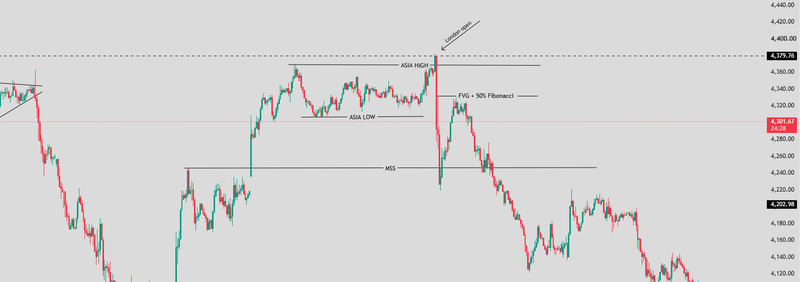
The manipulation phase is the Judas Swing itself. As London or New York opens, prices aggressively break above the range high or below the range low. Momentum suddenly increases, making it look as though a new trend has begun.
This is where many traders enter
The breakout appears convincing because it often happens during one of the busiest trading periods of the day.
The critical clue is what happens next. If price cannot hold outside the range and quickly returns inside, the manipulation phase is likely to finish.
The distribution phase
After liquidity has been collected, the market often enters its strongest directional move. This is the expansion phase that ICT traders are trying to capture.
Instead of trading the initial breakout, they wait for confirmation that the market has reclaimed the range and shifted structure before looking for entries.
The sustained move usually develops after institutions have already found the liquidity needed during the manipulation phase.
Source: Trading view
Where the Judas Swing targets liquidity
The Judas Swing rarely appears around random price levels. Instead, it often targets obvious liquidity pools that many traders are already watching.
The Previous Day High and Previous Day Low are among the most common objectives because they attract both stop-losses and breakout orders from traders using daily structure.
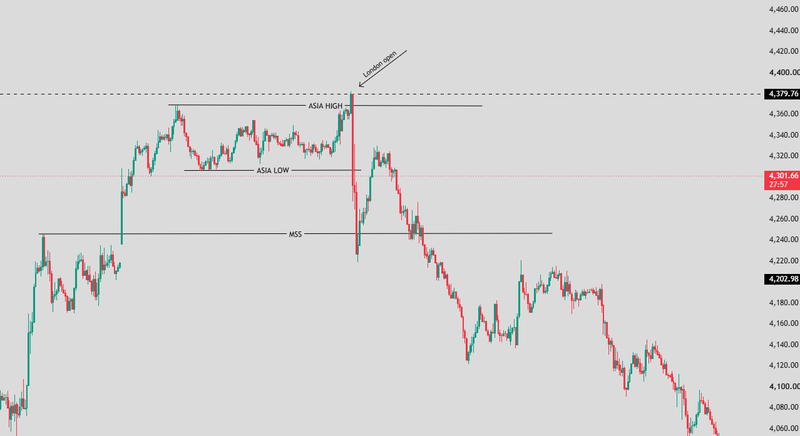
The Asian Range High and Asian Range Low are equally important. Since the accumulation phase often forms during Asia, those boundaries naturally become attractive liquidity targets once London opens.
Equal highs, equal lows, and clean short-term swing points can also become part of the same liquidity map. The common feature is visibility. If many traders can easily identify the level, it is more likely to attract orders.
How to confirm the reversal
The strongest Judas Swing setups are confirmed after the liquidity sweep rather than during it. The first confirmation is often displacement. Price should leave the swept level with strong momentum instead of drifting sideways.
The second confirmation is a Market Structure Shift (MSS) or a Change of Character on the lower timeframe. This shows that control has shifted after the liquidity event.
Together, these two signals help separate a genuine reversal from a breakout that is simply pausing before continuing.
Source: Trading view
Adding confluence to the setup
The Judas Swing becomes stronger when multiple ICT concepts align.
Fair Value Gaps
A strong displacement often leaves behind a Fair Value Gap. Instead of chasing the reversal candle, many traders wait for price to retrace into that imbalance before entering.
Order Blocks
The Order Block created before displacement can become another high-probability entry zone when price returns to it.
Fibonacci retracement
Some traders also use Fibonacci retracement to measure the pullback after displacement. If a retracement aligns with both a Fair Value Gap and an Order Block, the entry gains additional confluence rather than relying on a single signal.
The goal is not to stack as many indicators as possible. The goal is to let multiple pieces of price action support the same trade idea.
Source: Trading view
How traders execute the Judas Swing
A typical bullish sequence begins with an Asian range forming overnight. London then pushes below the Asian low, taking sell-side liquidity. Instead of continuing lower, price quickly rallies with strong displacement.
A lower-timeframe Market Structure Shift follows
Price then retraces into a Fair Value Gap or Order Block before continuing toward buy-side liquidity such as the Previous Day High.
The bearish version simply mirrors this sequence after sweeping the Asian high. The important point is that the entry comes after confirmation, not during the initial trap.
Risks of the Judas Swing
The biggest mistake is assuming every London breakout is a Judas Swing. Sometimes the first breakout is genuine, especially when supported by major economic news or a strong higher-timeframe trend.
Another common mistake is entering before displacement confirms the reversal. A liquidity sweep without a Market Structure Shift can easily become a continuation instead of a reversal.
Higher-timeframe context also matters. A bearish Judas Swing against a powerful daily uptrend often carries lower probability than one aligned with broader market direction.
News events create another challenge because price can sweep both sides of a range before choosing direction.
Finally, traders should avoid forcing the pattern onto every consolidation. The strongest Judas Swings usually begin from a clean range, sweep obvious liquidity, reclaim the range quickly, and confirm through displacement before offering a retracement entry.
FAQs
What is Judas Swing in ICT?
A Judas Swing is an ICT trading pattern where price makes a false breakout during an active trading session before reversing into the day's larger directional move.
Who created the Judas Swing concept?
The concept was popularized by Michael Huddleston (ICT) as part of his liquidity-based trading methodology.
What is the difference between a Judas Swing and a liquidity sweep?
A liquidity sweep is the move that takes stops beyond a key level. A Judas Swing is the complete sequence that includes the accumulation range, the liquidity sweep, the reversal, and the subsequent expansion.
What timeframe works best for the Judas Swing?
Many traders identify the setup using the Asian session range on the one-hour or fifteen-minute chart and refine entries on the five-minute or one-minute chart during London or New York.
Does every London breakout become a Judas Swing?
No. Some breakouts become genuine trends. Traders usually wait for displacement and a Market Structure Shift before treating the move as confirmed Judas Swing.