Help
Help 
Order Block vs Breaker Block vs Mitigation Block explained
Order blocks, breaker blocks and mitigation blocks help traders read different stages of market structure. One shows the origin of an impulse, one reflects a failed zone after reversal and one forms after a failed push and smaller structural shift.

An order block marks where a successful impulsive move begins.
A breaker block is a failed order block that changes role after a liquidity sweep and structural reversal.
A mitigation block forms after a failed continuation move and is often linked to institutional rebalancing.
What is an Order Block?
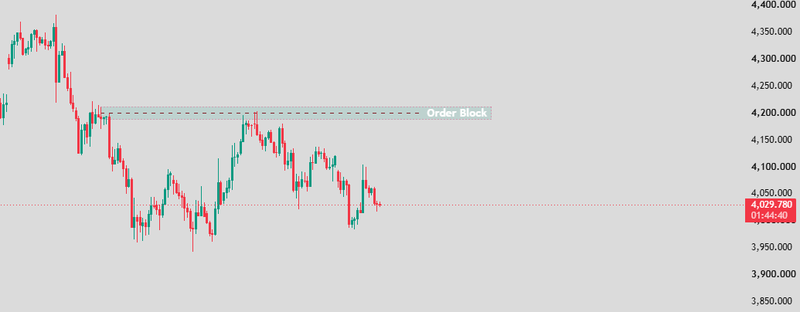
An Order Block is the last opposing candle before a strong impulsive move that creates displacement and breaks market structure.
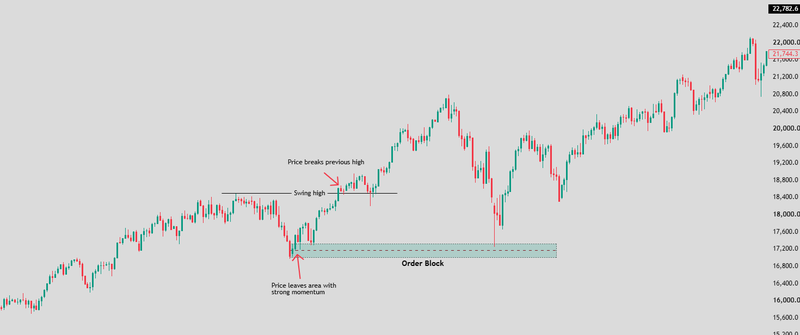
Imagine the market is trending higher. Price pulls back, forms a final bearish candle, and then rallies aggressively, breaking the previous swing high. That bearish candle becomes a bullish Order Block.
What makes it significant is not the candle itself. It is the fact that price left the area with strong momentum and successfully changed the structure of the market. This suggests that larger participants may have accumulated positions there.
When price later returns to an unmitigated Order Block, traders watch for a reaction. If buyers defend the zone again, the block can act as high-probability support. In a downtrend, the same logic applies in reverse, with the bearish Order Block acting as resistance.
Source: Trading view
How does an Order Block form?
An Order Block forms when three things happen in sequence. First, price creates a clear opposing candle during a pullback or consolidation. Second, the market leaves that area with strong momentum, creating displacement. Third, price breaks a previous swing high or swing low, confirming a break of structure.
Source: Trading view
What is a Breaker Block?
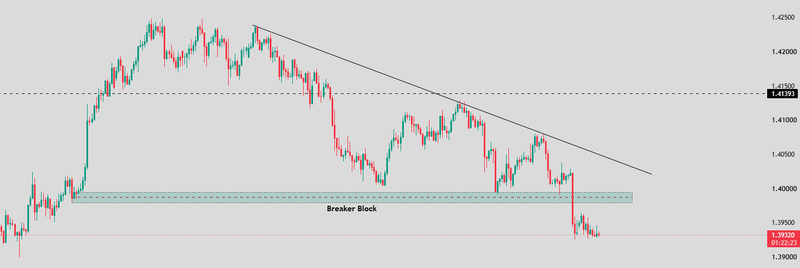
A Breaker Block is a previously valid Order Block that has failed and later changes its role. Suppose a bullish Order Block initially acts as support and sends price higher. Later, the market returns, breaks below Order Block, and shifts into a bearish structure.
When price revisits the same zone from below, it often acts as resistance instead of support. That failed bullish Order Block has become a bearish Breaker Block. Breaker Blocks are therefore associated with trend reversals and support-resistance flips, not with continuation.
Source: Trading view
How a Breaker Block forms
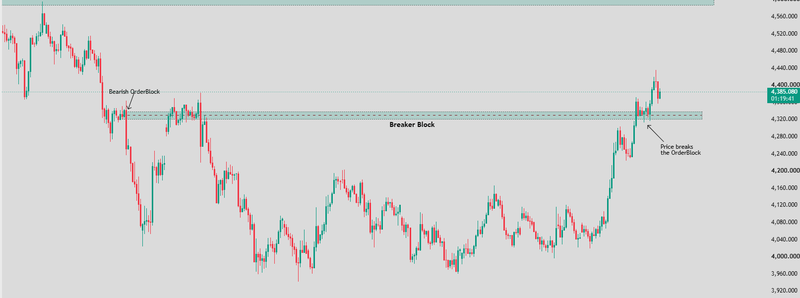
A Breaker Block starts as a normal Order Block. Suppose a bullish Order Block initially sends price higher. At that stage, the block is valid and the uptrend is intact. Later, the market returns and pushes above a previous swing high, taking buy-side liquidity and triggering breakout orders.
Instead of continuing higher, prices reverse sharply. The reversal is strong enough to break the most recent higher low, which means the structure has now shifted from bullish to bearish.
At that moment, the original bullish Order Block failed. When price later retraces back into that zone from below, the area often acts as resistance rather than support. The failed Order Block has become a Breaker Block.
The liquidity sweep is what gives the Breaker its importance. Price first traps traders above the old high and only then reverses violently. This is why Breaker Blocks are often associated with stronger reversal setups than ordinary support and resistance flips.
Source: Trading view
Why the Breaker becomes a flip level
When the original Order Block fails, traders who bought from that zone are now trapped in losing positions. If price returns to the area, many of them use the retest to exit their trades.
At the same time, traders following the new bearish structure may initiate fresh short positions from the same level.
The combination of trapped buyers exiting and new sellers entering creates the resistance reaction that gives the Breaker its power. In a bullish reversal, the opposite happens, with a failed bearish Order Block turning into support.
What is a Mitigation Block?
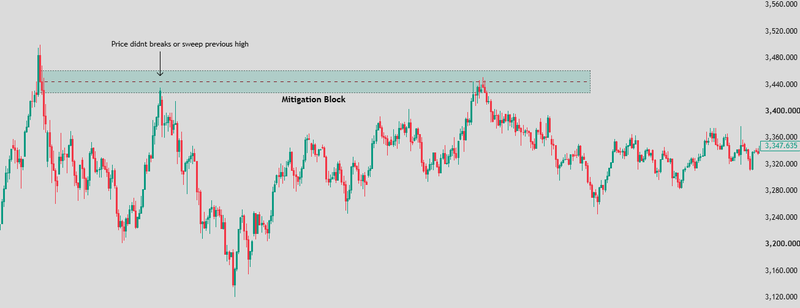
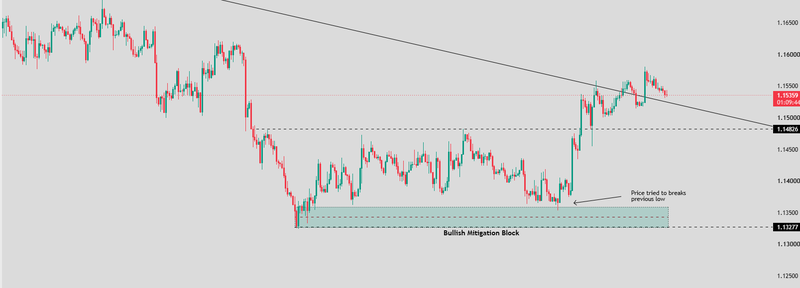
A Mitigation Block is different because it does not require a major liquidity sweep. It forms after a failure swing. Price attempts to continue the trend but cannot break the previous extreme. For example, in a downtrend, price rallies but fails to make a new higher high. Sellers then regain control and break an intermediate low.
Notice the difference from the Breaker scenario. The market did not first sweep a major previous high. It simply failed to continue.
Price later retraces into the origin of that failed rally. Institutions may use this return to rebalance, reduce, or complete existing positions rather than initiate a major reversal. That return area is commonly called a Mitigation Block.
Source: Trading view
How does a Mitigation Block form?
Imagine a downtrend where price rallies but fails to break the previous swing high. Sellers regain control and break an intermediate low.
At this stage, the rally has failed, but there was no major stop hunt above the previous high. Price later retraces into the origin of that failed rally before continuing lower. That return area is often called a bearish Mitigation Block.
The important distinction is that the market is not necessarily reversing because of a liquidity raid. It is more often rebalancing order flow after an unsuccessful continuation attempt.
Source: Trading view
The structural difference between the three
An Order Block is created by strong displacement and a break of structure in the direction of the trend. The trend remains valid.
A Breaker Block forms only after the original Order Block fails. A liquidity sweep occurs, price reverses aggressively, and structure breaks in the opposite direction.
A Mitigation Block forms after a failed continuation move. Price cannot break the previous extreme, then break an intermediate structure level and later returns to rebalance positions. The candle may look similar in all three cases, but the surrounding structure is completely different.
Risks of trading these blocks
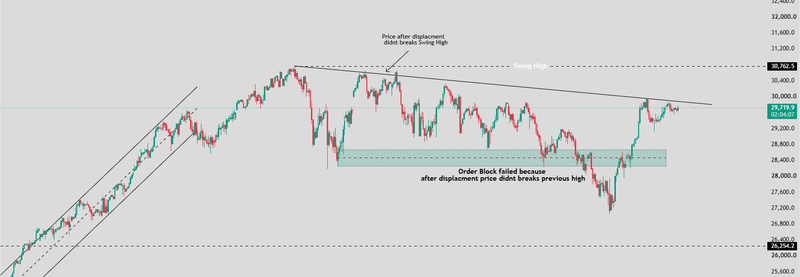
One of the biggest risks is treating every strong candle as an institutional block. Many candles create reactions, but not every reaction is meaningful. Another common mistake is ignoring the higher-timeframe trend. A bullish Order Block on a five-minute chart may fail if the four-hour market structure is strongly bearish.
False reactions are also common. Price may briefly respect an Order Block or Breaker Block before continuing through it. This is why confirmation and risk management are essential.
Overtrading is another danger. Marking too many blocks on the chart usually creates confusion and leads to low-quality trades.
Finally, news events can invalidate technical setups. Strong economic releases or unexpected geopolitical events can push price through Order Blocks, Breakers, and Mitigation zones with little reaction.
Source: Trading view
FAQs
What is an Order Block in SMC?
An Order Block is the last opposing candle before a strong impulsive move that breaks market structure. Traders use it as a potential institutional support or resistance zone.
What is a Breaker Block?
A Breaker Block is a failed Order Block that changes role after a liquidity sweep and a structural reversal. Support can become resistance, or resistance can become support.
What is a Mitigation Block?
A Mitigation Block is a zone created after a failed continuation move where institutions may be rebalancing or reducing existing positions rather than initiating a major reversal.
Is a Mitigation Block bullish or bearish?
It can be either. A bullish Mitigation Block appears in a bullish continuation context, while a bearish Mitigation Block appears in a bearish continuation context.
Which is stronger: Order Block or Breaker Block?
They serve different purposes. Order Blocks are generally stronger for continuation trades, while Breaker Blocks are stronger for reversal or flip trades after liquidity has been taken.
Can beginners trade these blocks?
Beginners should start with Order Blocks and learn market structure first. Breaker and Mitigation Blocks are easier to understand once liquidity sweeps and structure shifts become familiar.