
 Help
Help 
Trading Ideas
Get the edge with potential investments and opportunities
Single candlestick patterns: what they are and how traders use them
Single candlestick patterns are one-candle signals that reflect shifts in momentum, sentiment and control between buyers and sellers. In the right context, they can help identify reversals, pauses or trend continuation.

How to invest in the global stock market from Dubai
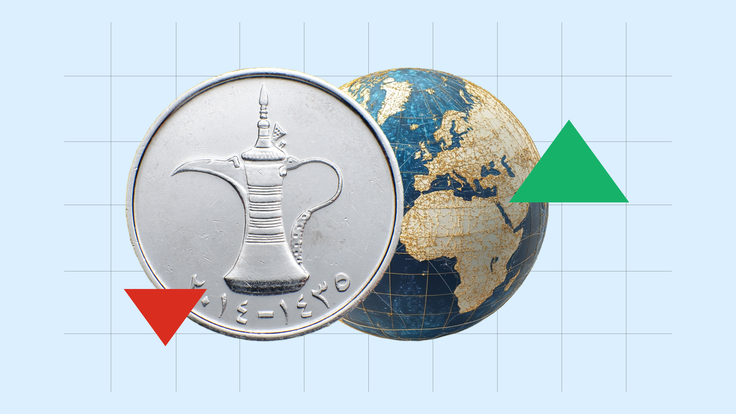
Investing in global markets from Dubai has become easier for individual investors. A regulated broker and straightforward verification now provide access to major global exchanges.
How to trade using pivot points
Pivot trading is based on the idea that markets often react around predefined price levels. These levels, known as pivot points, are calculated in advance to help anticipate reversals and shifts in momentum.

How to trade Nasdaq-100
Trading the Nasdaq-100 provides exposure to leading technology stocks without selecting individual shares. Its movement is closely driven by market sentiment, innovation trends and interest rate expectations.

What is a spot ETF?
A spot ETF is designed to mirror the price of an asset by directly owning it. Its structure relies on authorised participants, arbitrage and secure custody to maintain accurate pricing.

Hawkish meaning in trading: Definition, signals, and market impact
Hawkish refers to tighter monetary policy used to control inflation, often through rate rises and reduced liquidity. It plays a key role in shaping currency strength and market conditions.

What is Drawdown in trading? Definition, calculation, and risk management
Drawdown measures the percentage drop from a peak to a trough in an asset or portfolio. It is widely used to assess risk, compare performance and support more disciplined trading decisions.

What is index trading and how does it work?
Index trading focuses on price movements of a market index rather than individual stocks, reflecting the performance of a group of assets in a specific market.

What is a hammer candlestick?
The hammer candlestick is a key reversal signal in technical analysis, forming after falling prices and indicating that buyers are starting to regain control.

What is leverage in CFD trading
Leverage in CFD trading allows you to control a larger notional position by posting only a fraction of its value named “margin”. In CFDs this can amplify returns, but it also magnifies losses and costs. Understanding how margin, financing and risk controls work is essential before using leverage.
