Help
Help 
Similar stocks are chasing the same future as SpaceX
SpaceX remains one of the most powerful private companies in the world, but investors do not need to wait for an IPO to follow the same themes. Satellite phones, reusable rockets, AI infrastructure and cloud computing are already showing up in public markets through companies trying to build around the same future that SpaceX is shaping.
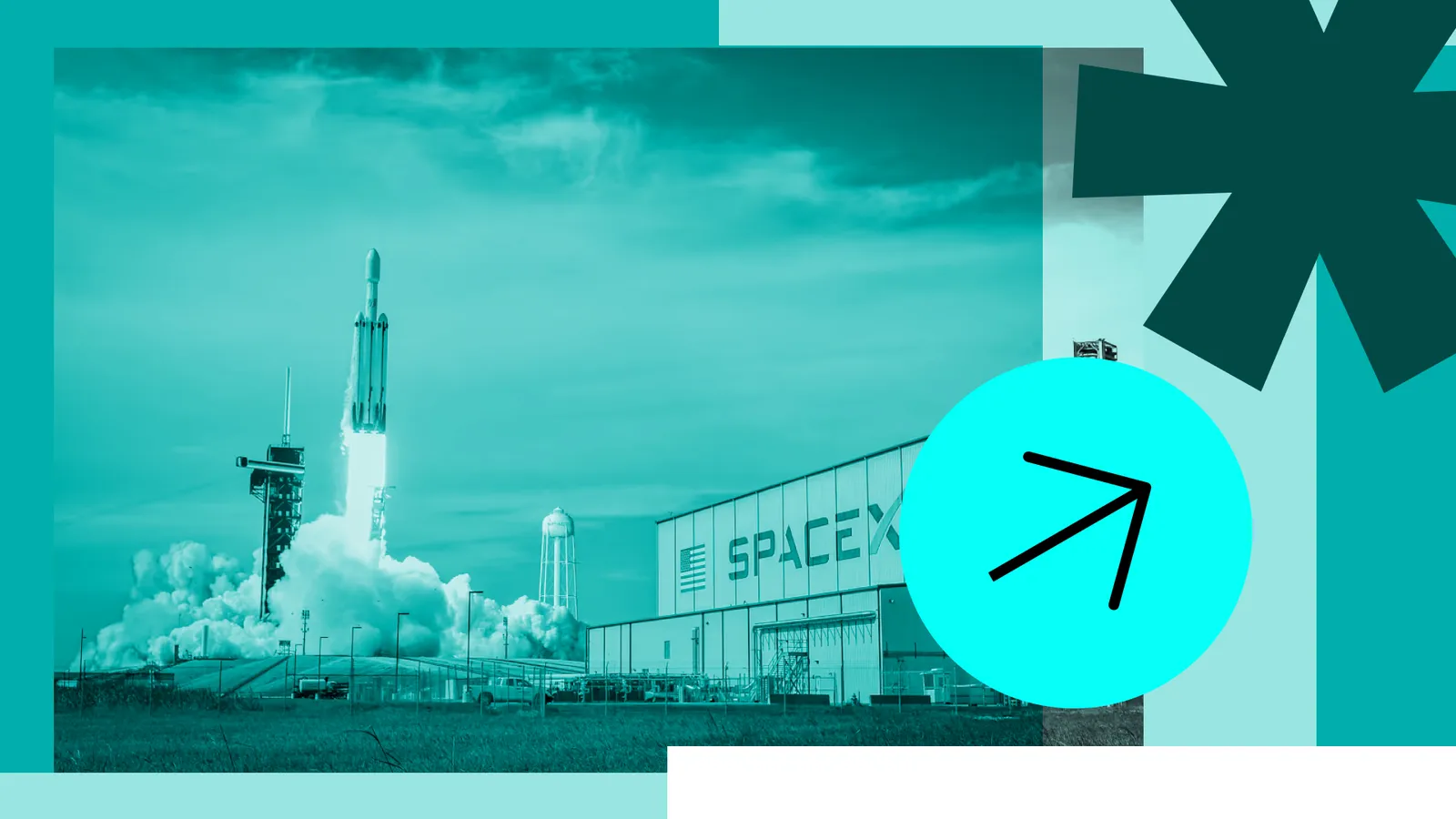
AST SpaceMobile is one of the most direct public plays on satellite-to-smartphone connectivity.
Rocket Lab offers one of the closest public comparisons to SpaceX’s launch business.
Alphabet gives investors exposure to AI models, cloud infrastructure and the data backbone
SpaceX is about more than rockets
The company has evolved into something much larger. Launch services remain a core business, but SpaceX is also building communications infrastructure through Starlink, expanding into direct-to-cell connectivity, supporting national security missions and positioning itself within the broader AI and data infrastructure ecosystem.
That is why investors looking for the next SpaceX often end up disappointed. The real opportunity is not finding a company that looks exactly like SpaceX. It is identifying businesses that are benefiting from the same technological shifts.
Some are focused on connectivity. Others are focused on launch services. Others provide the computing infrastructure that powers the next generation of technology. Together, they offer a way to participate in parts of the SpaceX story without owning SpaceX.
AST is betting on a world without dead zones
AST SpaceMobile is probably the clearest public name tied to the next phase of satellite connectivity.
The company is focused on direct-to-device service, meaning ordinary smartphones could connect directly to satellites without special hardware. If that works at commercial scale, the opportunity is large. Rural areas, oceans, deserts, flight routes and weak-coverage regions could all become part of a wider satellite-powered mobile network.
This is why AST is often compared with Starlink’s direct-to-cell push.
Starlink has a larger network, stronger financial base and deeper backing from SpaceX. AST, however, is more focused. Its whole business is built around closing the gap between satellites and regular smartphones.
That focus is what makes the stock interesting, but also what makes it risky.
Starlink generates approximately $11.40 billion in annual revenue, while AST SpaceMobile currently generates roughly $71 million in revenue. That gap illustrates how early AST remains in its development compared with the dominant player in satellite connectivity.
The gap between AST and Starlink remains huge. Starlink is already a large revenue-generating business, while AST is still in the early stages of proving that its model can scale. The company still needs more satellites, more capital, stronger commercial traction and clear proof that demand can turn into durable revenue.
Rocket Lab is the closest public launch proxy
Rocket Lab is not SpaceX, but it is one of the closest public comparisons for investors looking at the rocket business The company has built a strong position in small satellite launches through its Electron rocket. That business matters because demand for access to orbit keeps rising. Governments, defense agencies and commercial satellite operators all need more frequent and flexible launch options.
Neutron is the larger reusable rocket the company is developing to compete for bigger missions. If it works, Rocket Lab could move beyond small launches and become a more serious player in the broader commercial launch market.
SpaceX changed the industry by proving that reuse could work on a scale. Rocket Lab is trying to follow that path, but from a much smaller base. The company does not need to beat SpaceX to succeed. It only needs to show that there is room for another credible launch provider in a market that continues to grow.
Even so, the challenge is clear. SpaceX has more launches, more infrastructure, more government relationships and more operating experience. Rocket Lab has ambition, but it still needs execution.
Alphabet Owns the AI and Cloud Layer
Google’s Gemini ecosystem directly competes with xAI’s Grok. That makes Alphabet one of the clearest public ways to gain exposure to the AI side of Elon Musk’s wider technology world.
AI models require massive computing power, data centers, chips and cloud systems. Satellite networks also generate huge amounts of data that need to be processed, stored and analyzed. As space, AI and communications become more connected, the backend infrastructure becomes just as important as the hardware in orbit.
Alphabet generated approximately $402.84 billion in annual revenue, while xAI generates roughly $3.20 billion, highlighting Alphabet's enormous financial resources and infrastructure advantage in the broader AI race.
xAI is moving aggressively, but it is still building its infrastructure base. Its Grok model has gained attention quickly, helped by its connection to X and Musk’s broader ecosystem. But competing with Gemini requires more than user attention. It requires enormous spending on chips, servers, data centers and energy.