Help
Help 
SpaceX IPO: 10 things to know before SPCX goes public
The SpaceX IPO could become one of the most important public listings in market history, with Elon Musk’s company targeting a Nasdaq debut under the ticker SPCX and a valuation that could approach $1.75 trillion. Before SpaceX goes public, investors need to understand what they are really buying: launch dominance, Starlink’s cash flow, xAI’s artificial-intelligence ambitions and a stock that may arrive with enormous demand but very little margin for error.
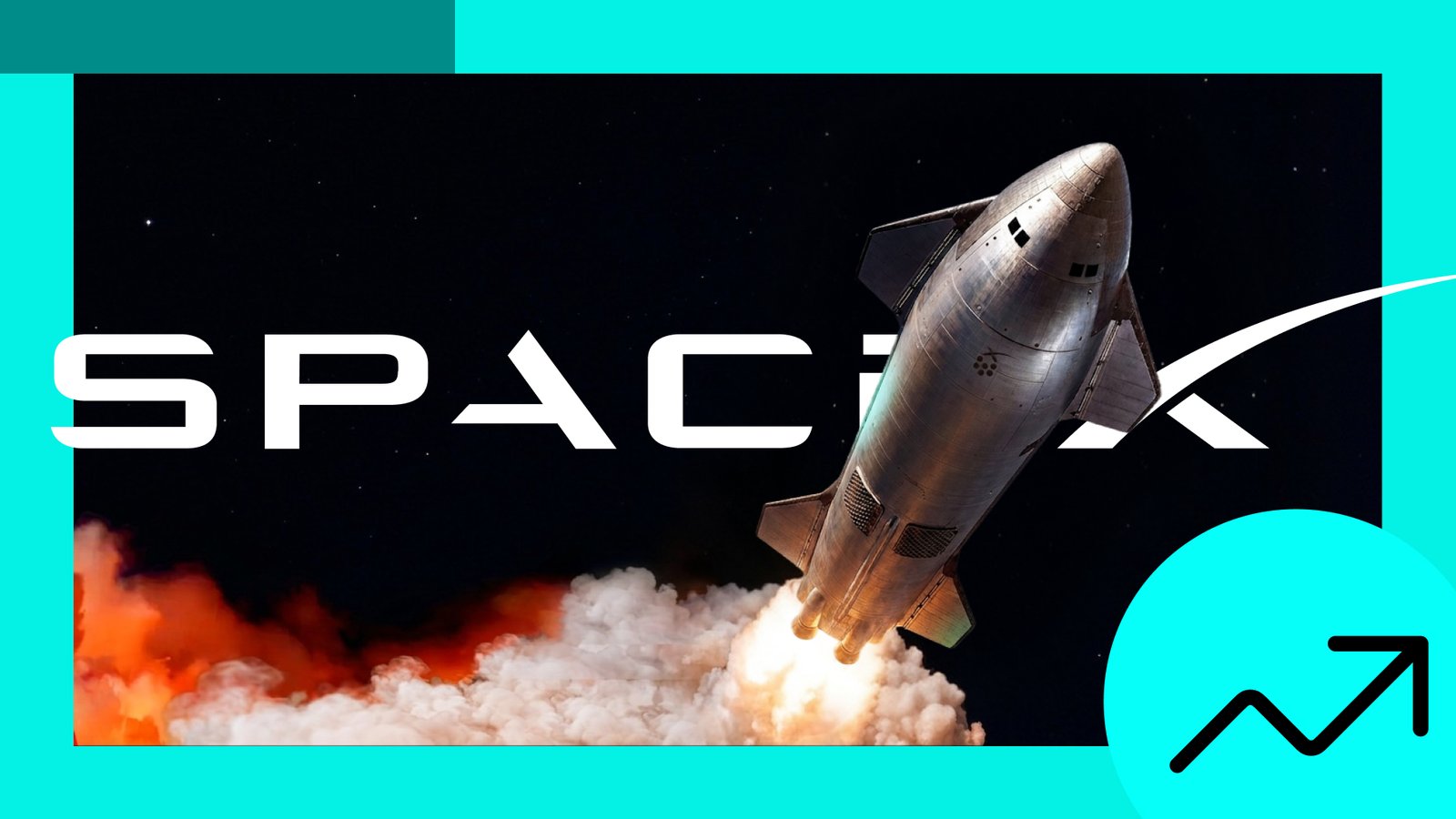
SpaceX could go public at a valuation near $1.75 trillion.
The expected ticker for SpaceX stock is SPCX.
Starlink is the strongest cash-generating business inside SpaceX.
xAI adds major upside, but also major valuation risk.
Post-IPO trading may be shaped by index demand and insider selling.
SpaceX IPO: why this listing matters
The SpaceX IPO is not a normal market debut. It is a rare event where one of the world’s most valuable private companies prepares to enter public markets with the kind of valuation usually reserved for Apple, Nvidia, Microsoft and other mega-cap technology giants.
SpaceX is reportedly preparing to list on Nasdaq under the ticker SPCX, with a potential IPO price of $135 per share and a valuation close to $1.75 trillion. That would make SpaceX one of the largest public companies in the US from its first day of trading.
For investors, the SpaceX IPO is not only about rockets. It is about whether the market is ready to treat SpaceX as a new mega-cap platform across space launch, satellite internet, defense infrastructure and artificial intelligence.
That is why the question before SpaceX goes public is not simply whether the company is impressive. It clearly is. The real question is whether SPCX stock will be priced for realistic growth or for perfection.
SpaceX is going public as a mega-cap company
Most IPOs come to market as growth companies looking for capital and visibility. SpaceX is different. It is preparing to go public with a valuation that could put it among the largest companies in the market from day one.
That changes the investment debate.
A $1.75 trillion SpaceX valuation would leave very little room for ordinary execution. Investors would not be paying for a small company with upside. They would be paying for a company already valued as if several major business lines will scale successfully over the next decade.
This is why the SpaceX IPO will be watched far beyond the space industry. It will test investor appetite for very large private companies, artificial intelligence infrastructure, Elon Musk-related businesses and high-growth listings after years of limited IPO activity.
If the SpaceX IPO succeeds, it could reopen the door for more major technology companies to go public. If it struggles, it may tell the market that even the strongest private-market stories cannot escape valuation discipline.
SpaceX stock is really a bet on three businesses
Before buying SpaceX stock, investors need to understand that SpaceX is not one business. It is three businesses inside one company.
- The first business is launch. SpaceX dominates reusable rocket launches and has built a major cost advantage through Falcon 9, high launch frequency and booster reuse.
- The second business is Starlink. Starlink is SpaceX’s satellite internet network and the most important near-term financial engine in the company.
- The third business is xAI. SpaceX’s artificial-intelligence exposure adds a powerful growth story, but it also adds uncertainty because the economics of AI infrastructure and orbital computing are still far from proven.
This three-engine structure is the reason the SpaceX IPO is so exciting. It is also the reason the valuation is difficult. Launch, satellite broadband and AI should not all be valued the same way. Each has different margins, risks, competitors and timelines.
For investors, the cleanest way to analyze SPCX stock is to ask one question: how much of the valuation comes from proven businesses, and how much comes from future optionality?
Starlink revenue is the strongest part of the SpaceX IPO story
Starlink is the business investors should watch most closely after the SpaceX IPO.
The satellite internet unit generated more than $11 billion in 2025 revenue, based on figures cited in the IPO analysis, and produced more than $4 billion in operating income. That makes Starlink the clearest cash-generation engine inside SpaceX.
This matters because SpaceX is still spending aggressively. Starship development, satellite deployment and artificial-intelligence infrastructure all require heavy investment. Starlink gives the company a recurring revenue base that can help fund those ambitions.
Starlink’s advantage comes from vertical integration. SpaceX can launch its own satellites using its own rockets. That means Starlink does not depend on outside launch providers in the same way other satellite companies do. Lower launch costs can feed directly into better network economics.
The biggest Starlink opportunity is not replacing fiber broadband in major cities. The stronger market is remote connectivity: rural households, aircraft, ships, defense customers, emergency services, logistics networks and direct-to-cell partnerships.
That is where Starlink has a real edge. If Starlink keeps growing revenue while maintaining strong margins, it could become the business that justifies a large part of SpaceX’s public-market valuation.
SpaceX launch dominance is the company’s real moat
The core of the SpaceX investment case remains launch dominance.
SpaceX changed the economics of space by making reusable rockets commercially viable. That gave the company lower costs, more frequent launches and a lead that competitors have struggled to close.
This launch advantage supports almost everything else SpaceX does. Starlink depends on low-cost satellite deployment. Future orbital infrastructure depends on affordable heavy-lift capacity. Even the AI story becomes more credible if SpaceX can use Starship to place data-center infrastructure or advanced computing hardware into orbit.
That is why Starship matters so much.
If Starship becomes commercially reliable and fully reusable, it could lower launch costs again and open new business models. That would strengthen the long-term case for SPCX stock.
If Starship faces delays, technical setbacks or higher-than-expected costs, the valuation becomes harder to defend. A major part of SpaceX’s future is tied to the idea that Starship can scale.
Investors should treat Starship as both a growth catalyst and a risk factor.
xAI gives SpaceX artificial-intelligence upside, but also risk
The xAI business makes the SpaceX IPO much bigger as a market story.
Artificial intelligence remains one of the most powerful investment themes in global markets. By adding xAI, SpaceX becomes more than a space and satellite company. It becomes part of the AI infrastructure trade.
The long-term idea is ambitious. SpaceX could combine launch capability, satellite infrastructure and data-center development to build a new model for artificial-intelligence computing. Some investors see this as a major upside option, especially if orbital computing becomes commercially viable.
But this is also where the SpaceX valuation becomes harder to justify.
The AI business requires huge capital spending. It faces intense competition from OpenAI, Anthropic, Google, Meta and other major players. Grok and xAI still need to prove they can build a durable moat in a fast-changing AI market.
Orbital computing sounds powerful, but it is still unproven. Space-based data centers would need to solve problems around radiation, heat, bandwidth, latency and maintenance. That makes xAI a high-upside but high-risk part of the SpaceX IPO.
For investors, the key is not whether AI makes the story more exciting. It does. The key is whether AI can generate enough future cash flow to support the valuation investors are being asked to pay today.
SpaceX valuation is the biggest debate before the IPO
The most important issue before SpaceX goes public is valuation.
A valuation near $1.75 trillion would price SpaceX as one of the most valuable companies in the world. That may be justified if launch, Starlink and AI all scale successfully. But it also means investors are paying upfront for years of expected growth.
This is where the debate becomes serious.
Bullish investors argue that SpaceX deserves a premium because it has no true public-market equivalent. It dominates launch economics, owns the Starlink satellite network, has government and defense relationships, and now has exposure to artificial intelligence.
Skeptical investors argue that the SpaceX IPO valuation already assumes too much success. The estimation of fair value of around $780 billion is far below the reported IPO valuation, showing the size of the disagreement.
This does not mean SpaceX is a weak company. It means the stock may be expensive.
Great companies and great stocks are not always the same thing. A company can be strategically exceptional and still disappoint investors if the entry price is too high.
That is the main risk around SPCX stock.
SPCX stock could rise early because of demand and limited float
The first days of trading in SPCX stock may be driven more by demand than valuation.
SpaceX has a powerful brand, massive retail interest, institutional demand and exposure to several popular market themes. If the public float is limited, buyers may have to compete for a small number of available shares.
That can create strong early price action.
Index demand may also become important. If SpaceX is added quickly to major indexes such as the Nasdaq-100, passive funds tracking those indexes may need to buy SPCX stock. That kind of mechanical demand can support the share price, especially when the float is tight.
But investors should be careful. Strong demand after the SpaceX IPO does not automatically mean the stock is cheap. It may simply mean there are more buyers than sellers in the early window.
The long-term test will come after the first wave of excitement fades and investors start focusing on revenue, margins, free cash flow, AI spending and insider selling.
Lockup expirations could pressure SpaceX stock after the IPO
The biggest risk for SPCX stock may not come on day one. It may come months later.
After IPOs, insiders and early investors are usually restricted from selling for a period of time. When those lockups expire, more shares can enter the market. That can create selling pressure, especially if the stock has already rallied sharply.
SpaceX has many private investors, employees and early shareholders who may want liquidity after years of value creation. Even if Elon Musk does not sell, other holders may use post-IPO windows to reduce exposure.
This does not mean they are negative on SpaceX. It simply means they may want to monetize part of a very large private-market gain.
For long-term investors, this is important. The best entry point for SpaceX stock may not be the IPO price or the first day of trading. It may come later, after lockup risk, first earnings reports and public-market volatility give investors more information.
Patience may be more valuable than speed.
SpaceX IPO risks investors should not ignore
The SpaceX IPO comes with several important risks.
- The first risk is valuation. A $1.75 trillion valuation requires very strong execution across several businesses.
- The second risk is Starship. If Starship does not scale as expected, the long-term cost advantage may be less powerful than the market hopes.
- The third risk is Starlink regulation. Satellite broadband depends on spectrum approvals, telecom rules and local market access.
- The fourth risk is AI spending. xAI could create value, but it could also consume large amounts of capital before returns become clear.
- The fifth risk is governance. Elon Musk is expected to retain strong voting control, meaning minority shareholders may have limited influence.
- The sixth risk is insider selling. Lockup expirations could add supply after the early IPO excitement.
These risks do not destroy the investment case. They define it.
Is SpaceX IPO a good investment?
The SpaceX IPO may be attractive for investors who believe the company can dominate several future markets at once: space launch, satellite connectivity, defense infrastructure and artificial intelligence.
The company has a powerful moat in launch, a real cash engine in Starlink and major optionality through xAI. That makes SpaceX one of the most compelling growth stories in global markets.
But valuation matters.
If SPCX stock prices near $1.75 trillion, investors will be buying a company that already carries enormous expectations. The stock may perform well in the short term because of demand, scarcity and index speculation. The longer-term return will depend on whether SpaceX can turn its technology lead into durable profits.
For traders, the IPO could be a momentum event. For long-term investors, the better approach is to wait for more public financial data, clearer segment reporting and a better view of post-lockup supply.
SpaceX may be an exceptional company. The real question is whether the IPO gives investors an exceptional price.
FAQs
When is the SpaceX IPO expected?
SpaceX is expected to begin trading on Nasdaq on June 12, 2026. The timing could still change depending on final regulatory steps and market conditions.
What is the expected SpaceX IPO valuation?
SpaceX is reportedly targeting a valuation near $1.75 trillion, making it one of the biggest IPOs in market history.
What will SpaceX’s stock ticker be?
SpaceX is expected to trade on Nasdaq under the ticker SPCX.
Why is Starlink important to the SpaceX IPO?
Starlink is SpaceX’s strongest cash-generating business, with more than $11 billion in 2025 revenue and over $4 billion in operating income.
Is the SpaceX IPO a good investment?
The SpaceX IPO may attract strong demand, but valuation is the key risk. At nearly $1.75 trillion, investors would be paying for very high future growth.