Help
Trading vs investing: what’s the difference?
Trading and investing both involve participating in financial markets, but they differ in their goals, how long positions are held and how they are managed.
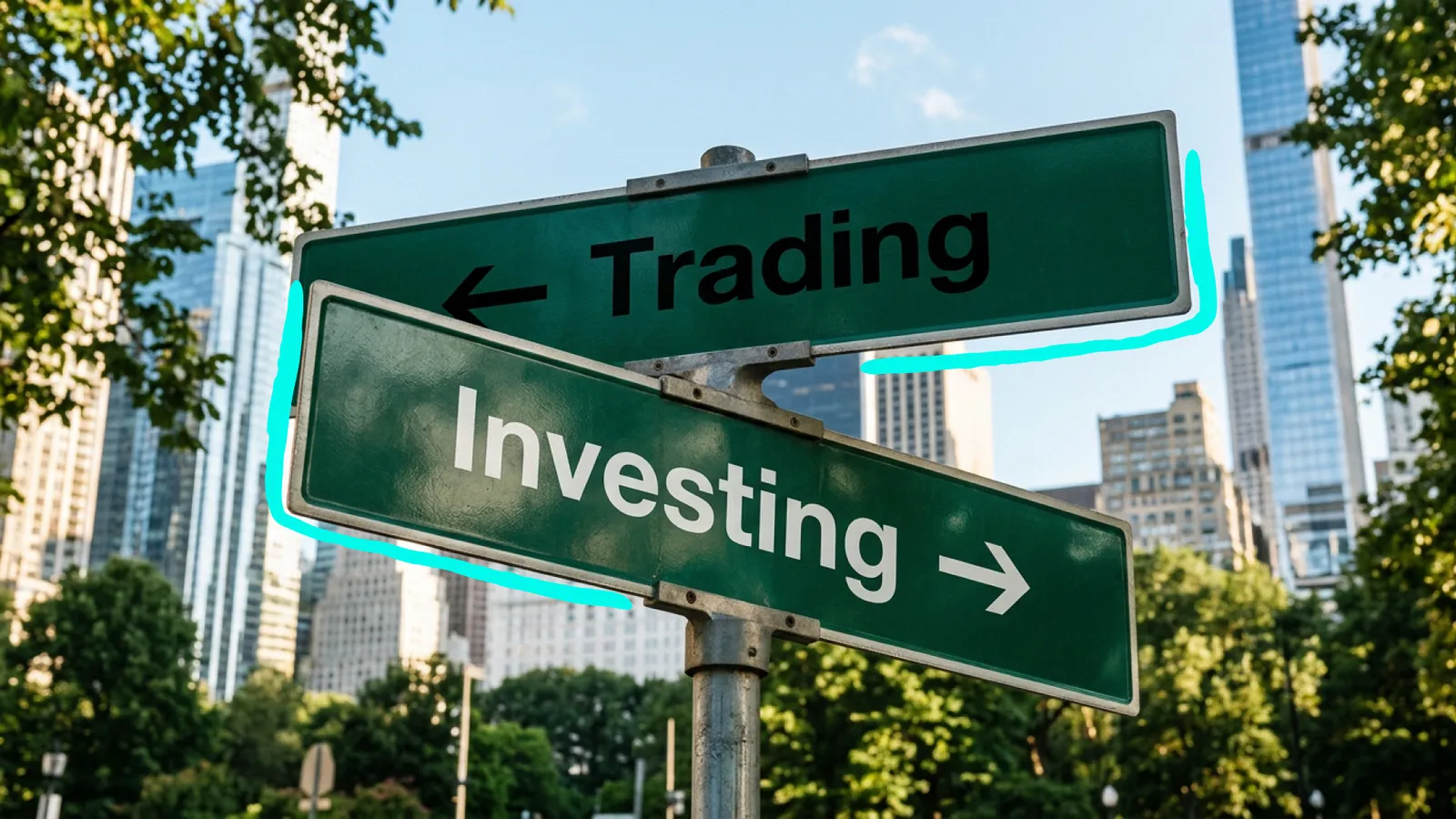
Trading tends to focus on shorter-term price movements and more frequent market activity, while investing usually takes a longer-term approach to capital growth, income or both.
Traders usually monitor markets and positions more frequently, while investors may hold assets for years and review their portfolios periodically.
Technical analysis is commonly associated with trading and fundamental analysis with investing, although both approaches can use either or a combination of the two.
Risk varies according to factors such as the instrument, position size, diversification and strategy, while the use of leverage can magnify both gains and losses.
Choosing between trading and investing involves considering your goals, risk tolerance, available capital, time horizon and how actively you want to manage positions.
What’s the difference between trading and investing?
The biggest difference between trading and investing is usually how long you plan to hold a position and what you want to achieve. Traders tend to focus on shorter-term price movements, while investors generally hold assets for longer, with the aim of growing their capital, earning income or both.
But the differences go beyond how long you hold a position. Trading and investing can also involve different ways of choosing opportunities, managing positions and approaching risk, as well as different financial instruments.
What is investing?
Investing involves putting money into assets with the aim of growing their value over time, generating income or both. Investors usually take a longer-term view, often holding financial assets such as shares, bonds, mutual funds or ETFs for years rather than days or weeks.
Investment decisions may consider factors such as a company’s financial performance and valuation, industry conditions and broader economic trends. Depending on the asset, investors may also receive income through dividends or interest, although these payments are not guaranteed and the value of an investment can fall as well as rise.
What is trading?
Trading involves buying and selling financial instruments, or taking positions on their price movements, with the aim of benefiting from changes in market prices. Traders typically operate over shorter timeframes than investors, from positions opened and closed within the same day to trades held for days, weeks or longer.
Trading can involve assets such as shares or derivatives such as CFDs, which allow you to take a position without owning the underlying asset. Traders often follow markets more closely and may use technical analysis, fundamental analysis or a combination of both to identify opportunities and decide when to enter or exit a position.
What are the key differences between trading and investing?
Beyond their different objectives and time horizons, trading and investing can also differ in how positions are researched, monitored and managed, as well as in the instruments, costs and risks involved.
The main differences include:
- Time horizon: traders may hold positions from minutes or hours to days or weeks, while investors typically take a longer-term view, often measured in years.
- Objective: traders generally seek opportunities from price movements, while investors may aim for longer-term capital growth, income or both.
- Market monitoring: trading usually requires more frequent monitoring of prices, market conditions and open positions, while investors may review their holdings periodically.
- Analysis: technical analysis is commonly used in trading, while fundamental analysis is often associated with investing, although both approaches can use either method or combine the two.
- Ownership and instruments: investing often involves owning assets such as shares or units in funds, while derivatives such as CFDs give traders exposure to price movements without ownership of the underlying asset.
- Leverage: some trading instruments allow the use of leverage, which lets you take a larger position with a smaller amount of capital. Leverage magnifies both potential profits and losses.
- Costs: trading more frequently can mean paying spreads, commissions and other charges more often. The exact costs depend on the instrument, provider and how you trade.
- Risk: both trading and investing involve risk, but the level and type of risk can vary depending on the market, instrument and approach. Factors such as leverage, position size and diversification can also affect your overall risk.
Time horizon and market monitoring
Trading generally involves holding positions for shorter periods and following the markets more closely. Depending on the trading style, you might open and close a position within the same day or hold it for several days, weeks or longer.
Investing usually takes a longer-term approach, so investors may be less focused on day-to-day price movements. Instead, they may review their investments periodically to check whether they still fit their goals and whether the reasons for holding them have changed.
Fundamental vs technical analysis
Investors often use fundamental analysis to assess financial performance, valuation, industry conditions and broader economic trends. This can help them evaluate an asset’s longer-term prospects and whether those prospects support the investment case.
Traders commonly use technical analysis to examine price movements, trends, trading volume and indicators when identifying potential entry and exit points. They may also consider economic data, company news and other events that could affect prices within their trading timeframe.
However, this does not mean traders and investors are limited to one type of analysis. Both can use technical and fundamental analysis, or combine the two when making decisions.
Risk, volatility and use of leverage
Both trading and investing involve the possibility of loss, and neither approach guarantees returns. The level and type of risk depend on factors such as the market, instrument, position size, diversification, leverage and strategy.
Shorter-term trading can involve greater exposure to rapid price movements and volatility, particularly around market news or economic events. Investing carries its own risks, including broader market declines, developments affecting a particular company or sector, and having too much exposure to a single investment or area of the market. Holding an investment for longer does not remove the risk of loss.
Leverage can increase risk when trading instruments that use it. It allows you to take a larger position with a smaller amount of capital, but gains and losses are calculated based on the full position size. This means leverage can magnify both profits and losses, making position sizing and risk management particularly important.
How trading and investing work in practice
The same market can appeal to both traders and investors, but for different reasons. For example, an investor might buy shares in a company because they believe in its longer-term prospects, while a trader might take a position based on an expected short-term price movement.
Consider a hypothetical listed company approaching its quarterly earnings announcement. Both an investor and a trader might be interested in its shares, but what they look at, why they take a position and how long they plan to hold it could be very different.
How would an investor approach a position?
An investor might assess the company’s revenue and earnings growth, financial position, valuation, competitive advantages and longer-term industry outlook. If these factors support their investment case, they may decide to buy shares with the intention of holding them over a longer period.
Short-term price fluctuations may be less important unless they materially change the investor’s longer-term outlook. Over time, the investor may review company results, industry developments and other relevant factors to determine whether the reasons for holding the shares remain valid.
Dividends may also form part of the potential return if the company pays them, although dividend payments are not guaranteed and can be reduced or suspended.
How would a trader approach the same market?
A trader might focus on how the share price could move around the earnings announcement within their intended timeframe. They could analyse recent price trends, support and resistance levels, trading volume, market expectations and other relevant signals before deciding whether an opportunity exists.
Before entering, the trader usually defines an entry point, an exit plan and the conditions that would invalidate the trading idea. Depending on the instrument used, they may also be able to take a position on either rising or falling prices.
If the market moves against them, simply deciding to hold the position for longer does not turn the trade into an investment. Doing so can mean moving away from the original plan and taking on more risk than intended.
What could drive the share price higher or lower?
Traders and investors can be affected by many of the same market drivers. The difference often lies in how they interpret those developments within their respective objectives and timeframes.
For a company’s shares, potential price drivers include:
- earnings, revenue and company guidance;
- new products, contracts or other corporate developments;
- interest rates and broader economic conditions;
- industry or regulatory developments;
- changes in market expectations and investor sentiment; and
- broader market volatility.
A trader may focus more closely on how these factors could influence prices over their intended trading timeframe, while an investor may consider whether they alter the company’s longer-term prospects or the original investment case.
What costs and practical factors should you consider?
The costs of trading and investing depend on factors such as the instrument, market, provider and frequency of transactions. Liquidity and market access also matter because they can affect how easily positions can be opened or closed and the conditions under which orders are executed.
Understanding these factors can help you assess the practical demands of each approach and how costs may affect returns over time.
Fees, spreads and trading frequency
Trading and investing can involve both transaction costs and ongoing charges, depending on the product and provider. These may include commissions, spreads, account or platform fees and, for some leveraged positions, overnight financing charges.
Trading frequency can have a significant effect on overall costs. A trader who opens and closes positions regularly may incur transaction costs more often than an investor who holds assets for longer periods, meaning even relatively small charges can accumulate over time.
Longer-term investing can also involve costs. Depending on the product, these may include brokerage charges, fund management fees or other ongoing expenses that can reduce investment returns over time.
Liquidity and market access
Liquidity describes how easily an asset or financial instrument can generally be bought or sold without significantly affecting its market price. More liquid markets often have higher trading activity and tighter spreads, while lower liquidity can contribute to wider spreads and slippage, where an order is executed at a different price from the one expected.
Liquidity matters to both traders and investors, but it can be particularly important when a position needs to be entered or exited quickly. Liquidity can also change depending on the market, instrument, time of day and prevailing conditions, especially during periods of heightened volatility.
Market access is another practical consideration. Available instruments, trading hours and order types can vary across markets and providers, affecting when and how traders and investors can enter, manage or exit positions.
What instruments can traders and investors use?
Traders and investors can use many of the same financial markets and instruments, but often in different ways. Shares and ETFs can support both shorter-term trading and longer-term investing strategies, while derivatives such as CFDs allow you to take a position on price movements without owning the underlying asset.
The choice of instrument can affect ownership, costs, market exposure, the availability of leverage and the risks involved. Understanding how an instrument works is therefore an important part of deciding whether it suits a particular trading or investing approach.
Shares and ETFs
Buying shares in the underlying market gives the holder an ownership interest in a listed company. Shares can be held for longer-term capital growth or potential dividend income, but they can also be bought and sold over shorter periods in response to price movements.
Exchange-traded funds (ETFs) are funds that trade on an exchange and can track a group of assets, such as shares, bonds or commodities, or follow a particular investment strategy. They are often used to diversify longer-term portfolios, but they can also be traded during market hours as part of shorter-term strategies.
Some shares pay dividends, while distributing ETFs may make income distributions to eligible holders. These payments can contribute to returns but are not guaranteed and may be reduced, suspended or vary over time.
Derivatives and CFDs
Derivatives are financial instruments whose value is linked to an underlying asset, market or other reference. They can be used for purposes such as speculation, hedging or gaining market exposure without directly owning the underlying asset.
Contracts for difference (CFDs) are derivatives that allow traders to take positions on rising or falling prices without owning the underlying asset. Depending on the provider, CFDs can provide exposure to markets such as shares, indices, forex and commodities.
CFDs are traded using leverage and margin, meaning the capital required to open a position represents only a portion of its total market exposure. This can magnify both gains and losses relative to the capital committed.
Leverage, margin and short selling
Leverage allows greater market exposure relative to the capital required to open a position. Margin is the amount of capital required to open and maintain a leveraged position, with requirements varying according to the instrument, provider and market conditions.
Because gains and losses are based on the full position size, leverage magnifies the financial impact of market movements. If a leveraged position moves against the trader, available funds may fall below the required margin level, which can result in positions being closed, depending on the product and provider.
Some instruments, including CFDs, also allow traders to take short positions. Going long means taking a position that generally benefits from a rise in the market price, while going short means taking a position that generally benefits from a fall. In either case, losses can occur if the market moves against the position.
How do you choose between trading and investing?
Choosing between trading and investing depends on your financial goals, risk tolerance, available capital, time horizon and how actively you want to monitor and manage positions. Some people may also use both approaches for different objectives rather than choosing one exclusively.
The decision involves more than how long you intend to hold a position. Consider why you are entering it, what evidence supports your decision, how much risk you are prepared to take and what conditions would cause you to exit.
Consider your goals, risk tolerance and available time
Start by defining what you want to achieve and the timeframe you are working with. Someone seeking longer-term capital growth or income may approach the markets differently from someone looking for shorter-term opportunities from price movements.
Consider both how much risk you are willing to accept and how much capital you can afford to risk, alongside the time you can realistically devote to research and market monitoring. Active trading can require frequent decision-making and position management, while longer-term investing may involve less frequent monitoring but still requires periodic review.
Available capital also matters. Rather than choosing an approach based primarily on its perceived return potential, consider the risks involved and whether its practical and financial demands fit your circumstances.
Define why you are entering a position
Before opening a position, define its purpose, intended timeframe and the reasoning behind the decision. The same asset can be approached as either a trade or an investment depending on why you enter it and the criteria you use to manage and eventually exit the position.
For example, buying shares because you believe a company has favourable longer-term prospects is different from taking a position based on an expected short-term price movement around an earnings announcement. The rationale helps determine which information matters, how the position is managed and what developments could invalidate the original idea.
This distinction becomes especially important when a position moves against you. Extending the holding period of a losing trade does not automatically turn it into a long-term investment. If the original trading rationale is no longer valid, changing the timeframe simply to avoid closing the position can undermine the original risk and exit plan.
Common beginner mistakes to avoid
Clear objectives and a defined plan can help beginners avoid decisions that conflict with their intended approach.
- entering a position without a clear rationale, timeframe or exit criteria;
- choosing an approach primarily because of its perceived return potential;
- taking more risk than intended or using leverage without understanding its effect on potential losses;
- reacting to short-term price movements that may not be relevant to a longer-term investment case;
- continuing to hold a losing trade after the original rationale is no longer valid; and
- copying another person’s strategy without considering differences in goals, timeframe, capital and risk tolerance.
A plan cannot eliminate market risk or prevent losses, but it can provide a framework for making more consistent decisions about entering, managing and exiting a position.
FAQs
Is trading better than investing?
Neither trading nor investing is inherently better. They serve different objectives and involve different time horizons, risks and levels of market involvement. Which approach is more appropriate depends on factors such as your goals, risk tolerance, available capital, timeframe and how actively you want to manage positions.
Which is more profitable: trading or investing?
Neither trading nor investing guarantees higher profits or returns. Outcomes depend on factors such as market conditions, the instruments used, costs, position sizing, risk management and individual decisions. Leverage can magnify gains in some forms of trading, but it can also magnify losses.
Can you be both a trader and an investor?
Yes. You can trade and invest at the same time, provided the objectives and strategies are clearly distinguished. For example, you might hold a longer-term investment portfolio while separately taking shorter-term trading positions, with different rationales, timeframes and risk parameters for each.
Is day trading the same as investing?
No. Day trading involves opening and closing positions within the same trading day to seek opportunities from short-term price movements. Investing generally takes a longer-term approach to capital growth, income or both, with positions often held for years rather than hours.