Help
Help 
Turtle Soup explained: How traders use liquidity sweeps to catch false breakouts
The Turtle Soup strategy is one of the most well-known reversal patterns in price action because it focuses on failed breakouts rather than successful ones. Instead of buying the first break above resistance or selling the first break below support, the strategy waits for the market to sweep liquidity, reject the move, and return inside the previous range.

Turtle Soup trades failed breakouts after liquidity is swept.
The setup targets stop sitting above high or below lows.
The original Raschke method enters immediately after rejection.
The ICT approach waits for lower-timeframe confirmation.
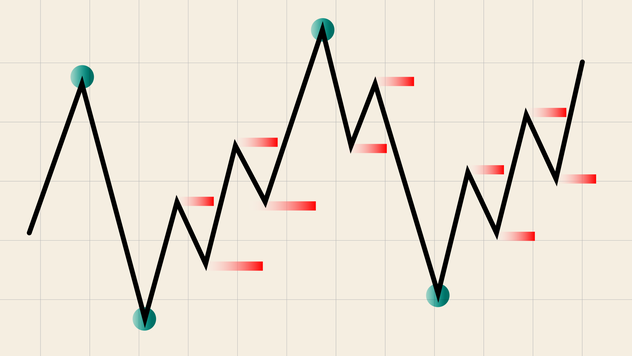
Stronger setups usually begin with a significant swing that has existed for several periods.
What is the Turtle Soup strategy?
The Turtle Soup strategy is a reversal setup that appears when price briefly breaks beyond an important swing high or swing low before quickly reversing back into the previous trading range.
At first glance, the breakout looks convincing. Momentum increases, breakout traders enter, and existing positions get stopped out. Then the market suddenly reversed.
That reversal is what makes the pattern valuable
Instead of viewing the breakout as confirmation of a new trend, Turtle Soup treats it as evidence that liquidity has been collected before the real move begins.
Why the pattern exists
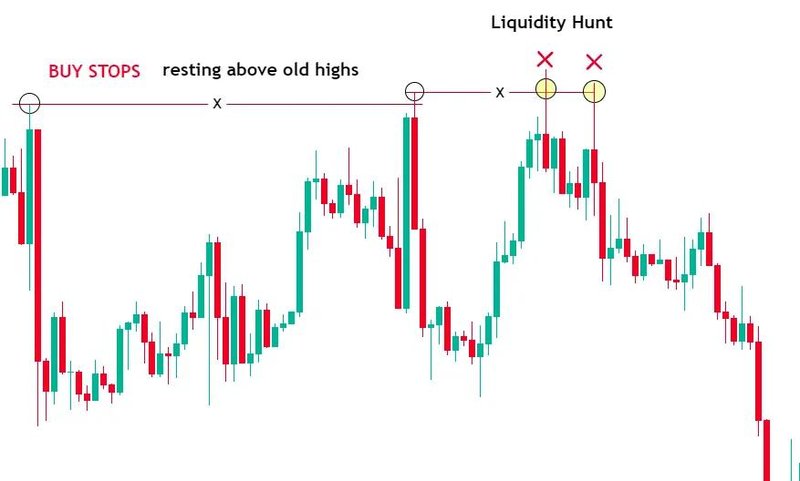
The setup works because obvious highs and lows rarely contain only one type of order. Above a previous swing high, short traders often place buy stop-losses to protect their positions. Breakout traders also place buy-stop entry orders, expecting prices to continue higher once resistance breaks.
Below a previous swing low, the opposite happens. Long traders place sell stop-losses, while breakout sellers place sell-stop entries beneath support.
When price reaches these areas, many orders are triggered at the same time. That surge in activity creates the liquidity needed for larger participants to execute positions more efficiently.
Source: Trading view
Breakout buyers vs. stop-losses
A swing low is a good example of why the pattern works. Imagine price repeatedly holds above support. Buyers become confident and place their protective stops below the low. At the same time, breakout traders prepare sell-stop orders beneath the same level, expecting a bearish continuation.
When price briefly breaks below support, both groups become active. Long positions are forced to exit, new sellers enter, and liquidity increases rapidly.
If price immediately reverses higher, both groups become trapped. The same process happens above swing highs during bearish Turtle Soup setups.
The anatomy of the Turtle Soup setup
The pattern follows a very specific sequence. Each step removes uncertainty before trade develops.
The benchmark level
Every Turtle Soup begins with an important reference point. The classic rule looks for a swing high or swing low that is roughly 3 to 20 trading days old, although intraday traders often apply the same idea using bars or periods instead of days.
The level should be obvious enough that many traders are likely watching it. A random minor swing usually carries less liquidity than a well-established high or low that has remained visible for several sessions.
The sweep
The next stage is the liquidity hunt. Price pushes beyond the benchmark level, triggering breakout orders and stop losses.
The move often appears strong enough to convince traders that a genuine breakout has begun. This is where many traders make the mistake of entering too early.
The rejection
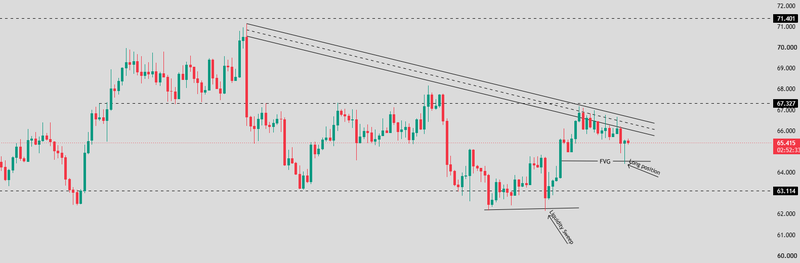
The rejection is what separates Turtle Soup from an ordinary breakout. Instead of holding above resistance or below support, price quickly snaps back inside the previous trading range.
This rejection often appears as a long wick, but the important point is not the wick itself. The important point is that price fails to accept the breakout. The stronger the rejection, the more convincing the setup becomes.
Source: Trading view
Types of Turtle Soup
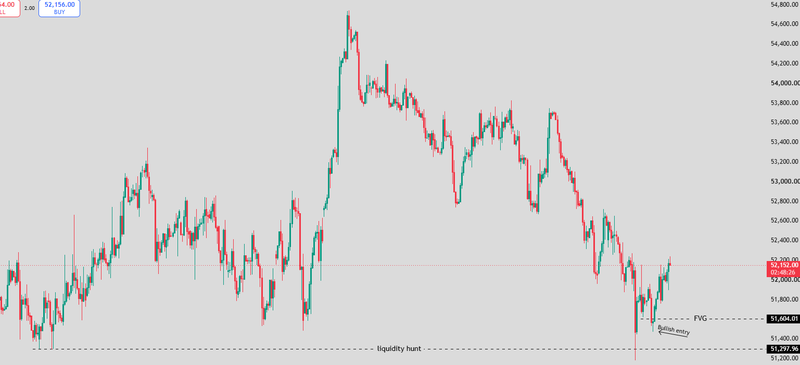
A bullish Turtle Soup forms after price sweeps a previous low before reversing higher. The market first approaches an established swing low. It breaks below the level, triggers sell-side liquidity, and then quickly reclaims the range.
The reclaim tells traders that sellers failed to maintain control. Confirmation becomes stronger if price follows with bullish displacement and a break of lower-timeframe structure.
Source: Trading view
Bearish Turtle Soup
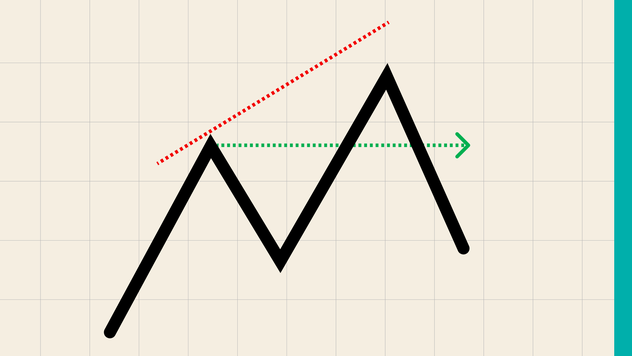
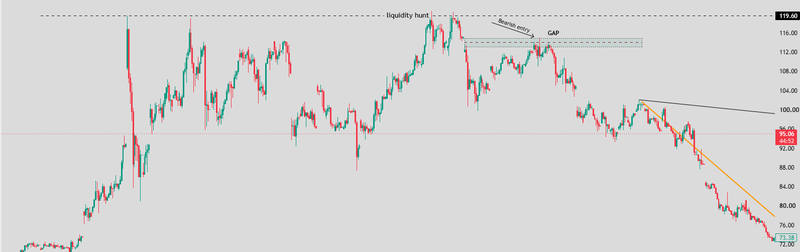
A bearish Turtle Soup follows the opposite sequence. Price pushes above an established swing high, attracts breakout buyers, and triggers short stops before reversing back below resistance.
Once price falls back inside the range, the breakout loses credibility. The strongest setups continue lower after displacement confirms that buyers have lost control.
Source: Trading view
How to trade the Turtle Soup strategy
There are two common ways to execute the setup. One comes from Linda Raschke's original approach. The other reflects the ICT and SMC confirmation model.
Classic entry (The Raschke method)
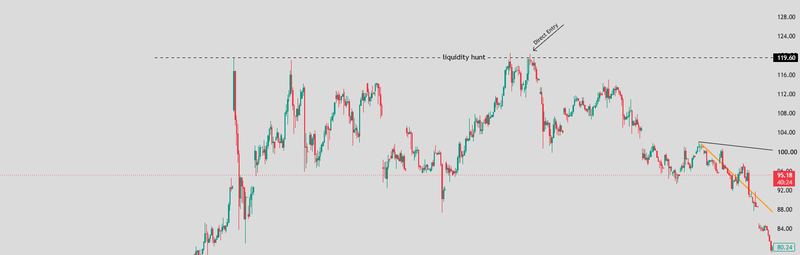
The original Turtle Soup method is designed to enter quickly. Once price sweeps the benchmark level and immediately reverses back inside the range, traders often place a limit order near or just inside the original level.
The stop usually sits beyond the sweep because a return through that level weakens the reversal idea.
The advantage of this method is early entry with attractive risk-to-reward. The tradeoff is that it relies heavily on the rejection holding immediately.
Source: Trading view
Confirmed entry (The ICT and SMC method)
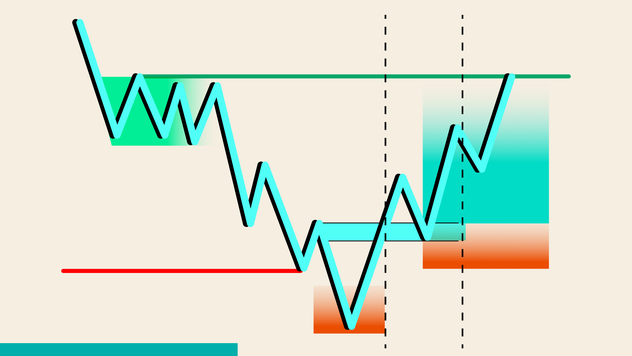
The modern ICT approach adds another layer of confirmation. Instead of entering immediately after the sweep, traders drop to a lower timeframe.
After the higher-timeframe liquidity sweep, they wait for a Market Structure Shift (MSS) or Change of Character.
Strong displacement should follow. The displacement often leaves behind a Fair Value Gap or returns to an Order Block.
The entry comes during that retracement rather than on the first reversal candle. This approach usually sacrifices a slightly earlier entry in exchange for stronger confirmation.
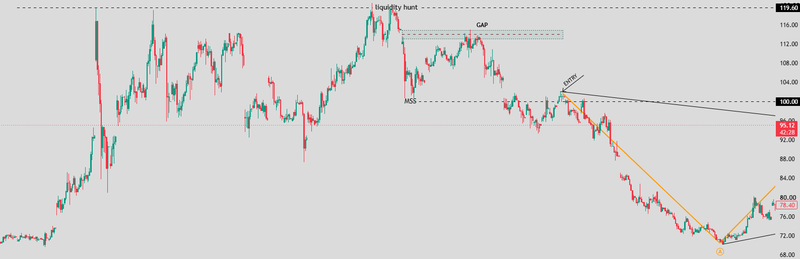
Source: Trading view
Which timeframe works best?
The Turtle Soup pattern works across multiple timeframes, but its reliability often improves with timeframe alignment.
Daily and four-hour charts usually provide stronger benchmark levels because more traders watch those highs and lows.
Intraday traders often identify the sweep on the one-hour or fifteen-minute chart before refining entries on the five-minute chart.
The most important point is that the benchmark level should be meaningful for the timeframe being traded.
Risks of the Turtle Soup strategy
The biggest risk is assuming every sweep becomes a reversal. Sometimes the market takes liquidity because genuine momentum is strong enough to continue trending.
Another common mistake is choosing weak benchmark levels. A small swing that formed recently usually attracts less liquidity than a well-established high or low.
News events also create additional risk. During major releases such as CPI, Non-Farm Payrolls, or central bank decisions, price can sweep both sides of a range before choosing direction.
Patience also matters
Entering before rejection or before lower-timeframe confirmation can place traders directly into the liquidity hunt instead of the reversal that follows.
Risk management remains essential because even high-quality Turtle Soup setups can fail if the market accepts the breakout instead of rejecting it.
FAQs
What is the Turtle Soup strategy?
The Turtle Soup strategy is a reversal pattern based on failed breakouts, where price briefly breaks above a key high or below a key low before quickly returning inside the previous trading range.
Why does the Turtle Soup pattern work?
It works because stop-loss orders and breakout orders tend to cluster around obvious highs and lows, creating liquidity that larger market participants can use before price reverses.
What is the difference between Linda Raschke's method and the ICT approach?
Linda Raschke's method enters the trade soon after the breakout is rejected, while the ICT approach waits for additional confirmation, such as a market structure shift and an impulsive move, before entering.
Does Turtle Soup work on all timeframes?
Yes, but it tends to be more reliable when it forms around significant levels on higher timeframes, with lower timeframes used to refine the entry.
Does every liquidity sweep lead to a reversal?
No. A genuine breakout can continue if price holds above or below the new level, which is why rejection confirmation and risk management remain essential parts of the strategy.