Help
Help 
What are trading assets? Definition and types
Trading assets are the financial instruments bought and sold in markets, including shares, bonds, currencies, commodities and indices. Each market moves for different reasons, so traders need to understand the specific drivers behind the asset they are trading.

An asset is anything of value that can be traded, owned or held for investment purposes.
Traders usually aim to profit from price movements.
The main asset classes include equities, bonds, forex, commodities and indices.
Gold often moves in the opposite direction to the US dollar and real yields.
What is an asset in trading?
An asset is something that has value and can be bought, sold or held as an investment. It can be a share in a company, a bond issued by a government or business, a currency, a commodity, or an index that tracks a group of companies.
There is also more than one way to trade assets. Buying shares means owning the stock itself. Futures, options and CFDs allow traders to follow the price without necessarily owning the underlying asset. The difference can become important when leverage, margin, financing costs or contract expiry are involved.
How do traders make money from trading assets?
Traders generally try to make money from changes in price. If a trader expects a stock to rise, they can buy it and sell it later at a higher price. If they expect it to fall, they can take a short position or use a derivative that allows them to benefit from the decline.
The holding period can vary considerably. An investor may keep a position for years, while a day trader may open and close a trade within minutes. The asset may be the same, but the way it is traded can be completely different.
What are the main trading assets?
The main asset classes are equities, bonds, forex, commodities and indices. They are grouped together because assets within each category often share some common characteristics. But even within one asset class, prices can react very differently depending on the market environment.
Interest rates, inflation, economic growth and investor sentiment can affect several markets at once, but not necessarily in the same direction.
What are equities?
Equities are shares in a company. When you buy a share, you become a part-owner of that business. The share price changes as investors change their view of the company. Earnings are one of the biggest reasons for those changes. A company can make more money than it did a year earlier and still see its stock fall if the results were below what investors had expected.
Interest rates can also affect stocks, especially companies whose growth is expected to come several years from now. When bond yields rise, investors may be less willing to pay high prices for those future earnings.
What are the risks of trading equities?
There are two sides to the risk. The company itself can run into problems. Sales may slow, profit margins may fall, or a competitor may take customers away.
But sometimes the problem is simply the price. A good company can still be a bad trade if investors have already priced in too much growth. This is why a stock can fall after what looks like a strong earnings report. The business may be doing well, but the market was expecting even more.
What are bonds?
Bonds are loans that can be traded. When you buy a government or corporate bond, you are lending money to the issuer. In return, the issuer normally pays interest and eventually returns the principal.
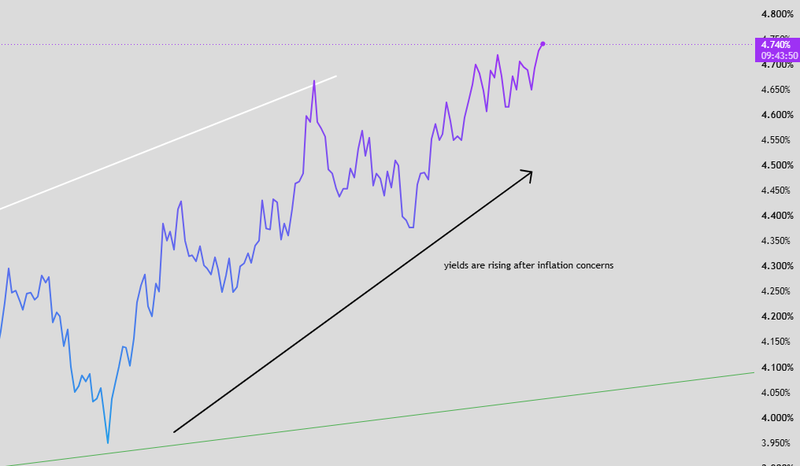
Bond prices and yields move in opposite directions. When yields rise, existing bond prices generally fall. When yields fall, existing bond prices usually rise.
This makes bonds particularly sensitive to central-bank policy and inflation expectations. A trader watching the Federal Reserve, for example, will often watch Treasury yields at the same time. A change in expectations for interest rates can move both markets quickly.
Source: Trading view
What are the risks of trading bonds?
Interest rates are one of the biggest risks. A bond with a long maturity can lose considerably more value when yields rise than a shorter-term bond. Corporate bonds also carry credit risk because the company issuing the debt may run into financial difficulties.
Inflation is another concern. If prices rise faster than expected, the fixed payments from a bond become less valuable in real terms.
What is forex?
Forex is the market for buying and selling currencies. Currencies are traded in pairs because buying one currency means selling another. EUR/USD, for example, shows how many U.S. dollars are needed to buy one euro.
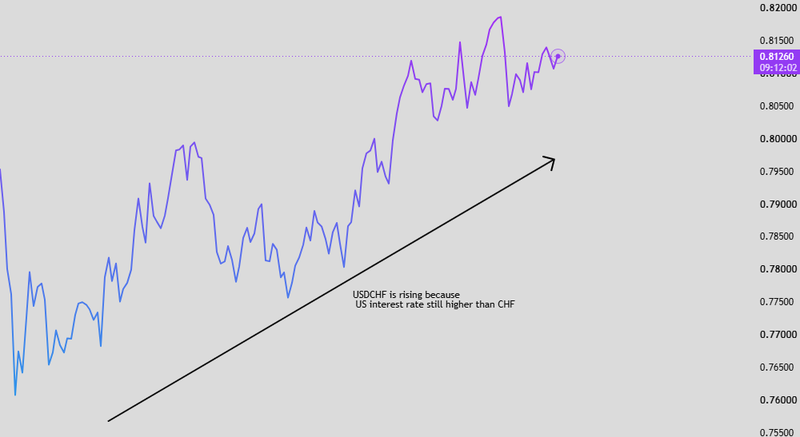
Interest rates are a major driver of forex. If traders expect U.S. rates to stay higher than rates in Europe, the dollar can attract more demand. But currencies also react to inflation, employment, economic growth, politics and changes in risk appetite.
Forex is particularly popular with short-term traders because major currency pairs usually have high trading volume and tight spreads.
Source: Trading view
What are the risks of trading forex?
Currency prices can change very quickly around central-bank meetings and major economic releases.
Leverage can make those moves much more significant for a trader. A small move in the currency may represent a much larger gain or loss relative to the money deposited in the account. Political events can also create sudden moves that are difficult to predict.
What are commodities?
Commodities are physical products traded in financial markets. They include energy products such as oil and natural gas, metals such as gold and silver, and agricultural products such as wheat and corn.
Supply and demand are usually at the heart of commodity prices
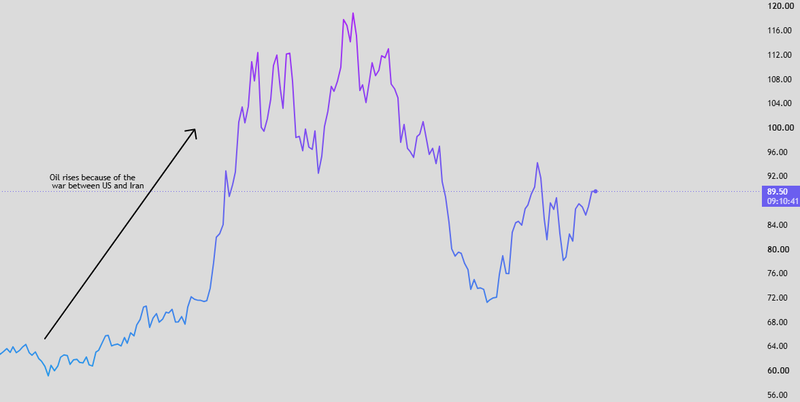
Disruption to oil production can push crude higher. Poor weather can reduce agricultural supply. Strong industrial demand can increase demand for metals. This is why commodity traders often pay close attention to production data, inventories, weather forecasts and geopolitical developments.
Source: Trading view
What are the risks of trading commodities?
Commodities can be extremely volatile because changes in supply can have an immediate effect on prices.
Oil is a good example. A conflict that threatens a major shipping route can cause crude prices to jump even before there is an actual shortage. Futures also introduce additional issues such as leverage, contract expiration and rollover costs.
What are indices?
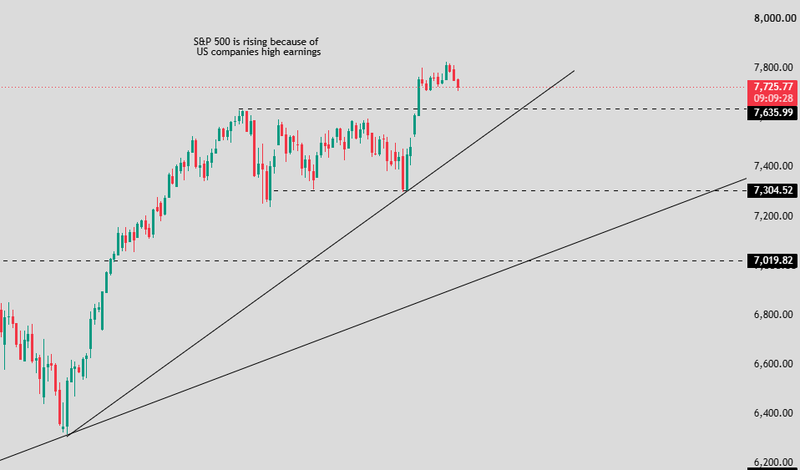
An index tracks a group of assets rather than one company. The S&P 500, for example, follows a broad group of large U.S. companies. The Nasdaq-100 has a much heavier exposure to large technology and growth companies.
Trading an index can therefore be a way to take a view on the market without choosing one individual stock.
Indices still carry risk, particularly when many of their largest companies are exposed to the same economic theme. A sharp rise in bond yields, for example, can pressure several large technology stocks at the same time and weigh on the index.
Source: Trading view
What are the risks of trading indices?
An index is more diversified than a single stock, but diversification does not prevent large losses. A recession, financial shock or major change in interest-rate expectations can affect many companies simultaneously. The use of leverage can also turn a relatively normal index into a significant gain or loss.
Which trading assets tend to move together?
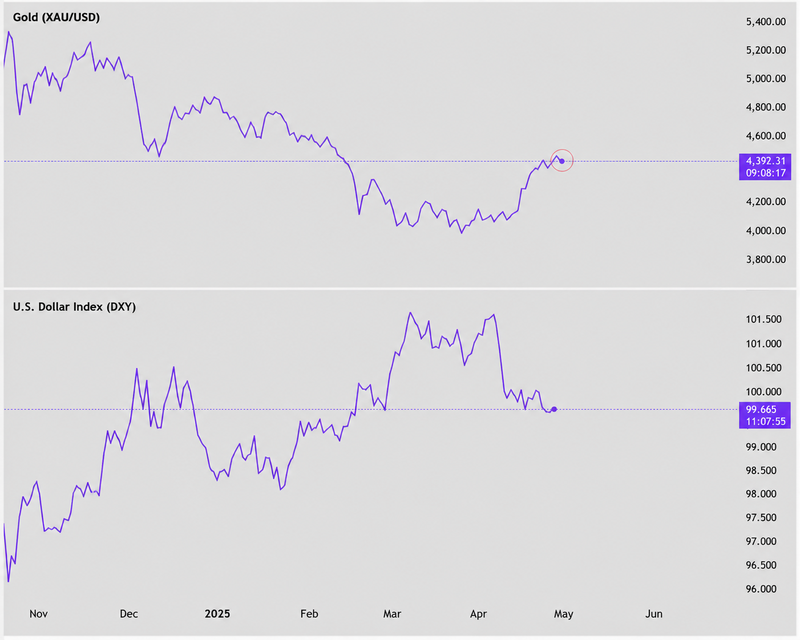
Gold often reacts opposite to the dollar and real yields. Major forex pairs move partly because of changes in the dollar. Technology stocks can react to Treasury yields because higher rates change how investors value future earnings.
Stocks and indices are naturally connected as well. If several of the largest companies in an index fall sharply, the index will usually feel the impact. These relationships are not fixed. Markets can break from their usual patterns when something important changes.
Source: Trading view
How should traders choose between different asset classes?
Someone who follows company earnings may prefer stocks. A trader focused on central banks may spend more time watching currencies and government bonds. Someone interested in supply disruptions may find oil and other commodities more useful.
The timeframe also makes a difference
A long-term investor may care about earnings and economic growth, while a short-term trader may be more interested in volatility around a data release.
The important thing is to understand what normally moves the market you are trading. A trader who knows why oil is rising, why Treasury yields are falling, or why the dollar is strengthening has much more information than someone looking only at the price chart. That context can make it easier to separate a normal market move from a change that could alter the broader trend.
FAQs
What are trading assets?
Trading assets are financial instruments or commodities that can be bought and sold in financial markets. Common examples include stocks, bonds, currencies, commodities and indices.
What are the main trading assets?
The main types are equities, bonds, forex, commodities and indices. Each market has different factors that can influence prices.
How do trading assets make money?
Traders generally try to profit from price movements. They can buy an asset if they expect its price to rise or use short positions and certain derivatives if they expect it to fall.
What is the difference between an asset and a derivative?
An asset is the underlying investment, such as a stock, currency or commodity. A derivative gets its value from an underlying asset and can allow traders to speculate on its price without owning it directly.
Which trading asset is best for beginners?
There is no single trading asset that is best for everyone. Stocks, forex, commodities and indices all have different levels of volatility, liquidity and risk. Understanding what moves a market is more important than choosing an asset simply because it is popular.