Help
Help 
A beginner’s guide to trading gold in forex with XAU/USD
Trading XAU/USD offers a direct way to access gold price movements in the CFD markets. Its volatility is driven by the US dollar, interest rates, inflation and global events.
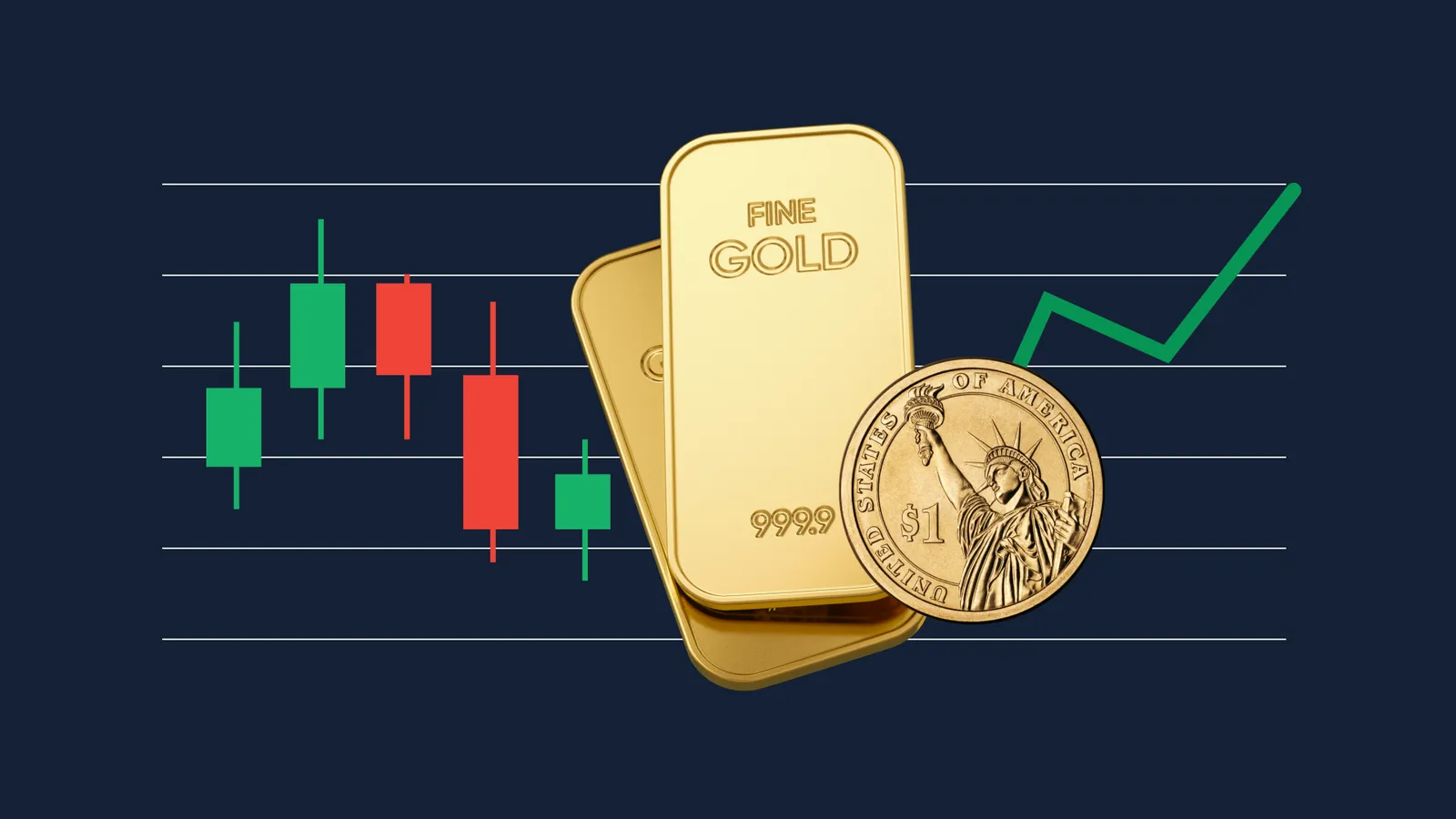
XAU/USD is the price of gold in US dollars, traded via CFDs to profit from both rising and falling markets.
Gold is highly volatile and driven by the US dollar, interest rates, inflation and geopolitical events.
Even small price moves can have a large impact, so understanding lot size, costs and risk is essential.
Successful trading requires a clear plan, including strategy (trend, breakout, range), risk management, and awareness of key economic events.
What is XAU/USD and how gold trading works in forex?
Gold has always held a special place in global markets. For centuries, it has served as a store of value, a hedge against uncertainty and a symbol of wealth. You can trade metals just like you trade a forex pair.
XAU/USD, for example, is a pair made up of gold against the US dollar. It works in the same way as any other currency market. Buying means purchasing XAU (gold) by selling USD and gives you a long position. Selling, on the other hand, means buying USD in exchange for gold, and gives you a short position.
When traders refer to trading gold in the forex market, they are usually referring to XAU/USD, which represents the price of one ounce of gold quoted in US dollars. For example, If XAU/USD is trading at 4,260, it means that one ounce of gold is worth $4,260.
Unlike buying physical gold, traders do not own the metal itself. Instead, they trade gold through leveraged instruments such as Contracts for Difference (CFDs). This allows traders to profit from both rising and falling prices. However, while leverage can maximise profits, it also magnifies losses, making proper risk management essential.
How to trade gold (XAU/USD): Video guide
Trading gold involves more than understanding how XAU/USD works. In this video, you’ll learn what drives gold prices, how to trade XAU/USD, how to manage position size and risk, and how traders use different order types, strategies and economic events when making trading decisions.
How to trade XAU/USD: step-by-step guide
Trading gold on a forex or CFD platform follows a structured process. Understanding each step helps ensure trades are placed with consideration and risk is managed properly.
1. Placing a trade: volume, stop-loss and take-profit
To place a gold trade, you first select your position size (volume) based on your risk tolerance. You then choose whether to buy or sell and set key risk parameters:
- Stop-loss (SL): automatically closes the trade to limit losses
- Take-profit (TP): locks in profit at a chosen level
Setting these levels before entering a trade is especially important as XAU/USD in forex is considered a highly volatile asset compared to traditional currency pairs.
2. Choose an order type: market, limit and stop orders
Gold trades can be executed using different order types:
- Market order: enters the trade instantly at the current price
- Limit order: enters the trade at a specified price or better than the current market, but only if that price is reached
- Stop order: triggers a trade once price reaches a specific level
Choosing the right order type helps you control both entry and execution.
3. Understand execution risks: slippage, re-quotes and volatility
XAU/USD can be volatile, particularly during major economic announcements. This can affect how trades are executed:
- Slippage: your order is filled at a different price than expected
- Re-quotes (on some platforms): a new price is offered if the market moves quickly
- Volatility: rapid price movements can lead to larger-than-expected outcomes
Being aware of these factors helps you manage expectations in fast-moving markets.
Pre-trade checklist for beginners
Before clicking “Buy” or “Sell” on your trading platform, it’s useful to follow a simple checklist. Confirm your trade direction, ensure your position size aligns with your risk plan and set your stop-loss and take-profit levels in advance.
You should also review current market conditions, including news and volatility, and check that spreads are reasonable. Using a checklist can help improve discipline and reduce impulsive decisions.
XAU/USD contract basics: lot size, pip value, margin and trading costs
Before trading gold, it’s essential to understand how XAU/USD works, as this determines your profit, loss and costs.
XAU/USD is quoted in US dollars per troy ounce, meaning the price shows how much one ounce of gold is worth. For example, if gold is trading at 4,260, one ounce equals $4,260. Your profit or loss depends on how this price moves after you enter a trade, combined with your position size.
Gold is traded in lots. At most brokers, 1 lot equals 100 ounces, while smaller sizes such as 0.10 lots (10 ounces) or 0.01 lots (1 ounce) allow for more flexibility. These values are defined in your broker’s contract specifications, so it’s important to check them before trading.
Unlike traditional forex pairs, gold is usually quoted in dollars and cents rather than standard pips. Prices typically move in 0.01 increments, and traders read these movements directly as dollar changes. For a standard position of 1 lot (100 ounces), a $1 move equals $100 profit or loss, while a $0.10 move equals $10.
For example, if you buy 1 lot at 4,260 and the price rises to 4,265, the $5 increase results in a $500 profit. If you sell instead of buy, you would profit when the price falls and lose when it rises. Larger moves have a bigger impact: a $10 move equals $1,000 and a $20 move equals $2,000 for the same position size.
Gold is often traded with leverage, meaning you only need to deposit a fraction of the full position value (margin) to open a trade. While this allows you to control larger positions with less capital, it also increases risk, as both profits and losses are magnified.
There are also trading costs to consider. The spread is the difference between the buy and sell price and can widen during volatile periods. Some brokers may charge a commission, and overnight swap fees apply if you hold positions beyond the trading day. These costs can affect your overall performance by increasing the distance the market needs to move in your favour before you become profitable.
Before placing a trade, it’s important to review your broker’s contract specifications, margin requirements and costs. Understanding these factors helps you manage risk more effectively and avoid unexpected expenses.
Key drivers of XAU/USD: USD strength, real rates, inflation and geopolitics
Gold reacts strongly to global macroeconomic conditions and is influenced by several key factors.
One of the most important drivers is the US dollar. Gold and the dollar usually move in opposite directions. When the dollar weakens, gold often rises, and when the dollar strengthens, gold tends to fall. This happens because gold is priced globally in US dollars, making it cheaper for international buyers when the dollar declines.
Interest rates and central bank policies also play a crucial role. Gold does not generate interest or yield, so when real interest rates are high, gold becomes less attractive compared to bonds and savings instruments. When interest rates fall or central banks signal a more dovish stance, gold often benefits. Decisions made by the US Federal Reserve are among the most powerful drivers of gold prices.
Another major factor is geopolitical tension. Wars, political conflicts and global instability tend to push investors toward safe-haven assets such as gold. This safe-haven demand can trigger sharp and rapid price rallies. These moves can be rapid and unpredictable, especially during major global events.
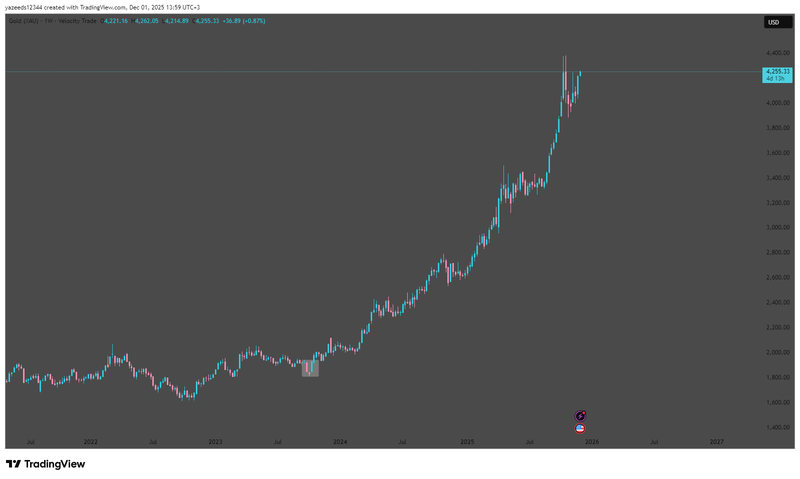
XAU/USD chart example (source: TradingView)
The core macro trio: USD, real yields and inflation expectations
While gold and the US dollar often move in opposite directions, the relationship is not always perfectly inverse. During periods of global uncertainty, both can rise together as investors seek safe-haven assets.
A key concept for gold traders is real yields, which are calculated as nominal bond yields minus inflation. Because gold does not generate income, rising real yields increase the opportunity cost of holding gold and can push prices lower. Falling real yields, on the other hand, tend to support gold.
Inflation data and central bank expectations play a major role in these movements. For example, a higher-than-expected US CPI release can quickly shift expectations for Federal Reserve policy, leading to rapid moves in both the US dollar and gold. Changes in how markets price future interest rates, often referred to as Fed repricing can also trigger sharp movements in XAU/USD within minutes.
Key economic events that affect gold prices
While gold is influenced by broader macroeconomic trends, certain economic events and indicators can lead to price movements in XAU/USD.
Several high-impact US economic releases tend to move gold prices:
- US Consumer Price Index (CPI): measures inflation and can shift expectations for interest rates
- Non-Farm Payrolls (NFP): signals labour market strength and economic health
- Federal Reserve interest rate decisions: directly influence the cost of holding non-yielding assets like gold
- FOMC statements and press conferences: provide forward guidance on monetary policy
- Speeches from Federal Reserve officials: can move markets if they signal changes in policy outlook
These events can trigger sharp short-term movements in gold, especially if results differ from market expectations. Traders often use an economic calendar to track upcoming data releases and central bank events, helping them prepare for periods of higher volatility in XAU/USD.
XAU/USD vs major forex pairs: volatility, average range and typical behaviour
Gold behaves very differently from traditional forex pairs like EUR/USD or GBP/USD. It is more volatile, trades in wider daily ranges and reacts aggressively to economic data and breaking news. A single US inflation report or a Federal Reserve speech can move gold by tens of dollars within minutes, depending on volatility and liquidity conditions.
This high volatility is what makes gold one of the most widely traded instruments in the world. It attracts day traders who seek fast price movements, swing traders who target multi-day trends and hedgers who use gold to protect their portfolios during periods of uncertainty. However, the same volatility that creates strong trading opportunities also increases risk, meaning traders must approach gold with discipline, proper position sizing and strict risk management.
Gold correlations and diversification
Gold can behave differently depending on market conditions. At times, it acts as a “risk-off” hedge, rising when investors move away from riskier assets such as equities during periods of uncertainty. In these environments, gold is often supported by safe-haven demand.
However, in other situations, gold behaves more like a rates-driven asset, reacting primarily to changes in interest rates, real yields, and central bank expectations rather than risk sentiment alone.
Correlations between gold and other markets are not constant and can shift over time. For example, gold may move inversely to the US dollar or equities during some periods, but during major crises or strong macro trends, these relationships can break down. This is why gold is not always a reliable “safe haven” in every market environment.
From a practical perspective, traders should be aware of overlapping exposure. Holding multiple positions that are closely related, such as gold and USD pairs, or gold and equity indices can unintentionally increase risk. Managing correlation and diversification helps avoid doubling exposure and improves overall risk control.
Common strategies for trading gold in forex
There are several approaches to trading XAU/USD, each suited to different market conditions. Understanding when to use each strategy can help traders make more structured decisions and manage risk more effectively.
Trend trading is one of the most common approaches. Traders look to buy when gold is in an uptrend (forming higher highs and higher lows) and sell during downtrends (lower highs and lower lows). Simple tools such as moving averages can help identify the direction of the trend. This strategy tends to work best in strong, sustained market moves, but can lead to losses if the market becomes choppy or reverses unexpectedly.
Breakout trading focuses on key price levels, such as support and resistance. Traders enter the market when gold breaks above resistance or below support, often during major economic events. While breakouts can lead to strong momentum moves, there is a risk of false breakouts, where price briefly moves beyond a level before reversing.
Range trading is used when gold is moving sideways within clear boundaries. Traders aim to buy near support and sell near resistance, taking advantage of repeated price swings. This approach works best in stable conditions but can fail if the market suddenly breaks out of the range.
Traders can combine technical analysis with macroeconomic factors, such as Federal Reserve policy, inflation data and US dollar strength. This helps provide a broader context for trade decisions, especially during periods of high volatility.
Risk management for gold trading
Risk management is critical when trading gold due to volatility and potential wide price swings. Without a structured approach, even a few trades can lead to significant losses.
Gold often moves more aggressively than major currency pairs like EUR/USD, which means traders typically need smaller position sizes and wider stop-loss levels to manage risk effectively.
Position sizing and stop-loss strategy
Position sizing should be based on a fixed percentage of your account, typically 1–2% per trade. Your position size is then adjusted based on your stop-loss distance.
Because gold often moves in larger daily ranges, wider stops are usually required. Instead of tightening your stop, you reduce your position size to keep risk consistent.
Stop-loss levels should always be set before entering a trade to ensure risk is clearly defined in advance.
Example:
- Account size: £10,000
- Risk per trade: 1% = £100
- Stop-loss distance: $10
Position size is calculated so the maximum loss does not exceed £100.
Using volatility-based tools such as the Average True Range (ATR) can help set more realistic stop levels. Wider stops may be needed during high volatility, while overly tight stops, especially during news events can lead to unnecessary losses.
Traders should avoid widening stop-losses after entering a trade, as this increases risk beyond the original plan.
Leverage, drawdowns and market conditions
Leverage can amplify both gains and losses, so it should be used carefully. Excessive leverage increases the risk of rapid drawdowns and account damage.
Here are a few things to keep in mind:
- Use conservative leverage levels
- Monitor drawdowns
- Avoid increasing position size after losses
High-impact events such as inflation data releases, central bank decisions and geopolitical developments can trigger sharp price movements in gold, making leverage especially risky during these periods.
Avoid overtrading in highly volatile conditions, as frequent entries can quickly lead to losses. Knowing when to stay out of the market is just as important as knowing when to trade.
Frequently Asked Questions (FAQs)
What are the spreads and fees when trading gold (XAU/USD)?
When trading gold CFDs, the main costs are the spread (the difference between buy and sell price), commissions (if your broker charges them) and overnight swap fees for holding positions beyond the trading day. These costs can increase during volatile periods and should always be considered, especially for short-term or overnight trades.
What is the lot size and pip value for XAU/USD?
Gold is typically traded in lots, where 1 lot = 100 ounces. Smaller sizes include 0.10 lots (10 oz) and 0.01 lots (1 oz). Gold usually moves in 0.01 price increments, and for 1 lot, a $1 move equals $100 profit or loss. This means even small price changes can have a significant impact.
When is gold most volatile and what news moves it the most?
Gold is most volatile during major US economic events and periods of global uncertainty. Key releases include US CPI, Non-Farm Payrolls (NFP), Federal Reserve decisions and FOMC statements. Speeches from Fed officials and geopolitical events can also trigger sharp price movements.
What is the best strategy to trade gold in forex?
There is no single “best” strategy for trading gold, as different approaches work better in different market conditions. You should also choose a strategy based on your goals and risk appetite.
Common methods include trend trading in strong directional markets, breakout trading around key levels or major news events and range trading when price moves sideways.
The most effective approach depends on the current market environment and should always be combined with proper risk management.
How do you trade XAU/USD as a beginner?
Beginners should follow a structured process when trading gold. This includes choosing a position size based on risk tolerance, deciding whether to buy or sell based on their analysis of the market and setting a stop-loss and take-profit before entering a trade.
It’s also important to choose a trading strategy, such as trend, breakout or range trading, that fits your overall plan, while monitoring economic news and overall market conditions. Starting with a clear plan and managing risk is essential when trading gold.
What mistakes do beginners make when trading gold?
Common mistakes beginners can make include using too much leverage, trading during high-impact news without a clear plan, setting stop-loss levels too tight or moving them impulsively, and ignoring key drivers such as interest rates and the US dollar. Overtrading in highly volatile conditions is another common issue. These mistakes can lead to unnecessary losses if not managed properly.
How do stop-loss and slippage work in fast gold markets?
A stop-loss automatically closes a trade to limit losses, but in fast-moving markets, it may be executed at a worse price due to slippage. This happens when price moves quickly, especially during news events. As a result, actual losses can be larger than expected, making risk management even more important.