
 Support
Trump’s Iran threat triggers global shockwaves
Trump signaled a more aggressive stance, warning that the United States could act “extremely hard” against Iran within the next two to three weeks. He further emphasized that Washington has multiple strategic options, including targeting Iranian oil infrastructure and seizing key energy facilities.

Trump warned that the United States could hit Iran “extremely hard” within the next two to three weeks.
Investors aren’t just thinking about conflict, they’re thinking about inflation and interest rates.
Gold is no longer moving purely on fear. It’s trading on interest rates, inflation expectations, and how policymakers are likely to respond.
A sudden shift in tone
Comments from Donald Trump this week have brought the U.S.–Iran situation back into the spotlight, with a noticeably more aggressive tone. Trump warned that the United States could hit Iran “extremely hard” within the next two to three weeks, while also suggesting that Washington has the ability to target key parts of Iran’s oil infrastructure.
Even without concrete action, the language alone was enough to move markets. Investors are highly sensitive to anything that could disrupt energy supply, and Iran remains a key piece of that puzzle.
Why gold fall instead of rising
Under normal circumstances, rising geopolitical tension would push gold higher. But this time, the opposite happened. Gold dropped roughly 5%, a sharp move that caught many off guard.
The reason lies in how the market is interpreting the situation. Investors aren’t just thinking about conflict, they’re thinking about inflation and interest rates. If oil prices rise and inflation picks up again, central banks may have to keep rates higher for longer or even tighten further.
Higher interest rates increase the opportunity cost of holding a non-yielding asset, and that tends to weigh on prices. In this case, the inflation story is overpowering the safe-haven narrative. The result is a steep selloff, putting gold on track for its worst month since the Global Financial Crisis.
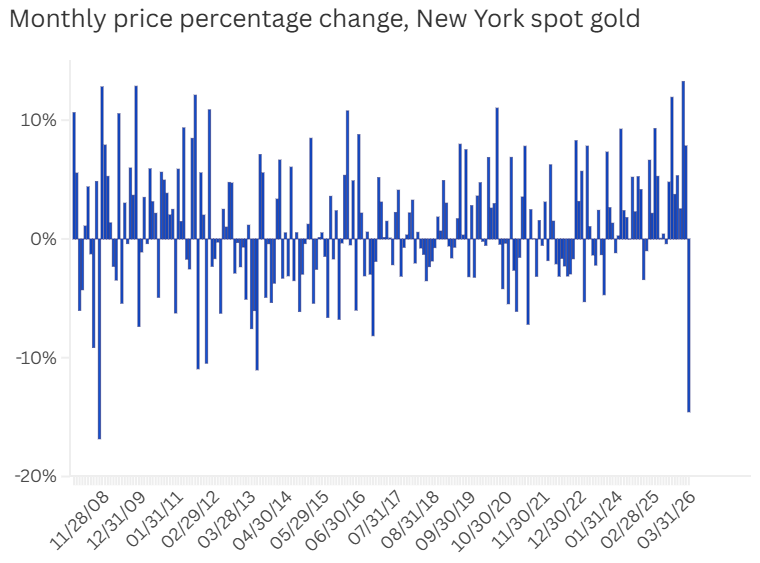
Source: FactSet
Oil risk creeps back into the picture
The immediate concern is oil. Any threat to Iranian production introduces uncertainty into global supply, and that uncertainty tends to show up quickly in pricing expectations. Trump’s remarks about boosting U.S. oil output offer some longer-term balance, but markets are not looking that far ahead right now.
Instead, the focus is on what could happen in the near term. If supply tightens, even temporarily, energy prices could move higher. That feeds directly into inflation expectations, which have only recently started to cool in many economies.
what is waiting the market after Trump statement
What stands out here is how quickly the market has shifted its focus. This isn’t just about geopolitical fear, it’s about what that fear leads to. Higher oil prices, higher inflation, and potentially tighter monetary policy.
At the same time, Trump’s comments that the U.S. has “never been better prepared economically” may be reinforcing confidence in the domestic outlook. That, in turn, reduces the urgency to move into traditional safe havens like gold.
The next phase depends on whether rhetoric turns into action. If tensions escalate further and oil supply is actually disrupted, inflation concerns could intensify, keeping pressure on gold. If the situation cools, markets may reverse quickly, as they often do when geopolitical fears fade.
For now, one thing is clear, gold is no longer moving purely on fear. It’s trading on interest rates, inflation expectations, and how policymakers are likely to respond.
Trump’s renewed stance on Iran has shaken markets, but not in the usual way. Instead of driving a rush into safety, it has sparked concerns about inflation and policy tightening.


