
 Support
Producer price index fuels uncertainty over inflation rebound; bond yields rise
U.S. producer price data surprised to the upside, sparking concerns of an inflation resurgence and driving bond yields higher, while the dollar gained ground.

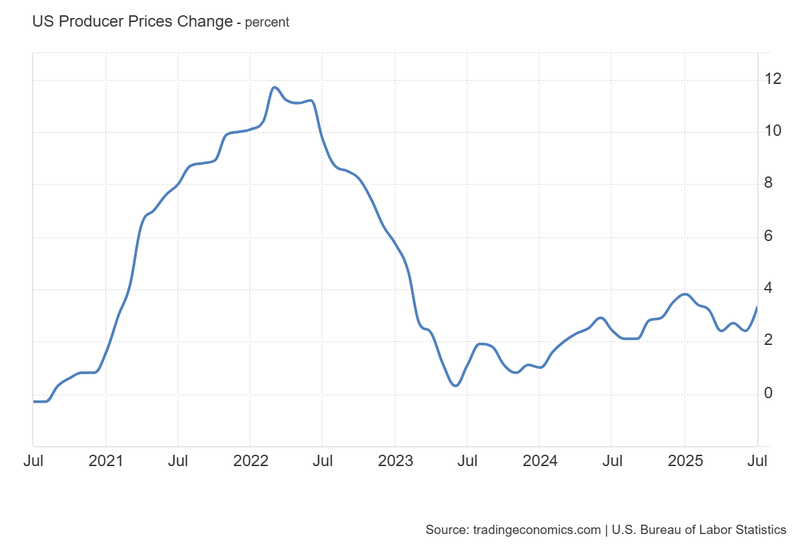
The Producer Price Index (PPI) rose 3.3% year-over-year, above expectations for 2.5%, unsettling bond and currency markets.
U.S. Treasury yields climbed roughly 1.25% intraday on fears that inflation pressures are re-emerging.
Jobless claims slowed more than expected, easing pressure on the Federal Reserve for aggressive rate cuts.
Producer price index surprises to the upside
The latest PPI reading defied market forecasts, resuming the upward trend seen over the past three years. Analysts had expected a 2.5% annual increase, but the actual figure came in at 3.3%. Core PPI also exceeded expectations, rising more than a full percentage point from the prior reading to reach 3.7% year-over-year.
The data jolted markets: the 10-year U.S. Treasury yield moved higher, and the U.S. Dollar Index advanced 0.5% intraday. The dollar remains down roughly 10% year-to-date in 2025, and expectations of monetary easing have weighed on its value. However, the stronger PPI raises the risk that August’s Personal Consumption Expenditures (PCE) index could also surprise to the upside. Since PCE covers a broader basket of goods and services than CPI, a rebound there could effectively shut the door on aggressive Fed easing in the near term.
Treasuries climb on fears of tariff-driven price pressures
Ten-year Treasury yields rose about 1.5% after the New York close as traders digested the inflation surprise. The July PPI data have fueled speculation that producer prices are already reflecting the effects of President Donald Trump’s tariff measures. If higher input costs are passed along to consumers, inflation could prove stickier than markets anticipate—limiting the Fed’s scope to cut rates.
The shift was quickly reflected in CME Group’s FedWatch probabilities. Earlier this week, markets were pricing in three cuts in the second half of 2025, with some wagers on moves larger than 25 basis points. Now, odds favor just two quarter-point reductions, bringing the policy rate to 4%. The change underscores how sensitive interest-rate expectations remain to incoming economic data.
Jobless claims slow, but hiring momentum weakens
Initial jobless claims fell to 224,000 in the latest reading, beating expectations and signaling continued labor-market resilience. Yet, the improvement contrasts with a slowdown in new hiring. Nonfarm payrolls have been trending lower through 2025, reflecting corporate caution on investment and expansion amid trade-policy uncertainty.
While employment metrics still point to relative strength, a growing number of economic indicators are beginning to capture the downstream effects of tariffs—suggesting that the shift in trade dynamics is becoming an entrenched feature of the U.S. economy.
