
 Support
US long-term mortgage rates rise to multi-month highs on inflation concerns
US 30-year mortgage rates have reached their highest level in approximately six months, driven by a significant surge in energy prices resulting from the US–Israel–Iran conflict in the Middle East. Concurrently, the Energy Information Administration (EIA) reported a substantial weekly build in crude inventories, exerting modest downward pressure on West Texas Intermediate (WTI) prices.

The US 30-year mortgage rate reached 6.43%, its highest level since October 2025.
Rates are reacting to the heightened risk of an inflationary rebound, as Middle Eastern tensions continue to drive energy costs higher.
US crude inventories saw a significant accumulation of 6.93 million barrels—well above analyst estimates—resulting in a 2.20% depreciation in WTI oil prices.
Australia’s inflation rate decelerated from 3.8% in January to 3.7% in February.
US 30-year mortgage rate reaches six-month high amid resurgent inflationary concerns
As reported by Reuters, the Mortgage Bankers Association (MBA) stated that the 30-year fixed-rate mortgage rose by 13 basis points to 6.43% for the week ending 20 March—the highest level recorded since October 2025. Notably, the structure of long-term rates suggests a potential inflection point, diverging from the downward trend observed over the past year. This development significantly complicates the outlook for the US real estate sector.
The US–Israel–Iran conflict has disrupted regional energy supply chains and critical infrastructure, pressuring oil and gasoline prices upward. Since the escalation began on 28 February, oil benchmarks and gasoline prices have surged by approximately 35% and 30%, respectively. This sharp increase has renewed fears of a rebound in US headline inflation, leading to market expectations that the Federal Reserve could maintain a "hawkish" stance with "higher-for-longer" interest rates. Consequently, US 10-year Treasury yields have climbed by 39 basis points to 4.33% during the period under review, subsequently pushing mortgage rates higher due to the Treasury market's significant influence on real estate financing costs.
A sustained period of high mortgage rates and macroeconomic instability typically dampens the real estate sector, leading to a decline in both purchase and refinance applications. Higher interest rates translate to increased costs for consumers; furthermore, a climate of elevated inflation and borrowing costs tends to erode consumer confidence, thereby weakening domestic demand.
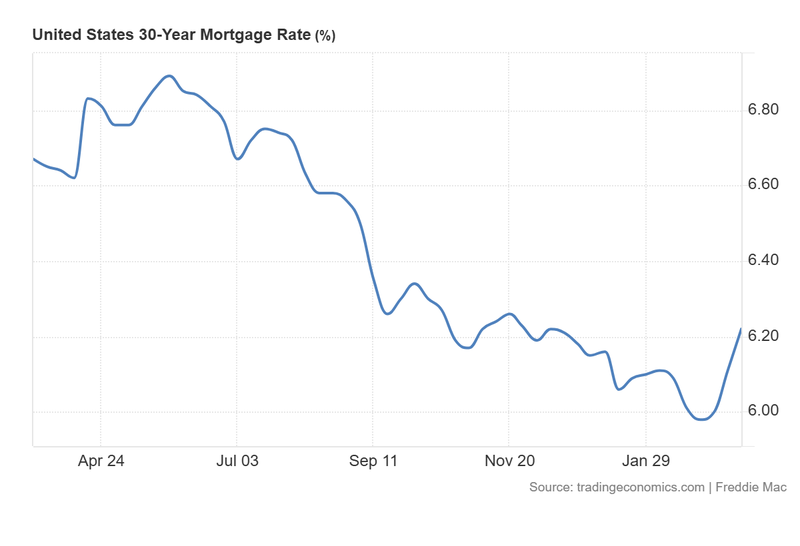
Figure 1. US 30-Year Mortgage Rate (2025–2026). Source: Data from the Freddie Mac; Figure obtained from Trading Economics.
US crude inventories accumulate well above forecasts; Oil prices retreat
According to data released by the US Energy Information Administration (EIA), crude oil stocks rose by 6.926 million barrels in the latest weekly assessment—a figure substantially higher than the 0.5 million barrels anticipated by analysts. This report marks the fifth consecutive week of inventory builds, with each evaluation consistently exceeding market forecasts. In response, the West Texas Intermediate (WTI) futures contract (CLK6) fell 2.20% to $90.40 per barrel. This depreciation could be attributed to the expanded US supply, which naturally exerts downward pressure on prices.
However, uncertainty and volatility remain the defining characteristics of the energy markets as the Middle East conflict persists. As reported by Reuters, while the United States has submitted a proposal to Iran intended to end hostilities in the Gulf, the Iranian Foreign Minister Abbas Araqchi suggested that negotiations would only be possible if Tehran’s specific demands are guaranteed.
Australian inflation rate decelerates slightly below the analysts projections
Data from the Australian Bureau of Statistics reveals that the headline inflation rate decelerated from 3.8% in January to 3.7% in February, slightly lower than the "unchanged" reading expected by analysts. While any reduction in price pressure supports the Reserve Bank of Australia’s (RBA) goal of returning inflation to its 2%–3% target range, it is important to note that this current evaluation does not yet reflect the surge in energy prices caused by the conflict in the Middle East.
Consequently, the RBA is likely to wait for updated economic data before re-evaluating its forthcoming policy decisions. Notably, the Reserve Bank of Australia was the first major Western central bank to raise interest rates following the onset of the US–Israel–Iran conflict—a proactive move designed to mitigate the inflationary impact of rising energy costs.
