
 Support
How to build a gold trading strategy
Trading gold demands precision, market knowledge and statistical discipline due to its strong correlations across major financial markets.

Gold plays multiple roles as a hedge, an investment and a speculative asset, free from counterparty risk as a store of wealth.
Long-term exposure is commonly gained through ETFs and equities, while futures and CFDs are used for leveraged exposure.
Strong US dollar performance and higher interest rates tend to suppress gold prices, while weaker conditions are generally supportive.
Effective risk control is vital when using leverage, as higher reward potential comes with heightened risk.
How to trade gold successfully: a general overview
Gold trading is a broad and complex phenomenon that requires the consideration of fundamental, statistical, and technical factors for its correct application. The precious metal is utilised as a raw material within specialised industries, as well as an exchange and reserve asset that retains its value, eliminating counterparty risk when held over time.
As an investment, gold has historically appreciated due to consistent demand; as a hedge, gold protects the holder's capital flows during periods of economic, geopolitical, or commercial uncertainty; and as a speculative asset, derivative instruments utilising leverage are employed to capture gold price variations with greater capital exposure.
Types of financial instruments in gold trading
There are various methods of trading gold in financial markets, depending on the specific objective required:
- Mining equities or Jewellery companies: Generally sought for long-term investment, investors select these equities with the aim of capitalising on the trend of gold prices and the financial performance of the companies themselves.
- Gold ETFs: Exchange-Traded Funds are utilised for long-term investment by individual investors and asset managers. These funds are composed of companies related to gold, or they may replicate the physical behaviour of the precious metal; in both instances, they offer a diversification benefit.
- Gold Futures or Options: Gold futures and options contracts are traded on derivatives exchanges globally. Gold-related companies and traders generally use these types of contracts for hedging and speculation. They offer the benefit of a clearinghouse, which minimises counterparty risk. Furthermore, implicit leverage allows access to potential profits, though the risk of loss is also significant.
- Gold CFDs: Contracts for Difference are traded on the Over-The-Counter (OTC) market and are generally used for speculation. The high leverage available in this type of contract considerably increases the potential for returns; however, the risk of capital loss is very high. Extensive knowledge is required to trade CFDs effectively.
A fundamental approach to gold trading
The fundamental framework for gold trading is extensive, covering topics such as interest rates, monetary policy, inflation, geopolitical risks, and correlation analysis. Key considerations are detailed below:
Interest rates and their impact on gold
Interest rates are a critical factor in the valuation of gold. When the US Federal Reserve raises interest rates for reasons of monetary policy—especially when rates rise above inflation (positive real rates)—capital flows tend to migrate towards interest-bearing or coupon-paying assets such as Treasury bonds. As a result, the US Dollar appreciates and gold decreases in value, as a more expensive Dollar discourages the purchase of gold, while the opportunity cost benefits bonds over non-yielding assets like gold. In contrast, when the Fed lowers interest rates, investment in bonds decreases, the Dollar tends to depreciate against global currencies, and gold becomes a vital reserve asset, increasing in value.
Inflation and the search for hedging
Gold tends to act as a hedge against inflation, particularly during times of global stress. Considered the quintessential safe-haven asset, gold is generally sought after by central banks, investors, and hedge funds during times of economic crisis—regardless of whether there is an imbalance in inflation levels or stagnation in underlying economic growth.
The impact of geopolitical and commercial risk on gold
In times of elevated geopolitical and commercial risk, gold has proven to be a relevant safe-haven asset as demand tends to increase. In recent years, gold has appreciated considerably due to a constant search for hedging amid scenarios of armed conflict, trade wars, and internal political crises. Such situations have occasionally caused the traditional inverse correlation between gold and the US Dollar to decouple, as both assets are utilised as refuges during periods of high uncertainty.
Technical analysis in gold trading
- The various technical analysis approaches used by traders globally are highly effective for gold trading, particularly those based on forecasting short-term movements. Prominent technical analysis approaches include:
- Price Action and Price patterns: Price action analyses the overall structure of the market with the aim of identifying the prevailing trend and likely reaction zones that are critical for determining entry or exit levels. Furthermore, chartist analyses chart patterns which have the potential for significant movement when valid support or resistance levels are respected or breached. Gold tends to follow and respect trends as well as price patterns.
- Indicators and Oscillators: Due to gold's trending behaviour and the formation of consistent chart patterns, technical indicators and oscillators such as Moving Averages, the RSI (Relative Strength Index), and MACD (Moving Average Convergence Divergence) are widely employed.
- Volume Analysis and Psychological Levels: Trading volume and indicators such as the Volume Profile are key analysis tools for gold trading, as the fundamental driver of price movement is the interaction between supply and demand. Furthermore, round price levels (e.g., $3,000, $4,000) tend to be areas sought after by traders due to the psychological impact they have on the trading of the precious metal.
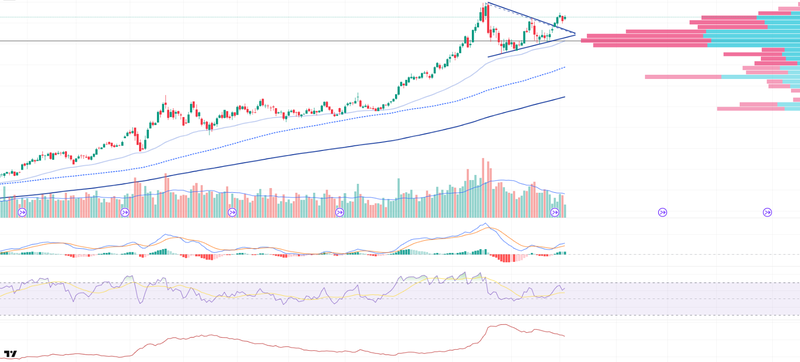
Figure 1. Gold price example. Source: Image obtained from TradingView.
Leverage in gold trading and risk management tools
Gold trading through leveraged instruments such as CFDs or futures has increased over time due to the profit potential offered by the multiplier effect. However, leverage also greatly increases the risk of capital loss, requiring the use of specialised risk management tools. Key tools include:
- Position Sizing: This involves identifying a percentage value for margin usage with respect to the total capital (balance), in order to control the account's exposure. For example, a trading account with a balance of $10,000, where the trader is only permitted to risk 2% per position, would imply that the initial margin to be traded is approximately $200 ($10,000 * 0.02).
- Volatility Analysis: This entails analysing changing movements in volatility with the aim of modifying exit levels or limiting a position to a greater degree. Key indicators for volatility analysis include the ATR (Average True Range) or Bollinger Bands.
- Risk-Reward Ratio: This is applied through the parallel use of stop-loss and take-profit orders to evaluate a position. The objective of the ratio is to maximise profit and minimise loss. For example, if the trader allows a maximum loss of $50 and the risk-reward ratio is 2:1, the profit sought on the trade would be $100.
Conclusion
Gold is widely recognised as the quintessential safe-haven asset, owing to its enduring status as both a store of value and a medium of exchange. Successful trading demands a comprehensive command of fundamental, statistical, and technical disciplines. To substantiate market predictions effectively, traders must accurately interpret the prevailing economic and geopolitical context. Furthermore, technical proficiency is paramount, particularly when utilising leveraged instruments such as CFDs and futures. In such scenarios, the rigorous application of risk management tools is essential to mitigate the heightened risk of capital loss associated with amplified market exposure.
Gold trading FAQs
Which financial instruments are best suited for trading gold?
The choice of instrument depends strictly on the investment horizon and objective. For long-term strategies, investors often opt for shares of mining companies or ETFs that replicate the metal's performance. In contrast, for speculation or short-term hedging, derivatives such as futures, options, and CFDs are used. The latter allow the use of leverage to maximise market exposure, although they carry a significantly higher risk of capital loss.
How do interest rates and inflation affect the valuation of gold?
Interest rates have an inverse relationship with gold: when the Federal Reserve raises rates, the Dollar appreciates and bonds become more attractive, putting downward pressure on the price of gold. On the other hand, gold functions as a traditional hedge against inflation and economic uncertainty. In scenarios of loose monetary policy, economic crises, or geopolitical tensions, the demand for the metal as a safe-haven asset rises, increasing its value.
Which technical analysis tools are most effective for this asset?
Since gold usually respects trends and chart patterns, price action analysis and price patterns are critical in identifying entry and exit zones. Traders complement this with oscillators such as the RSI and MACD. In addition, volume analysis (Volume Profile) and attention to psychological price levels (round numbers) are crucial, as these areas tend to concentrate significant interaction between supply and demand.
Why is risk management vital when trading leveraged instruments?
Leverage on instruments such as CFDs and futures acts as a multiplier for both profits and losses. Without proper management, volatility can liquidate capital rapidly.


