Support
How oil lot size calculation works in trading
Lot size in oil trading is a calculated decision based on risk, stop-loss distance and contract size. Understanding this process helps traders manage positions with greater discipline.
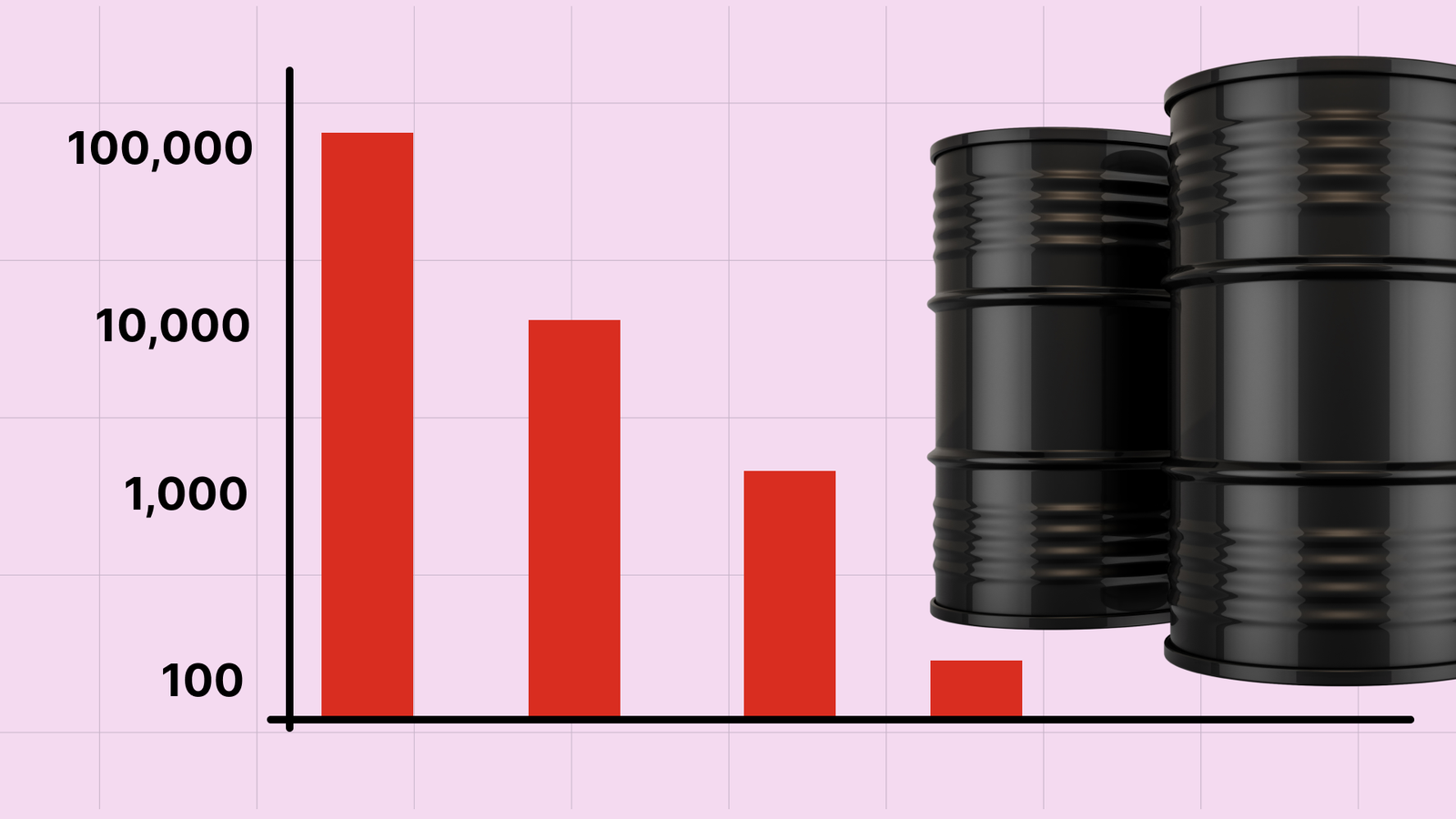
Oil lot size should match the amount of risk you are willing to take.
On Equiti, one standard oil lot is based on 1,000 barrels.
Oil position size is worked out from contract size and stop-loss distance.
WTI and Brent use the same approach to lot size calculation.
What lot size means in oil trading
In oil trading, lot size tells you how much market exposure you are taking. It defines how many barrels your position represents, and that determines how much money you gain or lose when oil moves.
This matters because oil is not a slow market. It can react sharply to inventory data, OPEC headlines, geopolitical developments, refinery disruptions, and broader risk sentiment. A move that looks small on the chart can still have a big effect on your account if the position size is too large.
That is why lot size should never be chosen casually. It should always be calculated before the trade is placed.
Standard lot size in oil
This is where traders need to be careful, because oil lot sizes are not always presented the same way across brokers and products.
On Equiti, one standard lot in oil is often shown as 1,000 barrels. That means your exposure is much larger than the 100-barrel convention some traders assume from certain retail products elsewhere.
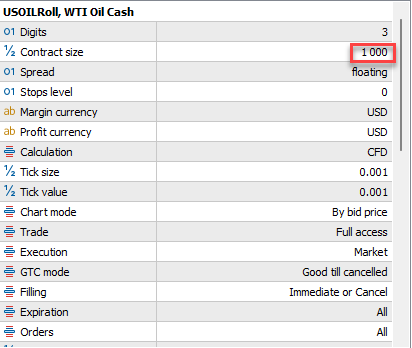
This changes the entire risk calculation.
If one standard lot equals 1,000 barrels, then a move of $1.00 in oil is worth:
1,000 barrels × $1.00 = $1,000 per standard lot
And a move of $0.10 is worth:
1,000 barrels × $0.10 = $100 per standard lot
That is why contract size must always be checked first. If you assume the wrong lot definition, your risk calculation will be wrong from the start.
Why lot size matters so much in oil
Oil traders often focus heavily on direction. They ask whether crude is likely to rise or fall, whether a support level will hold, or whether a macro headline will move the market. Those questions matter, but they come after the more basic one: how much are you risking if you are wrong?
Lot size is what translates your market idea into account risk. Two traders can have the exact same entry and stop-loss, but if one trades a much larger size, the outcome for the account will be completely different.
That is why disciplined traders do not begin with, “How much do I want to make?” They begin with, “How much am I willing to lose if this trade fails?”
The three numbers you need
To calculate lot size correctly in oil trading, you need three things.
The first is your account balance.
The second is your risk per trade, usually expressed as a percentage of the account. Many traders use 1% or 2%. Some go even lower, especially in volatile markets.
The third is your stop-loss distance, measured in dollars or cents per barrel. If you buy oil at 78.00 and place your stop at 77.40, then your stop-loss distance is $0.60 per barrel.
Once you know those three numbers, the rest becomes arithmetic.
The core formula
The logic is simple.
Dollar risk = Account balance × Risk percentage
Then:
Risk per 1 standard lot = Stop-loss distance × Barrels per lot
And then:
Lot size = Dollar risk ÷ Risk per 1 standard lot
Since Equiti often shows 1 standard lot = 1,000 barrels in oil, the formula becomes:
Risk per 1 standard lot = Stop-loss distance × 1,000
A corrected example
Let’s use the same account example, but this time with the correct standard lot definition.
Assume:
- Account balance = $10,000
- Risk per trade = 2%
- Dollar risk = $200
- Stop-loss distance = $0.50 per barrel
- Standard lot size on Equiti = 1,000 barrels
Now calculate the risk on one standard lot:
Risk per 1 standard lot = $0.50 × 1,000 = $500
Now calculate the correct lot size:
Lot size = $200 ÷ $500 = 0.40 standard lots
So the correct position size is 0.40 lots, not 4 lots.
That is a very important difference. If a trader used 4 standard lots by mistake under a 1,000-barrel contract definition, the actual risk would be:
4 × $500 = $2,000
That would be 20% of the account, not 2%.
This is exactly why contract size must be confirmed before trading.
How to think about point value in oil
Once you know that one standard lot equals 1,000 barrels, price movement becomes easier to interpret.
For one standard lot:
- A move of $0.01 in oil = $10
- A move of $0.10 = $100
- A move of $0.50 = $500
- A move of $1.00 = $1,000
This makes it easy to estimate trade risk quickly.
If your stop is 80 cents, then your risk per 1 standard lot is:
$0.80 × 1,000 = $800
If your account risk limit is $160, then your correct lot size is:
$160 ÷ $800 = 0.20 lots
That is the kind of thinking that keeps traders alive in volatile markets.
Why stop-loss distance changes the lot size
A lot of traders think they can settle on one favorite trade size and use it all the time. In reality, lot size should change from trade to trade, because stop-loss distance changes from setup to setup.
If the market is quiet and your chart setup allows a stop of 30 cents, your position size can be larger. If oil is highly volatile and your setup requires an 80-cent or $1.20 stop, your position size must be smaller.
The account risk stays the same. The stop changes. Therefore, the lot size changes too.
This is one of the clearest differences between a risk-based trader and an emotional trader. The emotional trader picks a size first. The disciplined trader calculates the size from the stop.
WTI and Brent: same logic, different product specs
The same position-sizing logic works whether you trade WTI or Brent. The formula does not change. What matters is the contract specification on your platform.
That is especially important because different brokers may structure oil products differently. On Equiti, one standard lot in oil is shown as 1,000 barrels, so the risk calculations should reflect that. If you switch products or brokers, you should check the specifications again before using the same assumptions.
The principle never changes:
- Confirm barrels per lot
- Measure stop-loss distance
- Convert that into dollar risk per lot
- Divide your account risk by that number
The most common mistake
The biggest mistake is assuming all oil products use the same lot definition.
A second mistake is choosing a lot size first and then forcing the stop-loss to fit it. That is not risk management. That is reverse engineering a trade to suit emotion.
A third mistake is ignoring changes in volatility. Oil can move in very different ways from one week to the next. A position size that felt comfortable during a quiet period may be far too large when volatility expands.
Calculating lot size in oil trading is not difficult, but it is one of the most important habits a trader can build. It turns risk into something measurable instead of emotional.
Once you know your account risk, your stop-loss distance, and the contract size used on your platform, the correct lot size becomes obvious. And on Equiti, where one standard lot in oil is shown as 1,000 barrels, that distinction matters a lot.
Get that number wrong, and the whole trade is built on the wrong foundation. Get it right, and you give yourself a far better chance of surviving the volatility that comes with oil trading.
The safest habit is simple: recalculate lot size for every trade
FAQs
How do I calculate lot size in oil trading?
Divide your dollar risk by the risk per lot based on stop distance and barrels per lot.
How many barrels are in one standard lot of oil on Equiti?
One standard lot is shown as 1,000 barrels.
Does the same formula work for WTI and Brent?
Yes. The logic is the same, but the contract specification must still be checked.
Why does stop-loss distance matter so much?
Because it directly changes the dollar risk per lot, which changes the correct position size.