Support
Fed decision today: Powell’s future may matter more than interest rates
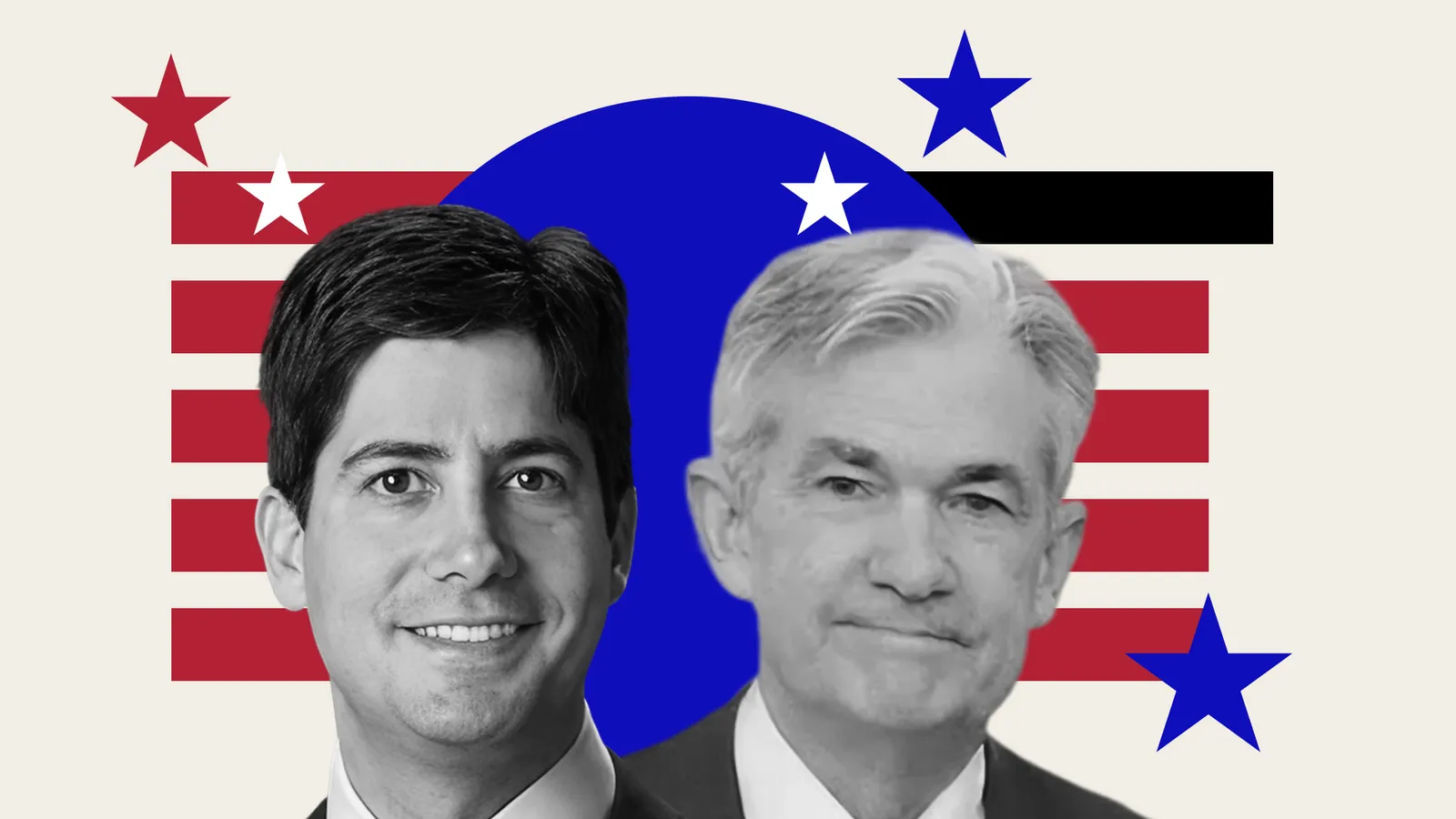
The Federal Reserve is widely expected to leave rates unchanged again, but the bigger story may be what Jerome Powell says about his own future. With inflation risks still unsettled, the Iran war clouding the outlook and Kevin Warsh moving closer to the chair, this meeting looks less like a policy turning point and more like a handover moment for the world’s most important central bank.
The Fed is expected to keep rates at 3.5% to 3.75% for a third straight meeting.
Policymakers remain in wait-and-see mode as war-driven energy risks complicate the outlook.
Powell’s comments on whether he stays on the Board after May 15 may dominate the market reaction.
Investors will also watch for any signal that the next move could still be a hike, not a cut.
A Fed hold is expected, but that is not the real event
The Federal Reserve is likely to leave interest rates unchanged on Wednesday, keeping the benchmark fed funds range at 3.5% to 3.75% for a third consecutive meeting. On the surface, that should make this a straightforward pause.
It is not.
This meeting arrives at a moment when the Fed is dealing with more than just inflation, growth and employment. The central bank is also moving toward a leadership transition, and that is now becoming just as important for markets as the policy decision itself.
The rate verdict may be predictable. What comes after it may not be.
Powell’s last press conference as chair may be the main market focus
This is widely seen as Jerome Powell’s final press conference as Fed chair, and that alone changes the tone of the meeting. Investors will still parse every word on inflation, growth and policy timing, but the more sensitive question may be whether Powell gives any clearer indication about staying on as a Fed governor after his chair term ends on May 15.
That matters because Powell’s term on the Board runs until January 2028. If he stays, he remains a powerful institutional presence even after losing the chairmanship. If he leaves, Kevin Warsh’s arrival would mark a much cleaner regime shift inside the central bank.
So while markets will hear the usual questions about rates, they will also be listening for clues about whether Powell is preparing for an orderly exit or a more awkward overlap with his successor.
The economic backdrop still argues for patience
On policy itself, the case for a hold remains strong. The Iran war has pushed up energy prices and disrupted supply chains, reviving fears of stickier inflation even as growth risks have also risen. That is exactly the kind of backdrop that encourages a central bank to wait rather than rush.
The Fed has already signaled that it is comfortable sitting tight for now. A fresh energy shock, especially one tied to geopolitics, is not the sort of inflation move policymakers are eager to answer immediately with a change in rates. At the same time, it is not benign enough to justify quick easing either.
That leaves the committee stuck in a familiar but uncomfortable position: cautious, patient and reluctant to overcommit.
The statement may still lean a little more hawkish
Even if the Fed does nothing on rates, the statement will still matter. Markets will be alert to small language changes that hint at how policymakers are thinking about the balance of risks.
One likely adjustment is in the description of the labor market. Hiring has remained soft, but broader labor conditions have looked more stable than feared, and the Fed may choose to acknowledge that.
More important, some officials have wanted the statement to make clearer that the next move is not automatically a cut. With inflation still above target and the Iran conflict adding another price shock, there is a stronger case now for preserving optionality in both directions.
That means even a subtle wording tweak could matter. A tiny edit can be enough to tell markets that the Fed is no longer comfortable being read as carrying a built-in easing bias.
Warsh is not yet in the chair, but he is already shaping the atmosphere
The broader political backdrop is making this meeting more charged than a typical hold. President Donald Trump has kept up pressure on the Fed for sharper rate cuts, while Kevin Warsh — his pick to replace Powell — has been talking in terms of “regime change” at the central bank.
That raises a bigger issue for markets: not just what the Fed does today, but how quickly the institution may start to change once Warsh arrives.
His confirmation path has become clearer after Senator Thom Tillis said he would now vote to advance the nomination out of committee, following the Justice Department’s decision to close its investigation into Powell and the Fed over the $2.5 billion headquarters renovation project. That removes a major obstacle, even if some political drama still lingers.
The Powell question is now also a governance question
Powell has previously said he would not leave until the investigation was truly finished, with transparency and finality. The formal closure of the DOJ probe may satisfy some of that condition, but not necessarily all of it.
That ambiguity is important. If Powell stays on the Board after May 15, the Fed could enter an unusual phase in which the old chair remains inside the institution while the new chair tries to establish authority. That would not automatically trigger conflict, but it would make the transition more politically delicate and more heavily scrutinized by markets.
For a central bank that relies as much on credibility and institutional calm as it does on actual rate settings, that is not a side story.
The real question is how long the Fed can stay still
Investors are still asking how long the Fed can hold this patient posture. The answer, for now, is probably longer than markets once thought. The combination of elevated inflation, uncertain energy dynamics and soft but not collapsing labor conditions gives policymakers enough justification to remain on hold.
But the longer they stay there, the more attention shifts away from the rates themselves and toward the framework, the politics and the next leadership chapter.
That is why today’s meeting feels bigger than a simple pause. The Fed is expected to stand still on policy. The institution itself, however, is clearly moving into a more uncertain phase.
A quiet rate decision, a louder transition signal
If the Fed does what markets expect, there may be no surprise in the decision. But there is still plenty of room for surprise in the tone.
Powell’s remarks on inflation, the labor market and especially his own future could end up driving the reaction more than the rate hold itself. In that sense, this is one of those Fed meetings where the official action is the least interesting part.
Rates may stay where they are. The real story is who will be steering next, and how messy the handoff becomes.