Support
 An introduction to trading global financial markets
Understanding the basics is the first step to trading. This guide explains how global financial markets operate, what influences prices, how traders analyse the markets and how to manage risk as you get started.
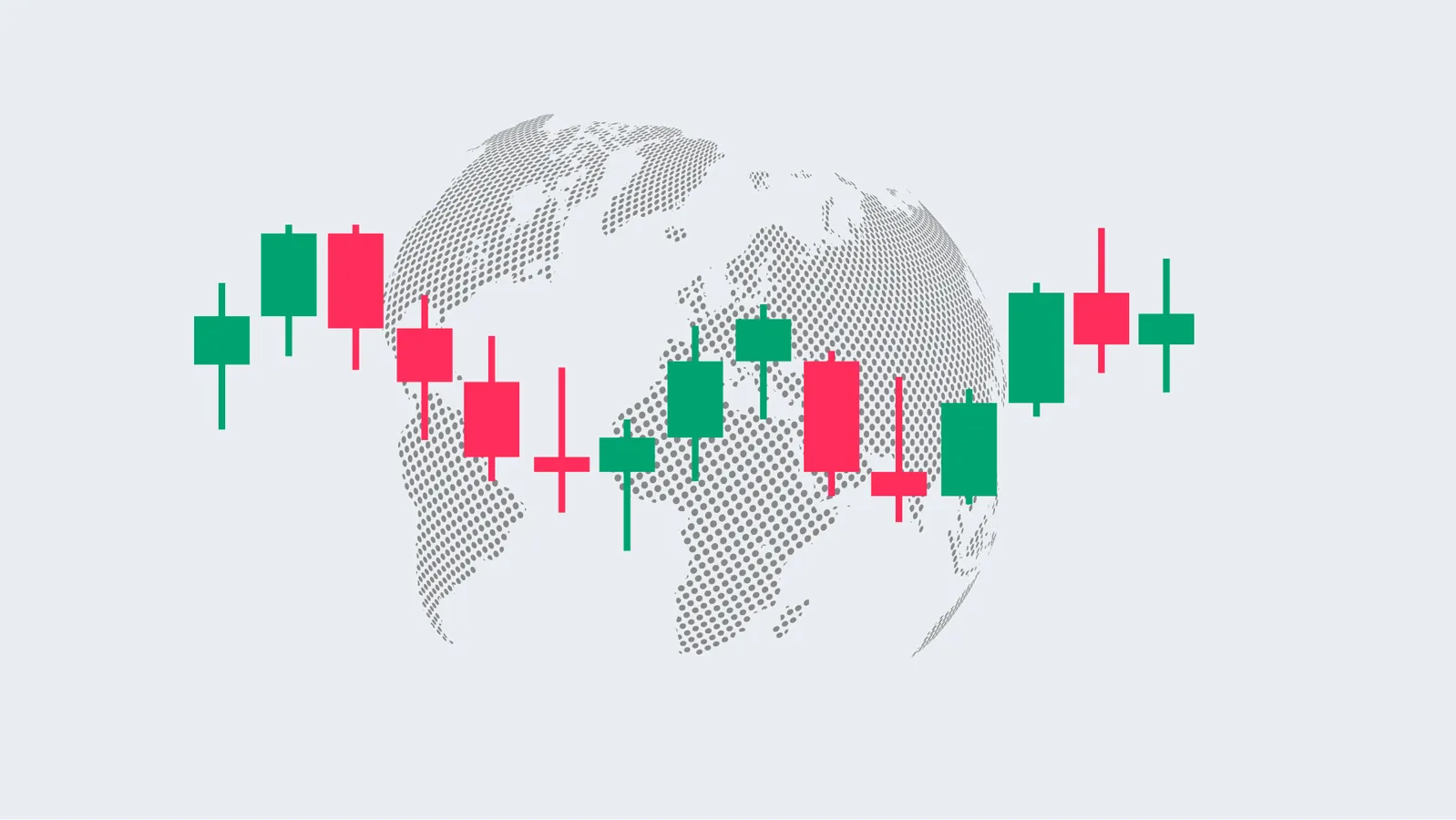
Global markets include asset classes such as stocks, forex, commodities, indices, bonds and derivatives.
Traders use technical, fundamental and sentiment analysis to better understand market conditions and identify potential opportunities.
Effective risk management, including position sizing and stop-loss orders, is an important part of trading.
Market prices are influenced by factors such as economic data, central bank decisions, company news and investor sentiment.
Choosing a regulated broker and understanding the products you trade can help you get started with greater confidence.
Getting started: choosing a broker and opening an account
Before you can trade global markets, you'll need to open an account with a regulated broker that offers access to the markets you want to trade.
Choose a regulated broker
A broker gives you access to financial markets and executes trades on your behalf. Choosing a regulated provider helps ensure your account operates within an established regulatory framework.
When comparing brokers, look beyond headline costs. Consider the markets available, trading platforms, customer support, educational resources and the overall trading experience. The right broker should match your trading goals, whether you're interested in forex, stocks, commodities or indices.
It's also worth understanding the products your broker offers. Some provide direct access to exchange-traded assets, while others offer derivatives such as CFDs, which allow traders to speculate on price movements without owning the underlying asset.
Open and verify your account
Opening an account usually takes just a few minutes. As part of the verification process, you'll usually be asked to provide proof of identity and proof of address to comply with Know Your Customer (KYC) and anti-money laundering (AML) requirements.
Some brokers may also ask about your trading experience and financial circumstances to determine whether certain products are suitable for you.
Fund your account
After your account has been approved, you can fund it using one of the broker's supported payment methods, such as bank transfers, debit or credit cards, or digital wallets.
Before making a deposit, check whether minimum funding requirements, processing times or fees apply.
Choose a trading platform
Most brokers provide access through web and mobile platforms, while many also support MetaTrader 4 (MT4) and MetaTrader 5 (MT5). These platforms allow you to analyse charts, place trades and monitor positions from almost anywhere.
When comparing platforms, consider the charting tools, order types, research features and overall ease of use to find one that suits your trading style.
Demo account vs. live account
If you're new to trading, a demo account lets you practise using virtual funds before risking real money. It can help you become familiar with the platform and test different strategies, although it won't fully replicate the emotions and decision-making involved in live trading.
Risk management essentials: Leverage, margin and stop loss
Successful trading involves both identifying opportunities and managing risk. Protecting your capital is an important part of trading, particularly when markets are volatile or you're using leveraged products.
Understand leverage and margin
Leverage allows you to control a larger position with a smaller initial deposit, known as margin. While leverage can increase both potential gains and potential losses, it's important to understand how it works before using it.
If your account balance falls below the required margin level, your broker may issue a margin call or close some or all of your positions automatically. Understanding how leverage and margin work before placing a trade is essential.
Manage your position size
Position sizing determines how much capital you risk on each trade. Before placing a trade, consider how much of your capital you're comfortable risking if the market doesn't move as expected.
Many traders limit their risk to a small percentage of their account on any single trade to help manage their exposure over the long term.
Use stop-loss and take-profit orders
Stop loss and take profit orders help automate your exit strategy.
A stop-loss closes your position if the market reaches a predetermined level, helping to limit potential losses. A take-profit order closes your trade once your target has been reached, allowing you to secure gains without constantly monitoring the market.
Using both can help remove emotion from trading decisions and support a more consistent trading approach.
Consider your risk-to-reward ratio
Before entering a trade, compare the potential reward with the amount you're prepared to risk. This comparison is known as the risk-to-reward ratio and helps traders evaluate whether the potential return justifies the level of risk involved. Many traders consider their risk-to-reward ratio alongside other forms of analysis before deciding whether to enter a trade.
Some traders also set a maximum drawdown limit for their account to help manage losses over time and reduce the impact of a series of unsuccessful trades.
Understanding market volatility and risk
Market conditions can change quickly, particularly around central bank decisions, economic data releases and geopolitical events. During periods of higher volatility, prices may move rapidly or gap between trading sessions, meaning trades may be executed at a different price than expected, known as slippage.
It's also important to consider correlation risk. Holding multiple positions that are closely related, such as oil and energy stocks or several USD currency pairs, can increase your overall exposure if those markets move in the same direction.
Developing good risk management habits can help you approach global markets with greater consistency and discipline over time.
Main financial markets you can trade
Global financial markets include a wide range of asset classes, each with its own characteristics, risks and opportunities. While every market works differently, understanding how they operate can help you decide which ones best suit your financial goals and trading strategy.
Stocks
Stocks, also known as shares or equities, represent ownership in a publicly listed company. Their value rises and falls based on factors such as company performance, earnings results, industry trends and broader economic conditions.
Investors typically buy shares to participate in a company's long-term growth, while traders often look to profit from shorter-term price movements. Depending on your broker, you may be able to buy shares outright or trade share CFDs, allowing you to speculate on whether prices will rise or fall without owning the underlying asset.
Forex
Forex is the market where currencies are traded in pairs, such as EUR/USD, GBP/USD or USD/JPY. Rather than buying a single currency, traders speculate on whether one currency will strengthen or weaken against another.
Exchange rates are influenced by a range of factors, including interest rates, inflation, economic growth, central bank decisions and geopolitical events. With trillions of dollars traded every day, forex is the world's largest and most liquid financial market.
Commodities
Commodity markets include physical assets such as gold, silver, crude oil, natural gas and agricultural products like wheat and coffee. These markets often respond to changes in global supply and demand, inflation, weather conditions, production levels and geopolitical developments.
For example, gold may attract increased demand during periods of economic uncertainty, while oil prices often respond to changes in global production or supply disruptions. Traders can gain exposure to commodities through products such as CFDs, futures or ETFs, depending on their broker and jurisdiction.
Indices
Indices track the performance of a group of companies rather than a single business. Popular examples include the S&P 500, FTSE 100 and DAX 40, each reflecting the performance of a particular market or economy.
Trading an index allows you to take a position on the broader market instead of selecting individual stocks. Many traders use indices to gain diversified market exposure or to react to major economic and corporate developments.
Bonds
Bonds are debt securities issued by governments and companies to raise capital. When investors buy a bond, they are effectively lending money to the issuer in exchange for regular interest payments over a fixed period.
Bond prices are closely linked to interest rates and inflation expectations. As a result, they are often influenced by central bank policy and economic data, making them an important asset class for many investors.
Derivatives
Derivatives are financial instruments whose value is based on an underlying asset, such as a currency, commodity, stock or index. Common examples include Contracts for Difference (CFDs), futures and options.
These products are often used to speculate on price movements or to hedge existing investments. Some derivatives can also be traded using leverage, allowing traders to gain greater market exposure with a smaller initial deposit. Before trading leveraged products, it's important to understand how they work and the risks involved.
How to analyse price movements and spot opportunities
There is no single way to analyse the markets or anticipate how prices might move. Instead, traders use different forms of analysis to better understand market conditions and identify potential trading opportunities. The three most common approaches are technical analysis, fundamental analysis and sentiment analysis.
Technical analysis uses charts and historical price data to identify trends, patterns and potential entry and exit points. Traders often use tools such as support and resistance levels, moving averages and technical indicators to help guide their decisions.
Fundamental analysis looks at the economic and financial factors that influence prices. This includes interest rates, inflation, employment data, company earnings, central bank decisions and geopolitical events that can affect supply, demand and market sentiment.
Market sentiment analysis measures how investors feel about the market. By understanding whether traders are generally optimistic or cautious, traders can better assess potential price movements, particularly during periods of high volatility or major news events.
Many traders use a combination of technical, fundamental and sentiment analysis to build a more complete view of the markets. Each approach offers different insights, and together they can help traders evaluate potential opportunities and risks.
What moves prices in global markets?
Prices in global markets change constantly as new information becomes available and market conditions evolve. While every asset responds to different influences, price movements are typically driven by a combination of economic data, investor sentiment and trading activity rather than a single event.
Interest rate decisions by central banks can have a significant impact on currencies, stocks, bonds and indices. Higher interest rates may strengthen a currency, while lower rates can encourage spending and investment, influencing broader market performance.
Economic indicators such as inflation, GDP, employment figures and retail sales provide insight into the health of an economy. Strong or weaker-than-expected data can quickly change market expectations and trigger short-term volatility.
Corporate earnings reports can move individual stocks and wider indices, while geopolitical tensions, trade policies and disruptions to commodity supplies can influence markets such as oil, gold and currencies.
Markets rarely move for one reason alone. Traders often consider fundamental developments alongside technical price levels and overall market sentiment before making trading decisions.
How trades are placed in global markets
Once you've identified a trading opportunity, you'll need to choose how your trade will be executed. Understanding the different order types, trading sessions and execution conditions can help you manage trades more effectively.
Order types
The most common order type is a market order, which executes your trade at the best available market price. A limit order allows you to set the price at which you want to buy or sell, while a stop order is triggered once the market reaches a specified price and is often used to manage risk or enter a trade after a price move.
Trading sessions
Trading hours vary depending on the market. Stock markets operate during exchange opening hours, while the forex market is open 24 hours a day during the trading week, following the major Asia, London and New York trading sessions. Activity and volatility often increase when these sessions overlap.
Spreads, liquidity and slippage
The spread is the difference between the buy and sell price of an asset and represents one of the main trading costs. Market liquidity can also affect execution, with more liquid markets generally offering tighter spreads. During periods of high volatility or low liquidity, traders may experience slippage, where an order is executed at a different price than expected.
Execution conditions can vary depending on the asset you're trading, the time of day and current market conditions, so it's always important to understand how your chosen market operates before placing a trade.
FAQs
How do I start trading global markets?
To start trading global markets, choose a regulated broker, open and verify your account, fund it and decide which markets you want to trade, such as forex, stocks, commodities or indices. Before placing your first trade, analyse the market, set your position size and use risk management tools such as stop-loss and take-profit orders. Many beginners start with a demo account to practise before trading with real money.
How do global market trading hours affect volatility?
Different markets have different trading hours, which can influence liquidity and price movements. The forex market operates 24 hours a day during the trading week across the Asia, London and New York sessions. Volatility often increases when major trading sessions overlap or when important economic news is released, which can create both opportunities and higher levels of risk.
What are the risks of trading global markets?
Trading global markets involves the risk of losing money. Market prices can change quickly due to economic data, central bank decisions, geopolitical events or unexpected news. If you trade using leverage, both profits and losses can be magnified. Managing your position size, using stop-loss orders and understanding market conditions can help reduce risk.
What fees do you pay when trading global markets?
Trading costs vary depending on the market and your broker. Common costs include spreads, commissions and overnight financing charges, also known as swaps, for leveraged positions held overnight. Some brokers may also charge currency conversion or withdrawal fees, so it's important to understand the total cost before trading.
Which type of market analysis is best for trading?
There isn't one approach that's best for every trader. Technical analysis helps identify trends and potential entry and exit points using charts, while fundamental analysis focuses on economic and financial events that influence prices. Market sentiment analysis looks at investor behaviour and overall market confidence. Many traders combine all three approaches to make more informed trading decisions.
What are the most common trading mistakes beginners make?
Some of the most common mistakes include risking too much on a single trade, trading without a clear plan, overtrading, ignoring stop-loss orders and allowing emotions to influence decisions. Many beginners also underestimate the risks of leverage or fail to keep up with important market news. Starting with a demo account and following a disciplined trading strategy can help build confidence and reduce these mistakes.