Support
Oil slips as war nears 50-day mark and Trump leans into ceasefire optimism
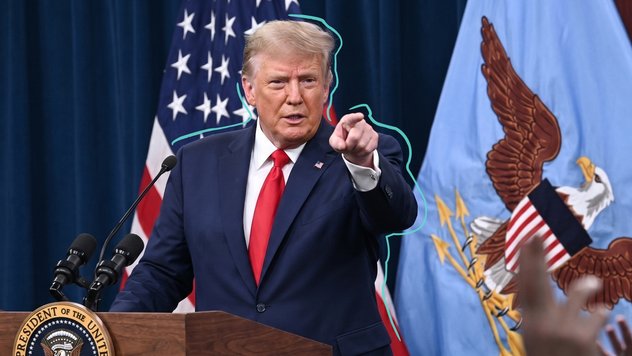
Oil prices eased as President Donald Trump adopted a more upbeat tone on the prospects for a permanent US-Iran ceasefire, offering markets a temporary reprieve after weeks of war-driven volatility. But while diplomacy is helping cool the panic premium, the crude market is still confronting a harsher reality: every delay in restoring normal flows through the Strait of Hormuz keeps supply tight and leaves the path ahead vulnerable to fresh disruption.
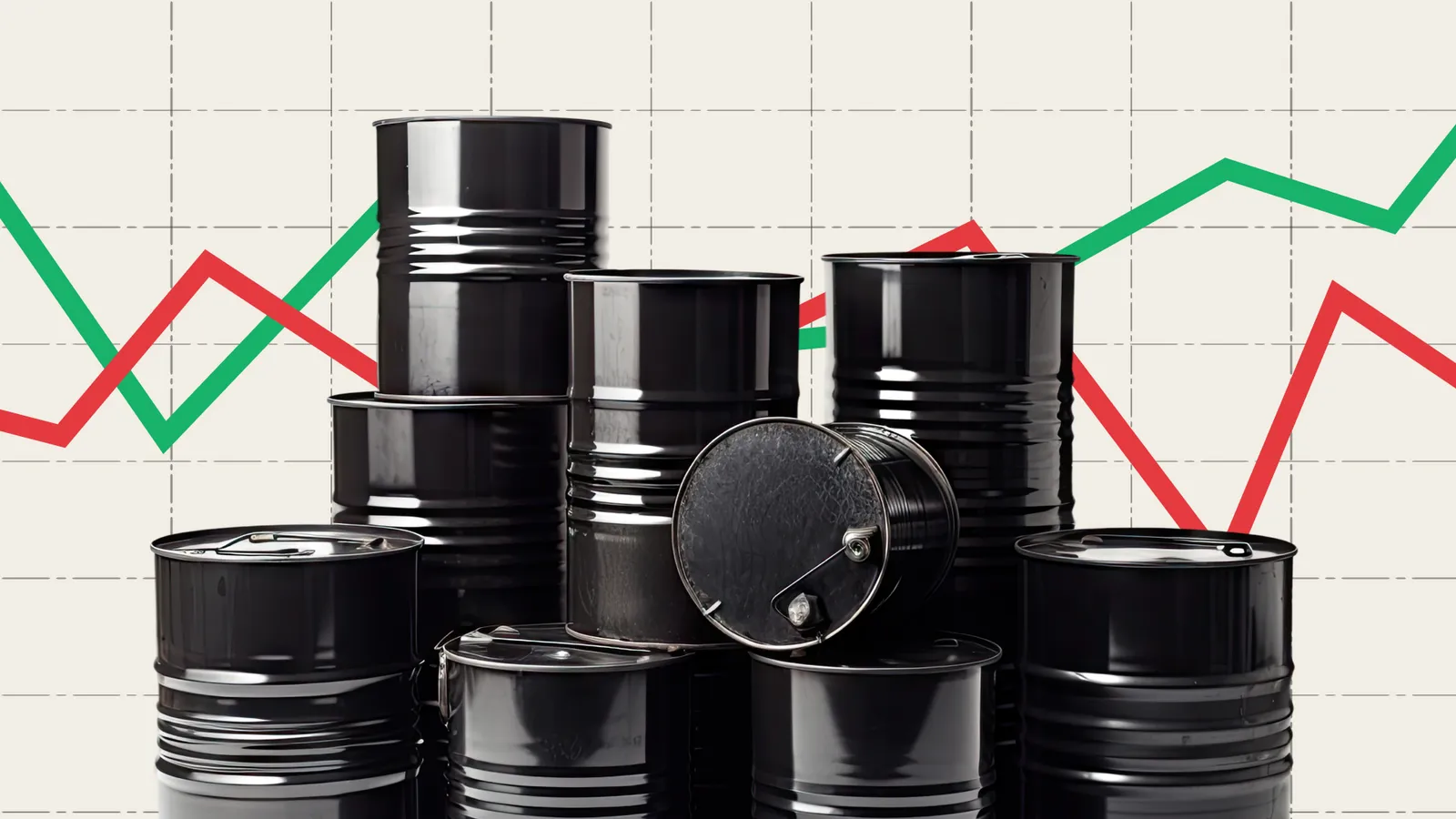
Oil fell as Trump signaled confidence in a permanent ceasefire with Iran.
Gulf and European officials see any full peace deal taking months, not days.
The market is moving from pure escalation pricing toward a more fragile stabilization phase.
Supply remains constrained, with Hormuz traffic still severely disrupted.
Diplomacy cools prices, but not the underlying shock
Oil edged lower as markets responded to a more optimistic tone from the White House on the chances of a lasting ceasefire between the United States and Iran. Brent moved back toward $98 a barrel, while West Texas Intermediate traded near $93, as investors trimmed part of the war premium that had built up during weeks of severe disruption in Gulf energy flows.
The softer tone came after Trump suggested that Tehran had agreed to terms it had resisted for weeks, including reopening the Strait of Hormuz. Iran has not publicly confirmed that position, which leaves markets doing what they have done for much of this conflict: reacting first to headlines, then pausing to ask whether anything concrete has actually changed.
The market is trying to price stabilization, not resolution
The tone in oil has shifted. The dominant trade is no longer immediate escalation, but the possibility of stabilization. That is a meaningful change after a conflict that had driven one of the most violent oil rallies in years.
Still, stabilization is not the same thing as resolution. Regional officials reportedly believe a full US-Iran peace deal could take around six months to negotiate, and that the current ceasefire may need to be extended for that entire period. That timeline matters because it pushes back any clean normalization in supply and keeps the market exposed to setbacks, miscalculation and renewed confrontation.
Nearly 50 days in, the damage is no longer theoretical
As the war approaches the 50-day mark, the crude market is no longer reacting only to political threats or military headlines. It is responding to a real supply shock. The conflict has already disrupted a large share of flows through the Strait of Hormuz, one of the world’s most important energy chokepoints, while the US naval blockade added another layer of constraint.
In the early phase of the conflict, fear drove the rally. Now diplomacy is driving the correction. But the correction has limits, because the physical disruption is still there. Shipping remains heavily constrained, and the market knows that a partial easing in rhetoric does not automatically translate into restored barrels.
Volatility has cooled, but uncertainty has not
One of the most notable developments in recent days has been the drop in volatility. Brent has traded within a much narrower weekly band than during the worst of the March chaos, when price swings became extreme. That suggests the market is no longer pricing imminent disaster every hour.
But calmer trading conditions should not be mistaken for confidence. The oil market is still dealing with an unresolved war, contested control over Hormuz, and unclear timelines for any durable deal. What has changed is not the uncertainty itself, but the way investors are managing it. Panic has given way to caution.
Hormuz remains the center of gravity
The central issue remains the Strait of Hormuz. Even if a broader ceasefire takes hold, the route’s future is still contentious. Traffic remains near standstill levels, and Iran has indicated that ships may still face charges for transit even after the war ends. That means the market is not simply waiting for peace; it is waiting for proof that physical flows can normalize on commercially workable terms.
This is why every upbeat headline has met only a partial market response. Oil can fall on ceasefire optimism, but not very far while the key artery of Gulf exports is still operating under blockade conditions and political uncertainty.
Regional de-escalation helps, but only at the margin
Additional diplomatic progress in the region has helped the tone. Israel and Lebanon also agreed to a 10-day ceasefire, potentially reducing some immediate spillover risk. But that only softens the edges of the broader crisis. It does not solve the core market problem, which is that energy infrastructure, shipping routes and export capacity across the Gulf have already taken a significant hit.
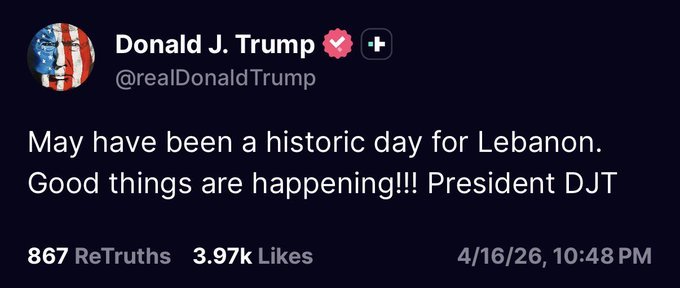
Source: Truth Social
The International Energy Agency has warned that a meaningful recovery in disrupted oil and gas production could take up to two years. That is the sort of timeline markets cannot ignore. It means even if the war stops getting worse, the supply side may not get better quickly.
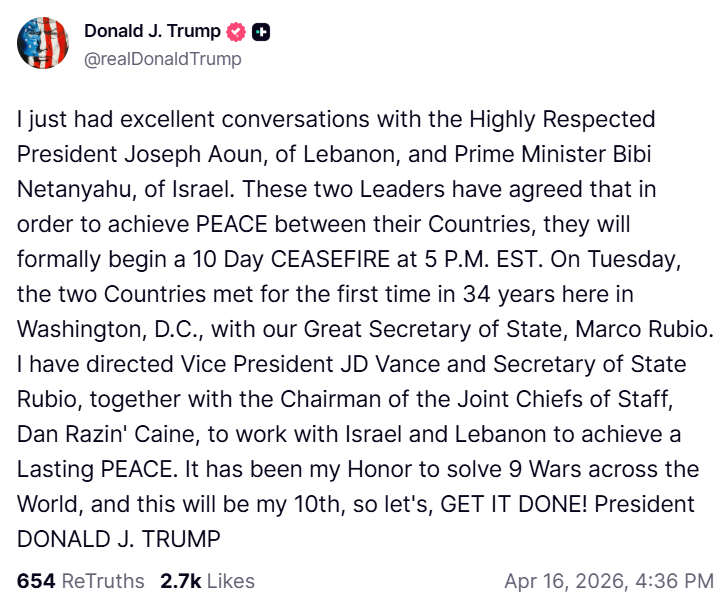
Source: Truth Social
Oil is falling, but the floor is still high
So the latest dip in oil prices makes sense. Trump’s optimism, ceasefire talk and a cooling in volatility all justify some pullback after such an intense rally. But the correction is happening within a market that still looks structurally tight in the near term.
That is the tension now defining crude. The headlines are improving. The fundamentals are not improving nearly as fast. And until actual flows through Hormuz begin to recover in a meaningful way, oil may keep trading less like a market at peace and more like one merely catching its breath.